


Israel failed to prepare for the long-term detention of thousands of security prisoners arrested after the October 7 attack and during the war in Gaza, despite prior warnings of a national prison crisis, State Comptroller Matanyahu Englman said in a report published Tuesday.
The report examined Israel’s handling of the imprisonment, release and prosecution of security prisoners after the start of the Swords of Iron War, Israel’s name for the war launched following Hamas’ October 7, 2023, massacre in southern Israel.
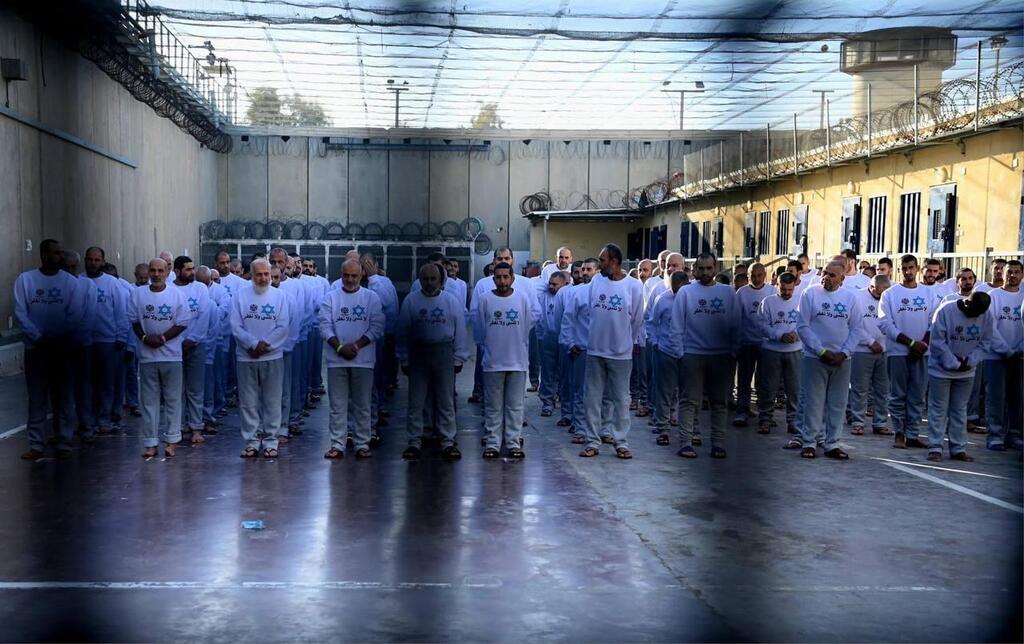
According to the report, the number of security prisoners held by the Israel Prison Service rose by about 92% during the war, from roughly 5,200 before the attack to about 10,000.
“The arrest of thousands of terrorists, without prior preparation, worsened the gap in prison capacity and impaired the Shin Bet’s ability to carry out arrests and interrogations, while increasing the burden and risk on Israel Prison Service staff,” Englman wrote.
The Shin Bet is Israel’s domestic security agency, responsible among other things for counterterrorism investigations. The Israel Prison Service is the country’s national prison authority.
Englman faulted the IDF and the Israel Prison Service for failing to prepare in advance for the intake of large numbers of security prisoners during an extraordinary security event, even though a joint procedure between the military and the prison service from 2006 required such planning.
One consequence highlighted in the report was the July 2024 release of 19 unlawful combatants, including Mohammed Abu Salmiya, director of Shifa Hospital in Gaza City. They were released because of the need to clear detainees from the IDF’s Sde Teiman detention facility in southern Israel.
The 19 were released on the recommendation of the Shin Bet, though one official in the agency noted that the group included people who “posed a risk.”
Englman said those detainees were supposed to remain in custody because of their involvement in terrorist activity and the danger they posed to Israel’s security. According to the National Security Council, their release “was not approved by the NSC or the prime minister.”
“The fact that the release of detainees who posed a risk to state security was not brought to the prime minister’s attention in real time must be viewed with severity,” Englman wrote.
The report said Abu Salmiya’s release caused “deep reputational damage” to Israel and was exploited by Hamas for propaganda. It also found that the Shin Bet opinion recommending his release did not take that broader impact into account, and that no review was carried out inside or outside Shin Bet headquarters over the recommendation by the specific unit that supported the move.
The report also found that as of the end of the audit in February 2026, no terrorist who took part in the October 7 massacre or in crimes committed during the war had been put on trial.
“Bringing Hamas terrorists who committed crimes in the terror attack and during the war to justice is of decisive legal, moral and public importance,” the comptroller wrote. “Doing so will bring justice to the victims of the terrible massacre and provide closure for the victims and their families, who experienced and continue to experience unbearable suffering.”

The report said the delay in prosecuting October 7 terrorists followed a decision by Prime Minister Benjamin Netanyahu and Justice Minister Yariv Levin not to advance the trials while Israeli hostages were still being held in Gaza, because of concern that such proceedings could endanger them.
As of September 2025, prosecutors had prepared legal opinions regarding many of the suspects, and draft indictments had been written for some of them. As of February 2026, several hundred terrorists were expected to face indictments, according to the report.
Englman said legislative changes were needed in areas including court procedure, legal representation for defendants and rules of evidence in order to streamline the judicial process and allow verdicts to be reached more quickly.
A formal trial process, he said, would also create an official and lasting record of the atrocities committed on October 7.
“Putting the terrorists on trial in a transparent and orderly proceeding will be clear legal proof to all the nations of the world of what happened on October 7 and of the existence of a just legal process in Israel,” he wrote. “The prolonged legal process harms the deterrent effect of prosecution, and the delay in bringing to justice the terrorists who committed the crimes delays justice for the victims of the terrible massacre and their families.”
The prison capacity crisis predated the war. In July 2022, the director general of the National Security Ministry determined that “the State of Israel is in the midst of a national prison crisis.” On the eve of the war, the number of prisoners exceeded capacity by about 1,700.
The report noted that the deadline for implementing a High Court of Justice ruling requiring expanded living space for inmates in Israel Prison Service facilities, originally set for December 2018, had been postponed until the end of 2027. The court made that extension conditional on progress in implementing a government-approved long-term national plan to improve and expand the prison system.
Englman said prison capacity standards did not distinguish between criminal and security prisoners, and that the number of places available for security prisoners was significantly lower than the number designated under the 2006 joint procedure between the IDF and the Israel Prison Service.
By February 2025, 10,147 security prisoners were being held in Israel Prison Service facilities, exceeding the maximum allowed under the wartime prison emergency standard by 1,136 prisoners. At the same time, the prison service was unable to absorb another 2,366 security prisoners being held in IDF facilities.
“Due to the large number of security prisoners incarcerated after the outbreak of the war, the Israel Prison Service could not fully fulfill its role as Israel’s national prison organization, responsible for incarcerating all prisoners in Israel,” the report said.
The comptroller found that the Israel Prison Service’s 2021 emergency plan, which set principles and priorities for using prison resources in a wartime scenario, relied mainly on crowding more prisoners into existing facilities rather than preparing additional capacity.
No process was carried out to assess prison needs under different wartime scenarios, and no plan or budget was prepared to create additional prison places, the report said. This was despite the fact that the National Security Ministry and the Israel Prison Service were aware that war could lead to a significant rise in the number of detainees.
The report also found that prewar IDF operational plans did not include estimates of the expected scale of arrests in a military campaign, even though IDF Operations Directorate orders required every operational plan to define an arrest policy in advance.
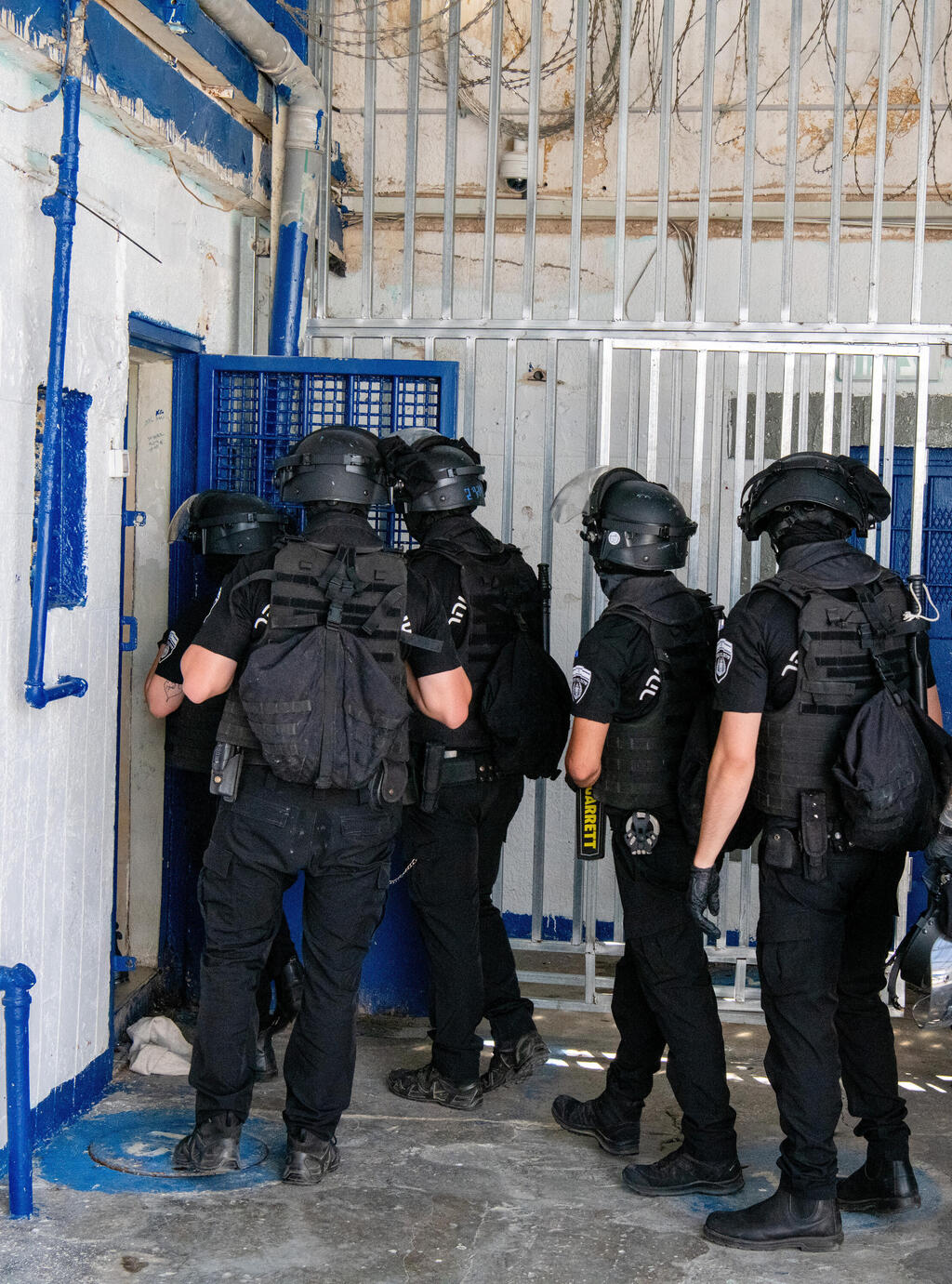
The plans also failed to regulate other required directives, including the establishment of a rear command detention facility under IDF responsibility. That gap, the comptroller wrote, “could impair the response to the need to detain enemy combatants in times of emergency and war.”
The IDF’s operational plans assumed the Israel Prison Service would be able to absorb security prisoners for long-term detention. But no estimate was prepared for the expected number of arrests, making it harder for the prison service to absorb large numbers of detainees and weakening the IDF’s readiness to hold prisoners for long periods when the prison service could not take them in.
After the war began, thousands of prison places were added, but the comptroller said this was not done based on long-term projections. He did, however, praise the Israel Prison Service for adding detention space during the war to provide an immediate response.
Although the IDF established four detention facilities during the war, planning led by the National Security Council in 2024 did not examine the option of holding detainees in a rear command facility operated by the military, despite the relevant IDF directive.
The shortage of prison space also affected the Shin Bet’s operational activity. According to the report, the lack of detention capacity significantly impaired the agency’s ability to carry out arrests, leading to a reduction in planned arrests in the West Bank and the cancellation of some planned operations. It also harmed the Shin Bet’s ability to conduct effective interrogations.
The rise in the number of security prisoners also increased the workload on prison staff. The worsening ratio between prison staff and inmates, alongside other challenges, increased the risk of physical and verbal harm to Israel Prison Service personnel, the report said.
The comptroller also pointed to delays in advancing alternatives to prison for criminal inmates. As of March 2025, about three years after a government decision on alternatives to incarceration, an agreed draft bill had still not been completed, despite Netanyahu’s September 2024 instruction to advance the legislation within six months.
Englman said the delay in regulating community custody as an alternative punishment prevented the prison service from using that tool to ease overcrowding.
The report also noted gaps in intelligence cooperation between the Israel Prison Service, the Shin Bet and the IDF, though details were not published.
The Knesset State Control Committee’s subcommittee, in consultation with the state comptroller, decided not to submit the full report to the Knesset and to publish only parts of it in order to protect state security.