


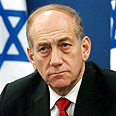
Peres and Olmert fight poverty
The two ministers agree on instigating a NIS 4 billion plan to reduce poverty in Israel. The proposal, to be reviewed by the Finance Ministry, also includes a scheme for the development of the country's periphery
Vice Premier Shimon Peres presented Deputy Finance Minister Ehud Olmert Sunday with a plan to fight poverty and develop the southern Negev and northern Galilee regions.
The two ministers agreed that the plan will be reviewed by the Finance Ministry, after which it will be returned to Olmert and Peres for further discussion.
According to the agreement, Peres and Olmert will put in a joint effort to settle the plan's propositions with the Finance Ministry's stand.
Referring to the matter of the Negev and Galilee development, Olmert stated that he intends to propose a bill to eliminate a standing precondition to financial aid in the regions, linked with income.
Olmert also stipulated he will carry out former Finance Minister Benjamin Netanyahu's commitment for state support for establishing a university in the Galilee. Peres and Olmert further agreed to hold a discussion in the next few days on the subject of the Capital Investment in Tourism act. Tourism Minister Avraham Hirschson is also expected to participate in the debate.
Free academic education for everyone
The cost of the plan to reduce poverty is estimated at NIS 4 billion (about USD 900 million). The plan was consolidated by Ministers Peres and Yitzchak Herzog in 2004, while the two were still Knesset members, ahead of the 2005 national budget's discussions.
Initiated by Peres, the plan is based on a model instigated by former U. S. President Lyndon Johnson in the 60s. The original bill failed to advance because of the political situation at the time, and was now introduced in a new and improve format.
The plan includes strategic short and long term treatments of the problem of poverty, by increasing the employment rate, narrowing the gaps in wages, encouraging employers to hire workers, and providing assistance in gaining employment.
The fundamentals of the plan include:
1. Significant tax benefits to employers who hire new workers
2. A reform in the field of professional training
3. Substantial financial assistance to handicapped workers
4. A cancellation of the cuts in pensions
5. Introducing new measures that will help increase low-level income
6. Improving housing assistance
7. Opening a savings account for children under the age of 18 – to ensure academic education for everyone
