


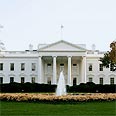
'U.S.-Israel relations do not revolve around the Israeli-Arab conflict.' The White House
צילום: רויטרס
Bridge to Washington
Caving in to U.S. pressure weakens the 'special relationship'
The claim that Israel cannot defy the wishes of the United States is fundamentally flawed, and it exposes the fundamental misunderstanding of precedent, of the wider context of Israel-U.S. relations, of global circumstances, of the current atmosphere in the United States, of the structure of American democracy and of the limits of a president during his second term.
In 1948-49, the State Department, Pentagon and the CIA all pressed David Ben-Gurion not to declare statehood, to allow Palestine to become a U.N. trust, to internationalize Jerusalem, to allow Palestinian refugees to return to their homes (with compensation) and to stop "occupying" the Negev.
The pressure was accompanied by a military embargo and threats of economic sanctions.
Ben-Gurion resisted the pressure, despite the few resources at hand.
In 1967, Levi Eshkol started a preventive war, despite the French embargo and pressure from U.S. President Lyndon B. Johnson. In 1981 Menachem Begin sent Israel Air Force pilots to destroy Iraq's nuclear reactor at Osirak, over the objections of the Reagan administration and threats of embargo.
Three prime ministers stood up to pressure, took one-sided military action, weathered the sanctions and short-term criticism and brought about an upgrading of strategic ties in the long term.
Joint interests
They understood that U.S.-Israel relations do not revolve around the Israeli-Arab conflict, but rather around joint threats and interests.
Israel's special relationship with the United States is anchored in joint values that prevent splits despite frequent tensions.
The U.S. founding fathers viewed the Bible as the political and social inspiration for the U.S. Constitution. There are sculptures of Moses in both the U.S. Supreme Court and the House of Representatives in Washington.
The Ten Commandments appear at the entrance of the Texas legislature. Hundreds of places around the U.S. have biblical names. Most Americans view the State of Israel as an important value unto itself, not as a purely international issue.
Potential support
The potential for support for Israel has skyrocketed since 9/11 following the daily report of American victims of Islamic terror. The image of Muslims in the United States has never been so low, and Israel has never enjoyed such great potential for widespread support.
But Americans like winners and scorn those who suffer from exhaustion. Therefore, the United States upgraded its strategic cooperation with Israel following the 1948 and 1967 wars, as well as after the 1981 attack on the Iraqi reactor.
The state of mind of the public and Congress is different from the world view of the State Department, which operates under the authority of Congress, which is a stronghold of support for Israel.
Congress controls the money, and its influence and power is equal to that of the president.
Change in 1992
Until 1992 Israeli prime ministers viewed Congress as a place to make connections and get around the State Department.
Since then, our leaders have viewed Congress as a "bench warmer". Until 1992, we understood that we would become weaker by caving in to our critics in Washington. Since then, we have adopted the policies of our critics and have become a prototype for caving in to pressure.
Yoram Ettinger served in the Israeli embassy in Washington and a columnist for Israel's leading newspaper Yedioth Ahronoth
