


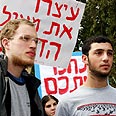
Refuseniks on day of recruitment
צילום: עופר עמרם
IDF going easy on refuseniks?
Army appears to have changed policy toward left-wing conscientious objectors, prefers to have them discharged on grounds of mental health instead of putting them on trial. 'The army just doesn't know how to deal with us,' one refusenik says
In recent months, the IDF's policy toward conscientious objectors who refuse to serve in the army appears to have changed. While in the past, the treatment of left-wing refuseniks has been systematically harsh, with authorities insisting on sending objectors to repeated prison terms, with new refuseniks the policy is different: Young recruits refusing to serve in the army are jailed for a short period of time and then sent to undergo psychological evaluation by a mental health officer who consequently discharges them from service.
According to one refusenik, "the army just doesn't know how to deal with us and prefers that we be discharged." A senior officer at the Military Prosecutor's Office admitted in conversation with Ynet that putting objectors on trial harms the army and creates sympathy for the refuseniks.
Shaul Mugrabi, who served 90 days in a military prison before being released from service, also believes that the army prefers to let soldiers like him go quietly. "It's obvious that the IDF would rather see refuseniks discharged by a psychologist or a committee. I personally chose to go see a mental health officer, because I felt I said all I needed to say."
Other young objectors also claimed that it appears easier to be discharged.
"The army just doesn't want to handle left-wing refuseniks, so it puts them in jail for a few weeks and then allows them to see a psychologist. The army refuses to get into an essential confrontation about the refusal itself. It appear that the struggle we had with the IDF just wore them out," one of the objectors said.
Some 300 youths have until now signed the petition of refusal, in which they declare they will not serve in the IDF because they refuse to take part in the "policy of oppression and occupation" in the West Bank.
