


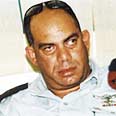
Court to rule: Decorated officer a spy?
Military court expected to submit ruling Thursday on whether Lieutenant Colonel Omar el-Hayeb spied for Hizbullah in exchange for money, large amounts of drugs; decorated officer could face life sentence if convicted
A military court in Tel Aviv is expected to submit its ruling Thursday on whether Lieutenant Colonel Omar el-Hayeb spied for Hizbullah in exchange for money and large amounts of drugs.
El-Hayeb, a decorated Bedouin officer, is charged, among other offenses, with treason and could face a life sentence if convicted.
El-Hayeb’s brother, Lieutenant Colonel (res.) Hassan el-Hayeb, told Ynet that the accusations are baseless, claiming that “even the army wanted to close the case with a deal stating contact with an enemy agent, but he (Omar) refused. He is pleading innocent.”
Three and-a-half years have passed since the filing of the indictment against el-Hayeb, one of the most severe indictments ever to be filed against an IDF officer.
El-Hayeb, 43, a father of four and a resident of the village of Beit Zarzir, is hailed as one of the top officers that the Bedouin community has produced. He spent most of his service in a trackers unit stationed along the northern border, until he was seriously injured in 1996 while in pursuit of Hizullah terrorists. El-Hayeb lost one of his eyes in the incident and has since been limited in bodily movements. After a three-year recuperation period he returned to the army and was promoted to the rank of Lieutenant Colonel.
In jail for 4 years
Part of el-Hayeb’s new job included the recruitment of those Bedouins who are not obligated to enlist in the army.
His arrest in September 2002 stunned the IDF, as the el-Hayeb family is known for its contribution to the country’s security; 14 family members have lost their lives while serving in the army throughout the years.
El-Hayed was indicted for spying, treason, contacting a foreign agent and three counts of dealing drugs. He was accused of relaying information about tank positions, IAF aircraft movement and details related to then Northern Command chief Maj.-Gen. Gabi Ashkenazi.
He was also accused of having accepted large quantities of drugs from Lebanon in exchange for his services.
The trial has been delayed by a year and nine months, awaiting the conclusion of the trial of two other suspects. Under military court rules indicted suspects cannot testify in a court whilst their trial is ongoing.
El-Hayeb denies all charges against him. A neurologist testified that el-Hayeb suffered serious head injuries during his service, which impaired his cognitive ability. His lawyers told the court of contradictions in the prosecution's evidence.
Bad feeling
Family members are anxiously awaiting the resumption of the trial. Hassan el-Hayeb cast doubt over the trial: "I have a bad feeling. The army cannot release him and find excuses for this mess.
"Omar is a sick man, he has judgment difficulties, it is very difficult for him. Since the injury he acts like a child. What do they want from him? We have family in Lebanon and we always speak with them. That's not spying," Hassan said.
Hassan said his brother turned down the prosecution’s proposal for a plea bargain where he confesses to having contacted a foreign agent and pleads guilt for some of the drugs smuggling offences attributed to him in return for a reduced sentence. "It shows that they have nothing against him," he said.
Hassan said since the arrest, there has been a drop in the number of Bedouins from the el-Hayeb clan joining the IDF. "A guilty verdict will cause further damage," he said.
Three Bedouin spy networks were discovered over the last few years. Two were involved in spying for Hizbullah and the third ran a drug smuggling ring. In March 2005, the Northern Command Military Court sentenced Ahmad el-Hayeb, a standing army soldier, to 14 years in jail for attempting to pass on intelligence and arms to Hizbullah.
