


Estimate: UN resolution against Iran will pass
China demands that any reference to possible sanctions or war had to be eliminated from UN resolution ordering Tehran to curb its nuclear program; however, country’s ambassador to UN adds ‘we are not thinking about a veto but of unifying the whole council’; both Russia, China fear too much pressure on Iran would be self-defeating or precipitate oil crisis
Diplomatic sources told Ynet Sunday that the UN resolution against Iran, which will be brought before the Security Council this week, may pass due to the fact that Russia and China will apparently abstain and not veto the move.
China made clear on Monday that any reference to possible sanctions or war had to be eliminated from a UN resolution ordering Tehran to curb its nuclear program.
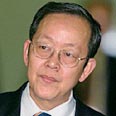
China's UN ambassador, Wang Guangya, spoke hours before his own foreign minister and those of Russia, Britain, France and Germany were to have dinner in New York with U.S. Secretary of State Condoleezza Rice. Iran is the main topic.
Moscow and Beijing want a resolution but oppose invoking Chapter 7 of the UN Charter, which is used routinely in dozens of Security Council resolutions for peacekeeping missions and other legally-binding actions.
The United States, France and Britain insist on Chapter 7. It allows for sanctions and even war, but a separate resolution would be required to invoke further steps of that nature.
Both Russia and China, which have veto power in the 15-nation UN Security Council, fear too much pressure on Iran would be self-defeating or precipitate an oil crisis. Both worry the United States would use a resolution under Chapter 7 to justify military action.
"My position is clear, because Chapter 7 is about enforcement measures," Wang told reporters. "My understanding is that a resolution of the Security Council is itself legally binding, so all the parties have to implement Security Council resolutions."
Many international lawyers disagree and say the only way to make a resolution legally binding is to invoke Chapter 7.
"That's why the draft is written the way it is, invoking the full range of Chapter 7, and that's the intention that we've had and that's what we've been sticking with," U.S. Ambassador John Bolton said.
France and Britain, authors of the U.S.-backed draft the council is discussing, said they were prepared to bring the measure to a vote this week, even without Russian or Chinese backing. But abstention by either nation would show disunity.
No Chinese veto
"We are not thinking about a veto. We are thinking about unifying the whole council," said Wang, whose country rarely casts vetoes.
Meanwhile, Tehran said Iranian President Mahmoud Ahmadinejad has written to President George W. Bush proposing "new ways" to resolve their differences, the first letter from an Iranian head of state to a U.S. president since 1979.
The contents were not immediately released and it was unclear whether Ahmadinejad offered any practical solution.
The United States and Iran severed diplomatic ties in 1980, after radical students stormed the U.S. embassy in Tehran and seized 52 Americans, holding them hostage for 444 days.
China's Wang said he hoped the United States and Iran would hold direct talks, which the Bush administration has resisted. "They should contact each other directly," he said.
The draft UN resolution, introduced on Wednesday, would compel Iran to suspend its nuclear enrichment activities. It does not call for punitive action if Iran defies the Council but the United States has made clear that an attempt to impose international sanctions would be the next step.
Iran on Sunday vowed again to reject any UN resolution on its nuclear program, which it says is legal and peaceful, and threatened to stop cooperating with the International Atomic Energy Agency, the UN nuclear watchdog.
Iran recently accelerated its pace of uranium enrichment but remains far below levels needed to make an atomic bomb.
Iranian officials note that the IAEA, the UN nuclear watchdog, has not found a weapons program after three years of scrutiny and does not consider Iran an imminent security threat.
Yitzhak Benhorin contributed to the report
