


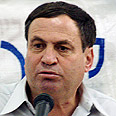
Ex-commando: We need bargaining chips
Former elite unit commander Uzi Dayan says abduction of Hizbullah members can boost chances of securing kidnapped IDF soldiers' release; preparation work for special ops can take years, he says
The public is usually informed only when the latter happens – operations that end with casualties among our forces or deep international crises.
So why did our fighters embark on the nighttime operation in Baalbek, deep inside Lebanon?
"At this stage, it is very important to obtain bargaining chips among Hizbullah members in order to secure the release of our abducted soldiers," says Major General (Res.) Uzi Dayan, who during his 17-year career with the security establishment also headed elite IDF commando unit Sayeret Matkal.
"There are of course benefits to hitting as many leaders as possible on their side, including Hassan Nasrallah, and sowing confusing," Dayan said. "It's good to be fighting on fronts where we have a relative advantage, and the utilization of Special Forces almost always constitutes an advantage for the attacking party, as long as the operation is well planned and executed professionally."
Dayan is closely familiar with special operations performed by the IDF routinely and during times of emergency, after taking part in many of them and leading others.
"A special operation requires very thorough planning, as well as units with execution levels acquired through drills and operations over a long period of time," he told Ynet. "It cannot be done without trained, suitable forces."
"The risk is of course an entanglement in the field that may prevent the possibility of returning home safely," Dayan says. "Yet based on my personal experience, one feels safer alone at night, 80 kilometers (50 miles) behind enemy lines…even if you cannot be rescued you count on yourself and the small force with you."
'Slam dunk can help'
Dayan says that every special operation is preceded by the utilization of numerous resources and efforts on the operational, intelligence, and logistical fronts.
"It's can't happen on short notice but rather takes place over long years – you build the ability to reach a remote area through sea, air and land. Basic intelligence regarding the different theaters is gathered, and experience is acquired through previous operations," he says. "Every theater has an operational file that details the operations that can be carried out there, and how."
"In a war, as opposed to in sports, the main aim is to win, not just participate," he said. "Here too one wins through defense, orderly offense, and hard work on the rebounds. But the slam dunk can help a lot and contribute if it comes at the right moment. If the dunk fails, the spectators get upset and difficult questions emerge. If it succeeds, it boosts morale. This is how it is in basketball, and also when it comes to special operations."
At war, and ahead of an operation, three questions must be asked, Dayan adds.
"What is my plan, what can the enemy do to me, and the most complex – if the enemy does it, how will I respond. People tend to forget that last question," he says.
