


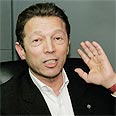
Gaydamak. Left with the bill
צילום: איי פי
Businessman pays tent city bill
Arcadi Gaydamak, who set up wartime tent city without government help, asked to pay police, ambulance bill
Businessman Arcadi Gaydamak, who volunteered to set up a tent city in southern Israel for northern residents fleeing the war, was asked to pay the bill for various government services provided at the site, his associate said during a Knesset subcommittee meeting.
The Knesset subcommittee tasked with looking into the state of the home front published Monday initial conclusions regarding government conduct during the war. During the Knesset discussion, committee members met with representatives of the volunteer groups active during the war and heard about the many difficulties faced by the organizations.
Gaydamak's spokesman and advisor, Yossi Milshtein, told the committee about the lack of government cooperation in setting up the tent city at the Nitzanim beach at a cost of USD 15 million.
"The Prime Minister's Director General Office knew as early as the fourth day of the war that we intend to set up the tent city within 48 hours, but it refused to cooperate," Milshtein charged. "The State did not even cooperate in evacuating those requiring medical treatment to the hospital. Gaydamak paid about half a million dollars just for evacuations to hospitals."
Milshtein charged that Gaydamak was also forced to pay security and rescue organizations for their services.
"At the end, the State also charged him in full for the police and fire fighting services provided at the tent city," Milshtein said. "Arcadi Gaydamak donated about NIS 10 million (roughly USD 2.2 million) to the Magen David Adom ambulance service right at the beginning of the war, but at the end of the war MDA charged him NIS 500,00 (about USD 125,000) for medical services he secured for the tent city."
Meanwhile, Rabbi Gilad Kariv from the Reform Movement slammed the government for failing to present a clear picture of the needs of residents who remained in the north during the war.
"When we turned to the Welfare Ministry we were told: 'The ministry has no clear picture of the needs - do what you can,'" Kariv said, while charging that the suspension of public transportation north of Haifa prevented northern residents who wanted to travel to relatives in the south from doing so without a vehicle.
