


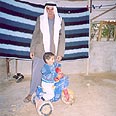
Arab residents of Negev region
צילום: סלוא עלינאת
64 percent of Arab children live in poverty, study says
Study presents dismal state of socio-economic situation of Negev's Arabs. Only 35 percent graduate high school, some 84 percent of homes without means to dispose of waste. Van Leer Institute: Figures indication of ongoing discrimination
Over half the homes in the Negev's Arab villages are without indoor plumbing and 82 percent of minors are living below the poverty line.
These harrowing figures and more like them were presented Wednesday as part of a study conducted by the Van Leer Jerusalem Institute and presented by Adalah, the legal center for Arab minority rights in Israel as part of a conference titled 'Society, Justice and the Struggle for Arab Civil Rights in Israel.'
According to the study 56.4 percent of Israeli-Arab households and 64.3 percent of Arab children were living below the poverty line in 2006.
Arabs residing in the Negev fared far worse, there figures were recorded as being 76.6 and 81.9 percent, respectively.
"There exists in the State of Israel in 2007 a disgraceful reality of ongoing discrimination, increasing distress and widening gaps in every aspect of life between the Jewish and Arab populations in Israel," said Dr. Adel Manna, a senior fellow at the Van Leer Institute.
The percentage of Arabs with academic degrees in the Negev is a mere 3.1 and those eligible for a high school diploma only reaches 35.6 percent.
The unemployment rate in the unmapped villages reached 17.1 percent and the primary source of income for 22.1 percent of families in these villages was state stipends.
84.3 percent of Arab homes in the Negev did not have a proper waste-disposal site nearby.
Dr. Manna also said that Arabs are poorly represented in state institutions. From the data collected for the study researchers reported that there are few Arabs employed at the Prime Minister's office, Ministry of Finance, Bank of Israel and additional governmental offices. The percentage of Arabs in the top echelon of state agencies is also miniscule.
Additional figures indicate that there is also virtually no Arab representation in communications or high-tech firms and that Arab only constitute one percent of university lecturers and administrators.
