


Don't dismiss - advance
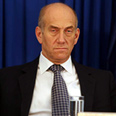
Author AB Yehoshua is optimistic and believes that Olmert must be given the opportunity to move the peace process forward
Yehoshua still believes that Israel's attack on Lebanon was justified; he thinks that the use of force without exploring diplomatic measures was a mistake. Yet he is willing to overlook that if the government will advance peace negotiations.
“The problem was, and still is, the peace process”, Yehoshua told Ynet. “That is my main concern. Olmert's fate should be determined by his party, Kadima, alone. That’s one of the reasons I wasn’t at the demonstration.”
In other words, Yehoshua isn’t quick to sentence the prime minister. He prefers to give Olmert the benefit of the doubt: “The Winograd Commission was set up to investigate the war's failures, not to decide the fate of the prime minister”, he says and adds “the committee had the chance to recommend Olmert be dismissed but chose not to. It shed light on problems that must be addressed, especially with regards to the functioning of the army. Presently, we must focus on moving forward.
It seems you would like Olmert to remain prime minister?
“The prime minister must win the public’s trust and continue the peace process, if he doesn't achieve that, he should resign. The coalition government committed itself to progress and it needs to stand by its word.”
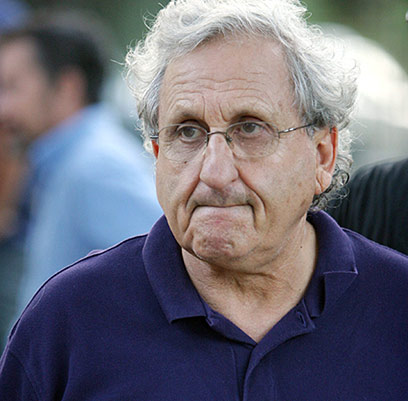
AB Yehoshua
Olmert said that he'll fix what he’s messed up. Do you think he has the ability to do it?
“His job is to stand by his commitments. I hope he’ll succeed in doing that."
Years of cover up
When he says: "There is a way to bring down a government through elections. We must adhere to the democratic process so we don't risk chaos," it seems that Yehoshua is indirectly engaged in a dialogue with the organizers of the demonstration."
Do you think the protest was a mistake?
“I think that it didn’t offer an alternative. At the demonstration there were too many people with opposing views who don't share the common ground needed to turn words into action. I felt I couldn’t take part in an event with people who were against the disengagement, and who vehemently oppose the peace process, which for me is the main issue. People booed author Meir Shalev when he spoke about the occupation of the territories. It’s hopeless. Furthermore, they called on Olmert to resign – that is completely legitimate – but didn't name a replacement.
Yet the Winograd Commission spoke loud and clear. People think that the country’s leadership needs to pay the price.
“The failures exposed during the war are rooted in the actions of the governments that preceded Olmert's. The entire process leading up to the war needs to be examined. It is a complex issue but we cannot place all the blame on the present political leadership; the northern communities were left exposed, the army was poorly trained and equipped because resources were used - for many years - to protect the settlements. It all stems from years of cover up. The Yom Kippur War took place because the consensus was – for many years - that the occupied territories were protecting us from attacks.”
Can one compare what the Israeli society had to cope with after the Yom Kippur War with where we are today?
“I don’t think so. We mustn’t forget that the threat Israelis faced in Yom Kippur was much greater. The consequences were severe and we suffered many more losses. The Second Lebanon War ended with the deployment of the Lebanese army and international forces along the border. We weren't looking to conquer Lebanese territory, we wanted quiet. Taking in account all of our weaknesses, blunders and flaws, I think the overall results weren’t too bad.
No drowning in depression
Yehoshua wants to convey a message of cautious optimism, or at least not to damage morale. Even while the government’s corruption causes him tremendous worry and darkens his mood, he asks us not to fall to pessimism.
“The widespread corruption is a terrible thing which must be dealt with seriously and forcefully by the police and lawmakers”, he says, “but we mustn’t lose faith in our democracy and the decisions of our parliament. It is crucial we keep our faith in the government.”
Are you optimistic?
"I can’t afford not to be. We saw how many civilians were killed during this last war, which, by the way, were not mentioned at all by the Winograd Commission. In the next war, there will be more civilian casualties and we need to prevent that at all costs.”
How do we do it?
“We move forward. No drowning in depression. We need to focus on the peace process with the Palestinians and, more importantly, with the Syrians. I’m not sure we have a partner for negotiations among the Palestinians, but with Syria I think we do. An agreement with Syria will neutralize the Iranian threat and put a stop to Hezbollah's activity. The Palestinians are not an existential threat, but Syria, Iran and Iraq are cauldrons of terror. It’s very dangerous for Israel.”
Do you think that an agreement with Syria is more realistic than an agreement with the Palestinians?
"Yes. I think they will honor an agreement. We mustn’t forget the ceasefire agreement in the Golan Heights that has been maintained for almost 37 years. They could have made trouble, but chose not to. Syria is a secular country; I think we can reach an agreement with them like we have with the Egyptians. As for the Palestinians; until they are free of their inner turmoil it will be difficult to negotiate with them. But we will be able to reach partial agreements."
