


2 capitals for 2 peoples
Tel Aviv has banished its religious residents, while Jerusalem forced its secular residents out
A young man from Kiryat Gat or Hadera dreams of moving to Tel Aviv as soon as he’s finished his army service. He can enjoy life there, find entertainment and work, make new friends and find success, and mostly he can escape from his mother and father, from the feeling of suffocation, from his friends who are everywhere, from his provincial town.
A secular young woman from the Krayot or Ashdod, from a moshav near Netanya or a kibbutz in the Negev, goes to work as a waitress in Tel Aviv to save money for a trip abroad and for college, to feel the big city right before she starts her bourgeois life in one of Gush Dan’s bedroom communities.
And we have Jerusalem.
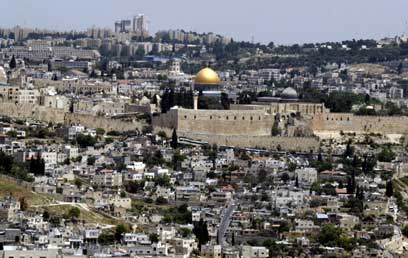
Jerusalem. Secular residents leaving (Archive photo: Sebastian Sheiner)
Jerusalem for the religious is like Tel Aviv for the secular. Religious young people feel a need to live a year or two in Jerusalem. They want to study in one of its abundant institutions—yeshivas and seminaries, teachers’ institutes, academic institutions, girls’ seminaries—or to do a year of national service or work in one of the endless organizations that deal with tourism or education.
For religious young people this is the last opportunity to meet new friends, to take in the feeling of holiness, to recharge their batteries, to escape from their mother and father, to hang out in the Old City and the new, and perhaps to meet the person they’ll live their bourgeois life with in Petah Tikvah.
If you look at Road Number 1 on a fine day, you’ll certainly see thousands of secular Israelis galloping off to Tel Aviv, exploring every apartment for rent. Secular Jews from united Jerusalem are moving to liberated Tel Aviv, while religious Jews from Tel Aviv and Gush Dan are galloping past them in the other direction, trying to breathe a bit of Jerusalem air.
Internal migration
One people, two capitals. In the past generation a fascinating migration of population has taken place, a voluntary transfer, a separation of populations that has changed both religious and secular society. Tel Aviv has been emptied almost completely of its religious population (and only recently, slowly, some groups of religious young people and families have gone against the grain by going to Tel Aviv).
_wa.jpg)
Dizengoff Square, Tel Aviv. Secular pilgrimage (Archive photo: Yaron Brenner)
Entire communities that had lived in north and central Tel Aviv have migrated to nearby cities, and their young people have gone to live in settlements, in religious neighborhoods, and in Jerusalem. At the same time thousands of secular young people have left increasingly strictly Orthodox Jerusalem and gone to live in the center of the country.
In my class in yeshiva high school from less than 30 years ago, there were more than 20 kids from the north and central Tel Aviv branches of Bnei Akiva. How many of them live in Tel Aviv today? Perhaps three. From an equivalent class in a secular Jerusalem high school how many are still in Jerusalem? Very few.
Only religious mark liberation's anniversary
Tel Aviv has banished its religious Jews, hinted that they should not spoil the non-stop fun. The secular, liberal city has caused young religious people to decide that this is not the place where they will raise and educate their children. They prefer to move to quiet and more moderate cities, cities where Shabbat is still Shabbat and the synagogues are full, not abandoned.Jerusalem has urged its secular residents to maintain the sanctity of the city or to look for somewhere else to live. Of course apartment prices and a whole list of other factors have encouraged this trend, but overall we have created here within less than two generations two capitals for two peoples. United Jerusalem is the city without which no religious person feels complete, while Tel Aviv of gold and silver and light is the city of the secular.
Perhaps that is also the reason that only the religious mark the anniversary of the liberation of Jerusalem. Aside from redemption and the Messiah, holiness and religious yearning, Jerusalem has extended a warm welcome to its religious children.
Since 1967 we have walked its walls, danced on the way to the Western Wall, demonstrated at Zion Square, had Shabbat in the Katamon neighborhood, gotten bored on Ben Yehuda Street, gone to our friends in Nahlaot, and studied in Kiryat Moshe. Jerusalem for us is not just the eternal capital of Israel; it is our big city. If one day the anniversary of the liberation of Tel Aviv were marked here, see how many secular Jews would say the Hallel prayer with a blessing.
