


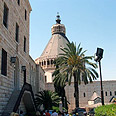
Church of the Annunciation
צילום: טלי חרותי סובר
The Crusades: 21st-century version
A website hawks tiles to cover a planned 200-foot tall cross in Nazareth, but the ambitious project is mired in controversy
The Nazareth Cross project is not yet underway, but it has already attracted the attention of thousands of believers – and many opponents as well.
Initially, the Cross was supposed to be built in Bethlehem for the new millennium, but the intifada ended that project. Two years ago, it was decided to begin construction in Nazareth.
The project, which is scheduled to be completed by 2010, involves the construction of an approximately 200-foot tall cross covered with 7.2 million glass tiles. An adjacent church is planned at almost four and half thousand square feet. Indeed, the entire complex is being touted as an experiential tourist site, which, the planners hope, will draw visitors from Israel and around the world.
The Bolous family of Akko, well-known throughout the Israeli construction industry, is spearheading the project. Apparently, they are being joined by a group of American and European entrepreneurs.
However, Ynet was unable to discover the identity of these foreign investors. In addition, our efforts to learn the names of the project’s architects proved equally unfruitful. The project’s planners appear unwilling to divulge this information.
Just talk
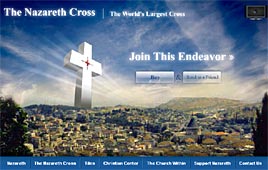
This week saw the launch of a website which describes the slated church complex and even offers tiles for sale. The tiles, which will be used to decorate the giant cross, range in price from $50 to $300, depending on their location on the cross itself.
Those placing orders can specify the dedication that will appear on their selected tiles. Project organizers maintain that all proceeds will be donated to the city of Nazareth.
“There’s been a lot of interest through the site,” Yaakob Bolous states. “As of today, over five thousand people have entered the site and purchased tiles. We've received many responses.
“For many, this is an important project for the Christian world, and they support it and donate. We’ve also had positive feedback from the Muslims, who understand that they’ll also benefit from the tourist enterprise.”
However, opponents note that sales have begun even though the planning stage is not yet completed. But organizers claim that “there’s a concept plan from the project’s architect, which was submitted to city hall and which we presented in a meeting with the mayor.
“So he knows what we’re talking about,” they continue. “We’re in the process of obtaining the final construction permits, which should take about a year.”
Yet, local authorities paint a completely different picture. According to them, the Nazareth Cross is nowhere near the planning stages. For instance, Nazareth Mayor Ramez Jeraisi says that he first heard about the project in the media and that he has no more information. Furthermore, Jeraisi hasn’t seen any plans and insists that no such plans were submitted to the municipal planning and construction authority.
Similarly, city engineer Issa Bishara reports that “as of today, it’s all just talk. I still have no application plans for construction permits. I have nothing to consider,” he adds. “When they submit the plans, we’ll have a position and a response to the matter.”
Christian opposition
Project organizers declare that the church complex will serve all Christians. But many of their coreligionists are less than pleased with the plans.
Bishop Marcuzzo of the Latin Basilica of the Annunciation issued a statement expressing concern that the new complex will detract from his church’s holiness. According to tradition, the Basilica of the Annunciation is the site where the Angel Gabriel informed Mary of her son Jesus’ birth.
In response, project organizers say that “no tourist site, no matter how elaborate, can overshadow a holy site.” Moreover, they claim, “we’ve already received the go-ahead from the Vatican.”
