


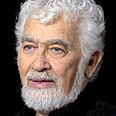
Atzmon: Yiddish and German are siblings
צילום: ז'ראר אלון
Germany to help perpetuate Yiddish culture
Delegation from German parliament visits Israel to examine possibilities for establishing fund for preservation, development of Yiddish culture in Israel and abroad. Yiddishpiel Director Shmuel Atzmon says Yiddish is synonymous to Jewish soul, voice of Holocaust victims
BERLIN - A delegation from the German parliament’s culture committee has visited Israel recently to examine possibilities for establishing a German-Israeli fund for the preservation and development of Yiddish culture in Israel and abroad.
The person behind this initiative is Shmuel Atzmon, founder and director of the Yiddishpiel Theater. The subject will be discussed in detail during the upcoming visit of the German secretary of state in September.
The fund, whose proposed cost is 1 million euros for the first decade, will enable the establishment of a center for the preservation of Yiddish culture in Israel around the Yiddishpiel Theater, which has recently been promised its own quartering.
The future center will include a 430-seat theatre and a professional stage to be used also as a studio for filming Yiddish plays for internet broadcasting. The center will also include a 120-seat theater for shows and movie screenings as well as serving as a rehearsal hall, and a memorial room for Yiddish speaking actors and theatrical artist who had perished in the Holocaust with a library and an archive. The smaller theatre will also hold Yiddish classes for both Israeli and international students.
Only 30% of the Yiddishpiel Theater’s activity is currently funded by the government. The rest of the budget depends on revenues and occasional donations. In order to ensure the survival of the theater and the Yiddish center, Atzmon has approached German government sources for financial help.
“Yiddish is a sibling of the old German language,” Atzmon emphasizes. “When we perform in front of German speaking audience, they usually don’t need translation. Thanks to our activity in the past 20 years, the voice of the Holocaust victims is still heard. Yiddish culture is the tangible seal by which we remember them.”
Atzmon adds that in an age where conscience and compassion have become soiled, Yiddish is still thriving. It has and always will be the very soul of the Jewish nation in Israel and in the Diaspora.”
