


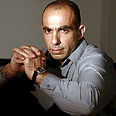
Tomer Buhadana
צילום: אביגיל עוזי
The real meaning of bereavement
Tomer Buhadana says bereaved mother’s eyes taught him about leadership, accountability
Remembrance Day matured along with me during my life and made me change my perception regarding bereavement and the sanctity of life.
My childish perception when I was a high school student, before I joined the IDF and while I was still an impassioned boy eager for battle, I perceived this day from the point of view of a soldier in Franco’s or Mussolini’s army – talking in praise of manliness and battlefield camaraderie and the honor of “dying for the homeland,” and less so about the honor of living for the homeland.
During my army service, as a commander, I encountered for the first time the eyes of a bereaved mother. This was the first time where I had to be accountable. This is a sad case, which in contradiction to the many Remembrance Day stories has no valor in it. It does not include a heroic battle, but rather, only “pure” bereavement without any further ethos. Yet this moment was the one that taught me about loss and its meaning.
In 1998, while I was a young first lieutenant, only 24-years-old, I was appointed as a company commander in the paratroopers. One of the platoons going through basic training at the time included a handsome and strong fighter – his name was Ronnie. For some time he complained that he was not feeling well, he was sent to the doctor, and was treated.
Later Ronnie again didn’t feel well, and on the doctor’s recommendation I sent him to rest at home and go for further treatment at a military clinic. Thirty minutes later I was urgently called to the bus station at the entrance to our military facility. I arrived quickly and was horrified – Ronnie, surrounded by paramedics and civilians, was lying dead, his eyes open wide as if looking at me. I felt as though time stood still. I couldn’t breathe, I froze. After all, only several minutes earlier we spoke, he was standing right in front of me…he was breathing. Ronnie, may he rest in peace, the handsome and strong guy who we were sure would do well in the army, died of a rare heart defect.
That evening, I traveled to his family home. I was scared of what was lying in store. I was scared of his parents. I arrived at the building and started going up the stairs to the second floor. In the stairwell I saw dozens of people who looked at me and whispered to each other while staring at me. I felt as though I was not climbing to the second floor, but rather, to a 40-story skyscraper.
Burden of responsibility
I entered Ronnie’s apartment, and his mother saw me and started crying. I didn’t know what to do. I sat there with his parents. Much was said and many questions were asked that evening by this loving and amazing family – but one thing has been etched in my memory and accompanying me to this day: One sentence uttered by Ronnie’s mother uttered with tearful eyes: “I don’t care about anything…I gave you a living son…return him to me alive!”To my regret, I couldn’t do it. When I was alone, I cried; maybe because of the pressure of the situation; perhaps because I grasped the burden of responsibility.
What did I gain from this sad story? I gained the insight that the lives of our sons are a priceless asset being entrusted in my hands, and I must return them at the end of the period. I learned that as commanders and leaders, we must teach and train soldiers that it’s not worthwhile dying for our country, but rather, if you’re called upon, to make our enemies die for their county, in line with General Patton’s famous quote.
I also learned that the comradeship that is always talked about is not only about marching shoulder to shoulder during the night, but also a years-long look into the eyes of a bereaved mother. I learned that I must assume personal accountability for everything, which has to do with my ability to plan and manage my moves well, act wisely, and exercise good judgment and responsibility when it comes to my subordinates and my superiors.
Yet this isn’t enough. I also have the responsibility to ensure that all the commanders under my command will conduct themselves that way – otherwise, we are not entitled to be commanders or leaders, either at times of peace or war.
Indeed, Remembrance Day has become a day of self-examination for me.
Tomer Buhadana is an IDF major (res.) and commands a paratroop reserve company. He became known during the Second Lebanon War after insisting on flashing the ‘V for Victory’ sign to photographers on his way to hospital after being wounded in battle
