


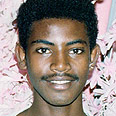
Prosecution says impossible to determine cause of Gabriel Dwait's death
Though State was adamant Ethiopian immigrant returned to Israel in swap deal with Hizbullah had drowned at sea, investigation has put original theory into doubt
The State Prosecution said during a hearing Wednesday at the Beersheba Magistrates' Court on the investigation into the case of Gabriel Dwait that even after his body had been autopsied, it was not possible to determine the cause of death.
The State initially asserted that Dwait had drowned and his body carried by the tide to Lebanese waters. His body was returned to Israel last October by Hizbullah in exchange for an infirm Lebanese prisoner and the bodies of two Hizbullah gunmen.
A criminal investigation into the circumstances surrounding Dwait's death was opened in February following a formal request filed by his family.
"Months after the investigation was launched we still have no conclusive findings that can tell us anything about what happened to Dwait between the day he disappeared and the day his body was returned to Israel," said Attorney Yael Segal-Michllis, who heads the legal department at the TEBEKA association (Advocacy for Equality and Justice for Ethiopian Israelis).
"I wonder, if this family had been of a higher socio-economic standing, whether the State would have handled the situation any differently."
Over the course of the next month the family's attorneys will go over the case before submitting their conclusions to the court, which will then have to decide whether the State is at fault.
The body was returned along with the ID card and passport that Dwait had had on his person at the time
of his disappearance, though they seem to have remained nearly completely intact. The Dwait family claims that it is impossible for these documents to have remained completely dry if Gabriel indeed had drowned.
The family, furthermore, claims that state officials had not seen fit to inform them where Gabriel’s body had been found, even though the State had been in possession of that information for quite some time.
