


Report: Iran might offer military aid to Lebanon
As Lebanese president arrives in Tehran for first official visit, Hizbullah sources claim Iran may offer to provide Beirut with missile systems
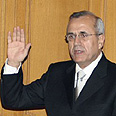
Lebanon's President Michel Suleiman arrived in Iran for a first official visit on Monday. He was greeted by Iranian Foreign Minister Manouchehr Mottaki at Tehran's airport, Iranian news agency IRNA reported.
London-based Arabic-language newspaper al-Quds al-Arabi quoted Hizbullah sources as saying that Iran may offer Suleiman military aid, including missile systems.
Suleiman came to Iran accompanied by a delegation of high ranking ministers, and is scheduled to meet with his counterpart, President Mahmoud Ahmadinejad, Mottaki and the Secretary of the Supreme National Security Council Saeed Jalili.
Tehran attributes great importance to the visit, in light of the major role Iran plays in internal Lebanese politics. A spokesman for the Iranian Foreign Ministry said this week that Suleiman was expected to discuss with the senior Iranian officials the countries' relations and regional developments in Iraq, Afghanistan and Palestine, as well as "the conspiracies of the Zionist regime."
'Dawn of a new era'
A senior source at the Lebanese presidential palace told French news agency AFP that the government did not plan to act against Hizbullah's military abilities. "We believe that there is a need to form a national defense strategy that would bolster the government, but would not harm the resistance capabilities against Israel," he explained.
Hizbullah expressed satisfaction over the tightening of relations between Iran and Lebanon. A statement issued by Hizbullah's parliamentary faction said that "this visit marks the dawn of a new era and could strengthen the useful ties between Iran and Lebanon, and help Lebanon in its firm resistance against Israel."
Roee Nahmias contributed to the report
