


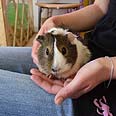
The animal presence is the tool, the client is the focus
Through Animal Assisted-Psychotherapy, the therapist works with the client on cognitive, social, behavioral and emotional issues in order to bring about change and healthy emotional development. Second article in the series
In the first article in this series, I discussed animal-assisted interventions in general and included definitions of and comparisons between various therapeutic ways that the human-animal connection may be used.
- For the previous article, click here
At this point, I would like to narrow the focus of this article to the field of Animal-Assisted Psychotherapy (AAP). In most references to Animal-Assisted Therapy (AAT) in published articles (both professional and for the lay population) and on the internet, AAT is mostly used in reference to therapy focusing on emotional issues. I feel that this is an unfair hijacking of the term AAT and ignores the other therapy fields that also use AAT (although each of the other fields acknowledges the emotional impact of the presence of animals and they use it to advance their goals). Thus there is the need for a more specific descriptive term, hence the term AAP.
A brief history of animal-assisted psychotherapy in the last 100 years
The first mention of the use of animals in psychotherapy is by the grandfather of the field, Sigmund Freud. Freud's dog Fi-Jo was often present in therapy sessions and he noticed that the dog's behavior in therapy could be used as a diagnostic tool, apparently believing that the dog was able to assess the client's mental state and reacted accordingly. Freud also noticed that the dog had a calming effect on clients, especially on children.In the 1960s, psychologist Boris Levinson used his dog, Jingles, in psychotherapy sessions with children and found this to be so useful that he wrote a book on the subject, Pet-Oriented Child Psychotherapy. Levinson found that the presence of an animal and his behavior in therapy hastened the development of the rapport between therapist and client, as well as serving as a catalyzing agent for therapy process. He made a survey of over 400 psychotherapists in the state of New York and found that 33% of the respondents employed animals as therapeutic aids.
Since Levinson, a number of books have been published for the lay person about the therapeutic effect of the human-animal connection on humans in various situations. The last few years have seen more books published by therapists on the subject of AAP. Although sparse, there is a growing body of research supporting the efficacy of AAP.
So how does Animal-Assisted Psychotherapy work?
It has been said that all emotional problems that are not organically-based come from problematic relationships – either in the past or in the present. Psychotherapy serves as a sort of laboratory for interpersonal relationships to be experienced, for problematic relationships to be reenacted through the therapist-client relationship, for the development of emotional expression and working through relationship and accompanying emotional issues in the "here and now", eventually leading to insight and change. In traditional psychotherapy, the only relationship that exists in the room is that between the therapist and client. In traditional play therapy, the therapy for children chosen by most therapists, the child may reenact relationships through "relationships" with or between various dolls, but it is clear to the client that it is only "playing pretend".
In AAP, there is a relationship triangle comprised of the relationships between client, therapist and animal. At any given time, the client may choose to participate in a relationship with either the therapist or with the animal – or in both. The client may also choose to observe the relationship between the therapist and the animal. If more than one animal is present, there is also the relationship between the animals. The client may project from relationships from outside onto the relationships within the therapy setting, or reenact within therapy a larger number of relationships from outside the therapy than in a traditional psychotherapy setting. For instance, a child, who may be neglected by her parents who have a clear preference for a prettier and more talented sibling over her, may not dare express that anger for fear of losing her parents' love. She may watch the way the therapist treats two animals and project that the therapist prefers one animal over the other and become angry at the therapist for neglecting the second animal. Thus she may reenact the family situation and be able to express her hurt, anger and jealousy in a safer situation.
Roles of animals in AAP
Animals fulfill many roles in the therapy situation that allow for emotional, cognitive and behavioral issues. The following is a list of some of the roles:- Often the client feels threatened by the therapist or by the therapy situation. Animals serve as a bridge between the therapist and the client in the formation of the relationship between them.
- The presence of an animal makes for a more natural and authentic atmosphere in the therapy setting, leading to a lessening of the client's anxieties and to more spontaneous behavior,
- There are many implications for the therapy process because of the fact that animals are alive, react, initiate, stimulate the senses (touch, hearing, sight, smell, movement). This awakens a variety of associations, feelings and reactions in the client that may lead to emotional expression and can be worked on within the therapy.
- Social interaction with the animals allows for the learning of acceptable social rules, natural and logical reactions to various behaviors, responsibility respect towards others, and allows for chances to develop expression and understanding of nonverbal language and intentions.
- We all have a natural need for physical touch, yet touch is a problematic issue, both within the therapy setting and in society in general. Interaction with animals allows for opportunities for warm and soft touch, and for learning healthy and appropriate ways of touch.
Interaction with the animal is only part of the therapy process in AAP. The main component is the accompaniment and guidance of the client by the therapist, with mediation by the therapist between the client and the animal, between the client and his/her own inner processes, leading to reflection, awareness and insight. The presence of the animal is the tool, and the client is the focus. In short, through AAP, the therapist works with the client on cognitive, social, behavioral and emotional issues in order to bring about change and healthy emotional development.
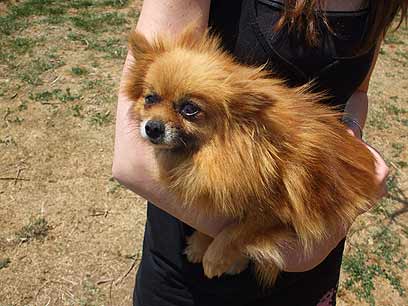
Photo: Dan Bentsur
As in other forms of psychotherapy, there is no other person – professional or lay – present in the therapy setting. A number of articles from the US refer to the presence of an "animal handler" (often a volunteer bringing his/her dog) together with the therapist. This is problematic, for the psychotherapy setting is a very intimate one, and the presence of another figure, especially one not trained in how to react to various client reactions and behaviors, would most likely water down the effect of the psychotherapy. At closer look at these articles, it becomes clear that the sessions were more characteristic of AAA and lacked the characteristics of psychotherapy.
It is important to note that AAP is not an adjunct to therapy, but is therapy in and of itself. In other words, AAP is not a "side therapy" in which the AAP therapist causes content to rise in some other "main therapy" to be worked through, for AAP is the main therapy and the content is worked through within the therapy, as in any psychotherapy.
Animal-Assisted Psychotherapy may occur in any of a number of settings:
There is a wide range of possible therapy settings in AAP, and each one has its advantages:
- A petting zoo, with a range of animals, offers a choice of possibilities for the client to include in the therapy. In addition, the zoo is often set up as an "environment" for the animals, which in itself may create situations that may be worked on in therapy. For instance, if there are chickens and ducks wandering around freely, an abandoned egg may remind a child who was abandoned by a parent of his own life situation. A goat in the goat shed who is dominant over the other goats may represent to the client an aggressor who is victimizing the other goats, and the client may identify with either the aggressor or with the victim.
- Many therapists work with their personal animals (dogs, hamsters, lab rats, rabbits, parrots, snakes, etc.) in a traditional therapy room set up for play therapy (with many play materials, such as dolls, play weapons, action figures, cards, board games, etc.). In this situation, the child is very aware and observant of the relationship between the therapist and the animals, often ascribing the role of parent to the therapist and child to the animal. It is always interesting to see if child perceives the therapist as a good parent, neglecting or abusing parent, overbearing parent, etc., and to see the emotional reaction of the client to this perception, and to see what type of situation/role play/reaction ensues. During the various stages in the therapy process, the child may choose to concentrate on the animals, on the toys, or on a combination of the two (e.g. putting the hamsters into a doll house and preventing them from entering into the room where the "parent" dolls are sitting).
- Some therapists work in a petting zoo and have a separate therapy room, allowing the child to either choose to be in the zoo or bring an animal from the zoo into the room, thus allowing for advantages from both settings.
- Many therapists who work with their dog follow the example of Levinson and offer the possibility of taking the dog out for a walk. This extends the therapy setting to include many types of stimuli that exist outside of the therapy room that may bring up relevant content that may be worked on in therapy.
What types of animals may be used with which populations?
There is a popular misconception that the certain animals are to be used specifically for certain populations. The experience of many therapists in the field has shown this not to be true. Each client brings with him or her a rich past of experiences, as well as his or her own perceptions of the world around and those in that world. It is impossible to know ahead of time which animal will stimulate the any given client's inner world, leading to progress in the therapy process. I once had a therapist come to me for advice: "I learned that children similar to my client must work with a furry animal in therapy, but the most amazing therapy development happened with my client when she noticed my turtle and started expressing herself through her interactions with and projections onto the turtle. What was I doing wrong?" This therapist did nothing wrong and did everything right. She believed in her client and allowed the client to be the focus of the therapy and not the animal, which ultimately led to a successful therapy outcome.In the next article in this series, I will concentrate on the status of Animal-Assisted Psychotherapy here in Israel today: professional training, Code of Ethics, IAAAP/Merchav - the professional organization, and the status of AAP legally and in practice.
Nancy Parish-Plass, Animal-Assisted Psychotherapist, Founding Chairperson of The Israeli Association of Animal-Assisted Psychotherapy – MERCHAV, Professional Consultant for Animals and Society – The Israeli Journal for the Connection between People and Animals
