


Iran atom official: Trust needed in nuclear row
In first official statement since appointment, new head of Islamic Republic's Atomic Energy Organization says efforts to build mutual trust with West needed to end dispute over Tehran's nuclear program and 'close case open during last six years'
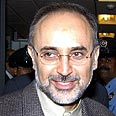
It was Ali Akbar Salehi's first official comment since President Mahmoud Ahmadinejad named him on Thursday to replace Gholamreza Aghazadeh as head of the body leading Iran's nuclear activities.
"We hope that, contrary to the hostilities in the past six years, more efforts are taken to gain mutual trust ... so that a case, open during the last six years, would be closed," US-educated Salehi told state television.
He made no suggestion, however, that Iran would be prepared to halt or freeze sensitive nuclear work which the West suspects is aimed at making nuclear bombs, a charge Tehran rejects.
Ahmadinejad, re-elected last month for a second four-year term, has ruled out prospects of Iran bowing to Western pressure and conducting talks on the issue.
His first term saw a steady expansion of nuclear enrichment activity which can have both civilians and military uses.
Iran's Atomic Energy Organization is the main body for the country's nuclear program. But its head does not lead talks with major powers on the issue
.
Salehi, who has studied at the Massachusetts Institute of Technology (MIT), was Iran's former representative to the UN International Atomic Energy Agency (IAEA) under the government of reformist former President Mohammad Khatami.
Analysts say he is a mild-mannered politician in favor of resolving Iran's nuclear row with the West through talks.
Iran, the world's fifth-largest crude exporter, says its atomic work is for peaceful purposes, to generate electricity.
"We will enter the scene with a fresh perspective ... The Atomic Energy Organization will respect its international commitments as much as it will defend Iran's nuclear rights," Salehi said.
"Because the world's stability depends on Iran's stability, all sides should try to end this issue in the best way possible," he said.
Supreme Leader Ayatollah Ali Khamenei is Iran's most powerful figure and has the last say on all state matters like the nuclear dispute between Iran and the West. Iran's chief nuclear negotiator is Saeed Jalili, an Ahmadinejad ally.
Aghazadeh, who was also a vice president, announced his resignation on Thursday.
He is an ally of former president Akbar Hashemi Rafsanjani, who backed opposition candidate Mirhossein Mousavi in the June 12 disputed election, but Thursday's media reports on his resignation did not say whether it was linked to the vote.
