


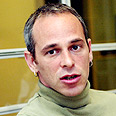
Gadi Taub
צילום: צביקה טישלר
Israel’s dying middle class
Social order at risk when citizens realize it doesn’t pay to play by rules
I have a friend who owns a bar. He employs quite a few bartenders, all of them young. Some of them have not yet decided what to do in the future, others are saving up for a trip overseas, and some are saving up in order to finance their studies.
The most hard-working ones advance to the position of shift manager. For example, a young woman in her late 20s who moved here from the former Soviet Union, and a single Israeli-born man in his late 20s. She wants to become a nurse and is saving up to pay for school. He wants to be a teacher. It is doubtful whether they are aware that today, working as bartenders, they are making more money than they will as a nurse and a teacher.
When we discuss the growing gaps in Israel, we usually don’t think about them. The question of poverty is usually more prominent. The erosion of the middle class is marginalized. It doesn’t make for good images on television or good photographs on the front page of newspapers. Here we won’t find leaking roofs, torn clothes, or eight people sharing a room.
However, the size of the middle class is an indication of economic and social stability and the wellbeing of democratic regimes. It is no coincidence that both in political theory and in our intuition, this class is identified with maintaining the social order. These are the people who did not get rich through bold business gambles and did not lose all their money because of them; they have no unusual talent or unusually large inheritance.
These people play by the rules and advance slowly in order to get their own apartment, a car, reasonable education for their children, and an occasional trip abroad. They serve as testament that the rules work and that playing by the rules pays off – those who play by the rules and work hard advance in life.
However, the above statement is becoming less and less accurate in Israel. Based on Adva Center data, the Israeli middle class shrunk by almost 20% from the end of the 1990s to the middle of the current decade. The definitions used by the researchers, Dr. Shlomo Swirski and Eti Konor-Atias, were economic (for example, households that earn 75-125% of the average montly income – roughly $2,800 to $4,200 per month at the time the study was published.)
Free society in danger
However, the middle class is also a sociological definition, not only an economic one, and the gap between these definitions is worrying. In Israel, what sociologically speaking should be the middle class is to a large extent no longer so in economic terms. Hence, it would be worthwhile to think about the two shift managers at my friend’s bar: Hard-working, honest people who want to secure a job that is beneficial for society. There are many people like that: Teachers, police officers, nurses, social workers, and city hall officials. Many of them are being pushed out of the middle class.These are not only people identified with social order – they are the people who maintain it in practice. This is the police officer you will meet when you file a complaint, the nurse who will take care of you at your local clinic, and the teacher who will face your children at school. What are we supposed to say to the immigrant from the former USSR and to the young man who wishes to become a teacher? What do we say to a young man who joins the police or wishes to care for youth in distress?
We are telling them that their job will prevent them from enjoying the social order they are entrusted with maintaining; that they will not become part of the middle class; that they will have no money for a daycare center, for a car, for their own apartment, and for educating their children.
A free society is maintained when it pays off to play by the rules of the game. If it doesn’t pay off to do so, the rules must be enforced, and society ceases to be free. Hence, this trend is not only cruel and unjust, it endangers all of us; including those who think they will not be hurt by it directly.
