


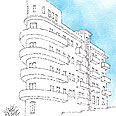
Collective memory
צילום: סרג'יו לרמן
Munich mounts Tel Aviv centennial show
New exhibit in Germany to focus on architectural history, style of Israeli metropolitan; showcase works by Arieh Berkowitz, Sergio Lerman
A new exhibition honoring Tel Aviv's centennial celebration opened at the famed House of Architecture in Munich, Germany.
The exhibit's curator is Arieh Berkowitz and it features his and artist Sergio Lerman's works. It will run until December 11.
The showing expresses a longing for the city's old, romantic architecture, typical of the 1920s and 1930s.
"Any reference to urban architecture requires, first and foremost, an understanding of the collective memory, since it is a spiritual thing and not a tangible thing," said Lerman.
"Keeping the collective memory intact means making every possible effort to protect the cityscape and its character. You can't keep a city as a museum, it must grow and change, but you can create a dialogue between the old and the new."
Lerman wants Germans to "understand the adventure that is called Tel Aviv."
Berkowitz: "We're trying to communicate the atmosphere of the place. Much of the show is purely about architecture.
"German audiences are curious about Tel Avivian architecture as-is. This exhibit doesn’t offer a political dialogue but an artistic exchange meant to Illustration that Tel Aviv is the city of dreamers."
