


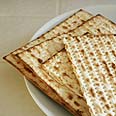
Matzah brei confessions - update 1
So far, I have received support for my position: Only 'French toast' style brei is edible. In the last days before Pesach, tell me why your style is better
Matzah brei competition update: There is great support for my position that French toast-style is the way to go with matzah brei, and not omelette or (shudder) scrambled-eggs style. You have a few more days to let me know. Full report before the holiday!
Pesach is approaching, with its annual mix of the joyous remembrance of gaining our freedom from slavery, the wine at the seder and the time with friends and family.
But there is also the dread at the prospect of being limited to matzah and its offshoots as the “bread” product of choice for the week. “Bread of affliction” it truly is, if you know what I mean without my getting too graphic.
As I’m as Atkins-wary of carbos as the next aging baby boomer, I’m not too worried about the absence of bread, rolls, croissants, hamburger buns and even challah for the week.
I am looking forward to one kind of food I seem to eat only during Pesach: matzah brei.
For those who don’t know, matzah brei is a fried matzah and egg scramble served generally as a breakfast dish, but eaten throughout the week in a variety of ways.
I am going to lay down a gauntlet soon on the ONLY proper form of matzah brei to make and the ONLY proper way of eating it.
But I would like to digress for a moment to mention briefly the issue of “gebrokts” and “non-gebrokts.” The latter is the Orthodox and Haredi belief that matzah should not be mixed in any way shape or form with any form of moisture, be it water, milk, beaten egg or anything else wet. That means no matzah balls in chicken soup, no matzah meal pancakes, and of course, no matzah brei.
French-toast style is the only way
The fear of the non-gebrokts set is that some theoretically uncooked flour in the matzah could, maybe, possibly leaven slightly if it came in contact with a wet substance. Let me say here that many competent rabbinical authorities say this idea is baseless. Let me also say I agree wholeheartedly with that position. Once matzah is baked (and then ground into meal or flour or “farfel” pieces) it can’t leaven - because it’s already cooked. Perhaps, for those who want to uphold a family tradition, I could see keeping to the “non-gebrokts” rule. And if you do, no reason to read further.
But for everyone else, here’s the thing: the only real form of matzah brei is the French toast-style I grew up eating. Everyone else is wrong.
Here’s how you make my real matzah brei: Break matzah squares (yes, that leaves out handmade shmurah matzah) into four quarters. Run cold water over them. Drain. Press three or four slices together and dip in the same type of egg batter you use for French toast (I like cinnamon, vanilla and even orange juice.). Drop into a pan of sizzling hot butter, and fry like French toast until firm.
Cover with any (or all) of the following: maple syrup (the real kind only, preferably from Vermont), sugar, cinnamon sugar, strawberry preserves, or honey (only as a last resort). Eat and repeat.
Now, I know there are those of you out there who think differently. My wife, in fact, goes for the scrambled-egg approach: little bite-size pieces of matzah sprinkled in beaten egg and scrambled up loose. There is even an omelette-style, as well.
Both of those styles are simply WRONG. They taste like dry, crumbly eggs or overcooked turkey stuffing. My French toast-style is by far the best way to enjoy matzah brei.
But, in the spirit of the holiday, I invite all of you to send us your best matzah brei stories and recipes. We’ll post them on Ynetnews - even if they’re wrong.
