

The Middle East is entering a new strategic era. Familiar structures are crumbling, and regional actors are repositioning themselves in search of influence, stability, and leverage. No country embodies this transformation more than Saudi Arabia, whose national program, Saudi Vision 2030, aims to turn the kingdom into a modern economic powerhouse and an assertive regional player. Under Crown Prince Mohammed bin Salman, Riyadh seeks to shift from a posture of dependence and reaction to one of initiative, diversification, and leadership.
Saudi Arabia’s modernization is not confined to its economy or society; it extends to its foreign policy. The kingdom is reducing reliance on a single external protector, widening its strategic portfolio, and recalibrating its regional role vis-à-vis Iran, the Gulf states, and the United States. In this evolving landscape, the question of normalization with Israel has moved from the realm of taboo to the realm of possibility, and perhaps even inevitability, provided that the timing and political price align with Saudi interests.
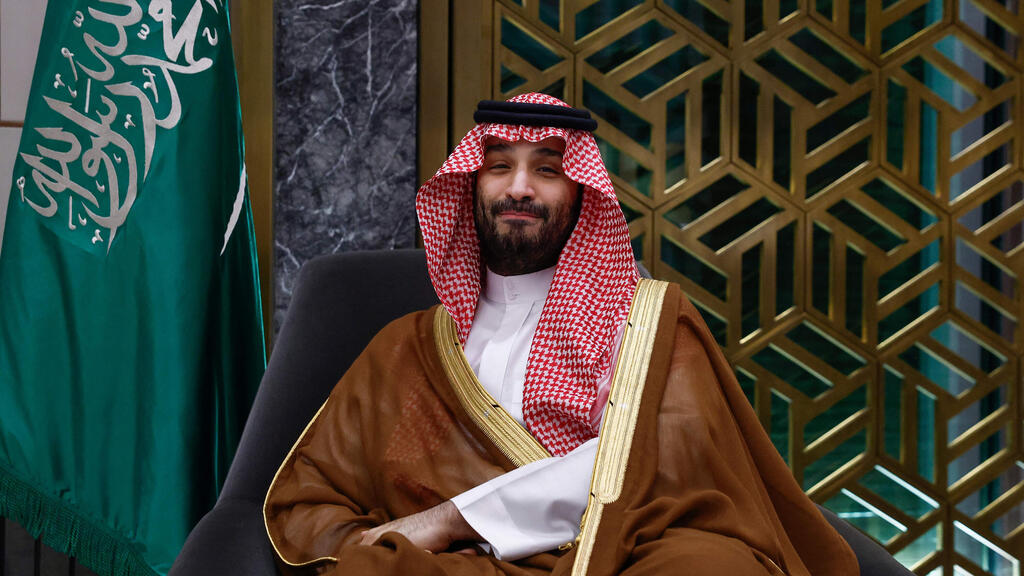
The Saudi position is clear. Riyadh will openly consider normalization with Israel only under two conditions: meaningful progress on the Palestinian issue that grants political credibility in the Arab and Islamic spheres, and a long-term security framework with Washington that strengthens the kingdom in its rivalry with Iran.
The question, therefore, is not if normalization will happen, but when, and on what terms.
The kingdom’s deepened defense cooperation with Pakistan, a major Muslim nation with nuclear capability, reflects this strategic moment. Although it is not a formal alliance and does not constitute a mutual nuclear umbrella, the agreement signals that Saudi Arabia intends to widen its defense architecture and build parallel channels of deterrence. The move also underscores the kingdom’s aspiration to shape the regional environment rather than remain confined within American security guarantees alone.
For Israel, this shift presents both a historic opening and a real strategic test. On the positive side, normalization with Saudi Arabia could anchor a broad regional coalition that contains Iran, enhances Israel’s diplomatic legitimacy, and unlocks far-reaching economic cooperation. Trade corridors connecting the Gulf, the Mediterranean, and Europe, as well as collaboration in energy, water, cyber, tourism, and advanced technology, would reshape the regional map. Moreover, Saudi Arabia is the only Arab actor capable of granting legitimacy to a future political framework regarding the Palestinians, should such a framework emerge.
Yet the risks are equally clear. If Saudi Arabia deepens defense cooperation across the Muslim world without including Israel, Jerusalem could find itself isolated at a critical juncture, watching a new regional architecture form without it. The Saudi-Pakistani defense relationship, even without nuclear implications, demands close attention from Israel, as it reflects a gradual shift toward multi-sourced security structures in which Israel has limited influence unless it acts early and decisively.
Israel must therefore abandon a policy of observation and adopt a policy of initiative. The strategic window will not remain open for long. Israel should coordinate closely with Washington, engage Riyadh directly and substantively, and offer a realistic political and economic framework that enables cooperation rather than competition. If Israel acts now, it can turn Saudi Arabia’s rise into a strategic asset and a milestone in regional stabilization. If it hesitates, the Middle East may realign without it.
Saudi Arabia has already taken the wheel of the emerging regional order. The question is whether Israel chooses to sit in the front seat, the back seat, or outside the vehicle altogether. In the Middle East, those who do not shape reality are ultimately shaped by it.