


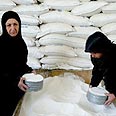
Distributing food in Gaza
צילום: איי פי
Humanitarian crisis in Gaza
At the same time as the EU announced the suspension of aid to Gaza Strip, the activities of humanitarian organizations that provide food and services to hundreds of thousands of Palestinians were brought to a halt. "The population needs us now more than ever – but we can't work," say activist
The crisis in Gaza turned residents and activists of humanitarian organizations who try to help them into hostages. "The Palestinian population needs us now more than ever but it is practically impossible to function," said Kirstie Campbell, spokeswoman for the UN's World Food Program that feeds over 275,000 Palestinians daily.
Campbell, who's been working in Gaza and the West Bank for the past three-and-a-half years, left Gaza last week as a result of the escalation in the situation and her fear for her life. Campbell was not alone, the majority of foreign volunteers and employees of humanitarian organizations have left also the Strip.
UNRWA resumes activities
The United Nation's Relief and Work Agency (UNRWA) that helps about 850,000 people in the Gaza Strip, has already lost some of its activists. One of the agency's employees was killed last week in Khan Younis. Another was hit by gun fire in Gaza and later died. In light of the situation, UNRWA decided to limit its activities in the Gaza Strip but announced Monday that services will be fully restored despite the uncertain situation.
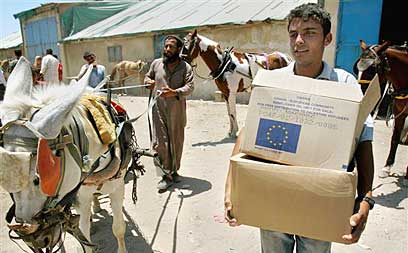
"The Palestinian population needs us now more than ever but it is practically
impossible to function" (Photo: AP)
When asked by journalists about media reports that the Israeli authorities planned to cut water, electricity and fuel supplies to Gaza, the Commissioner-General of the United Nations Relief and Works Agency Karen AbuZayd said: “We have had no such indications from our contacts with Israeli authorities. It would not be in anyone's interests to take measures that would aggravate the already desperate situation in Gaza."
