


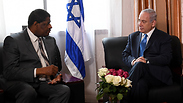
Israel and Senegal end diplomatic rift after leaders' meeting
After the African country initiated a resolution that was passed at the UN against the settlements, Netanyahu recalled the Israeli ambassador and canceled the aid to Senegal; during Netanyahu's visit to the Economic Conference of the West African countries, the leaders of the countries meet and agree on normalizing relations.
The announcement was made after a meeting between Israeli Prime Minister Benjamin Netanyahu and Senegal President Macky Sall on the sidelines of an Economic Community of West African States (ECOWAS) gathering in Liberia.
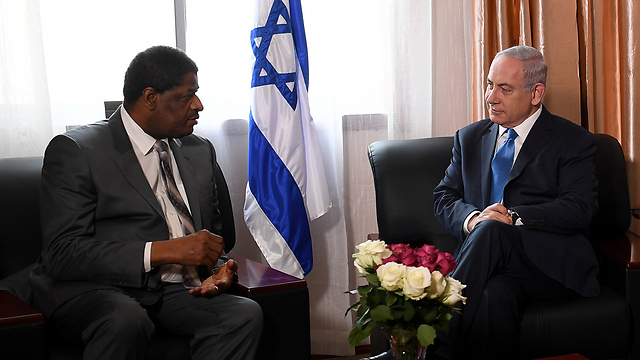
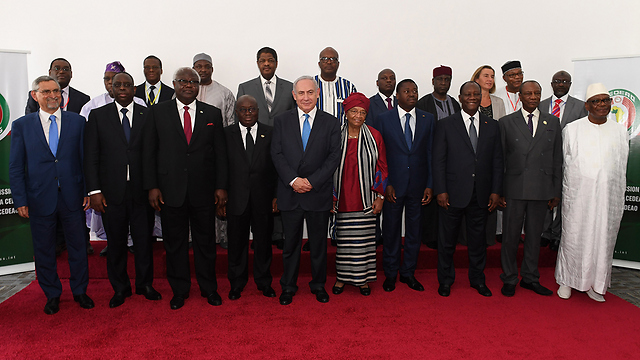
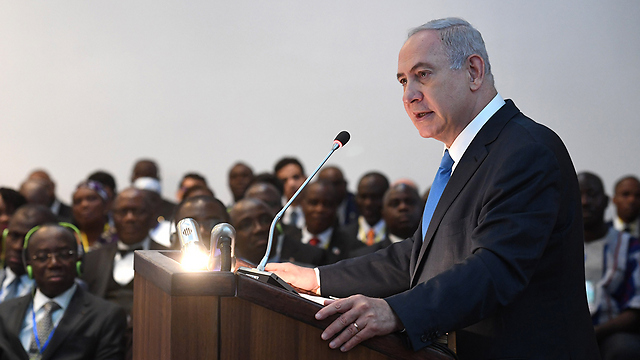
Netanyahu addressed ECOWAS as a guest speaker on Sunday and met several African leaders, including Ibrahim Boubacar Keita, the president of Mali, a Muslim state with whom Israel has no diplomatic relations.
A statement from Netanyahu's office said Senegal had agreed to support Israel's candidacy to become an observer nation at the Organization of African Unity.
The two states also agreed to resume joint projects and cooperation in security and agriculture, the statement added.
Senegal, New Zealand, Malaysia and Venezuela, sponsored last December's Security Council resolution demanding Israel end its settlement activity on disputed territory which the Palestinians hope will be part of an eventual independent state.
Netanyahu recalled the envoys to Senegal and New Zealand, Israel has no diplomatic ties with Malaysia and Venezuela.
The resolution passed in the 15-member Security Council because the United States, under the administration of former president Barack Obama, broke with its long-standing approach of diplomatically shielding Israel and did not wield its veto power, instead abstaining.
