


‘Not an ordinary commander, not an ordinary man,’ the story of Maj. Tal Grushka OBM
“There’s a 14-year gap between Tal and me,” says Hadar Sitton, sister of Maj. Tal Grushka. “Hearing the news that Mom was pregnant when it hit me in adolescence, it was very special. He was born when I was 14. It was love at first sight. Pure, blue eyes, a button nose, you fall in love with him from the first moment. I felt I’d been given a gift. It really was an internship in parenthood.”
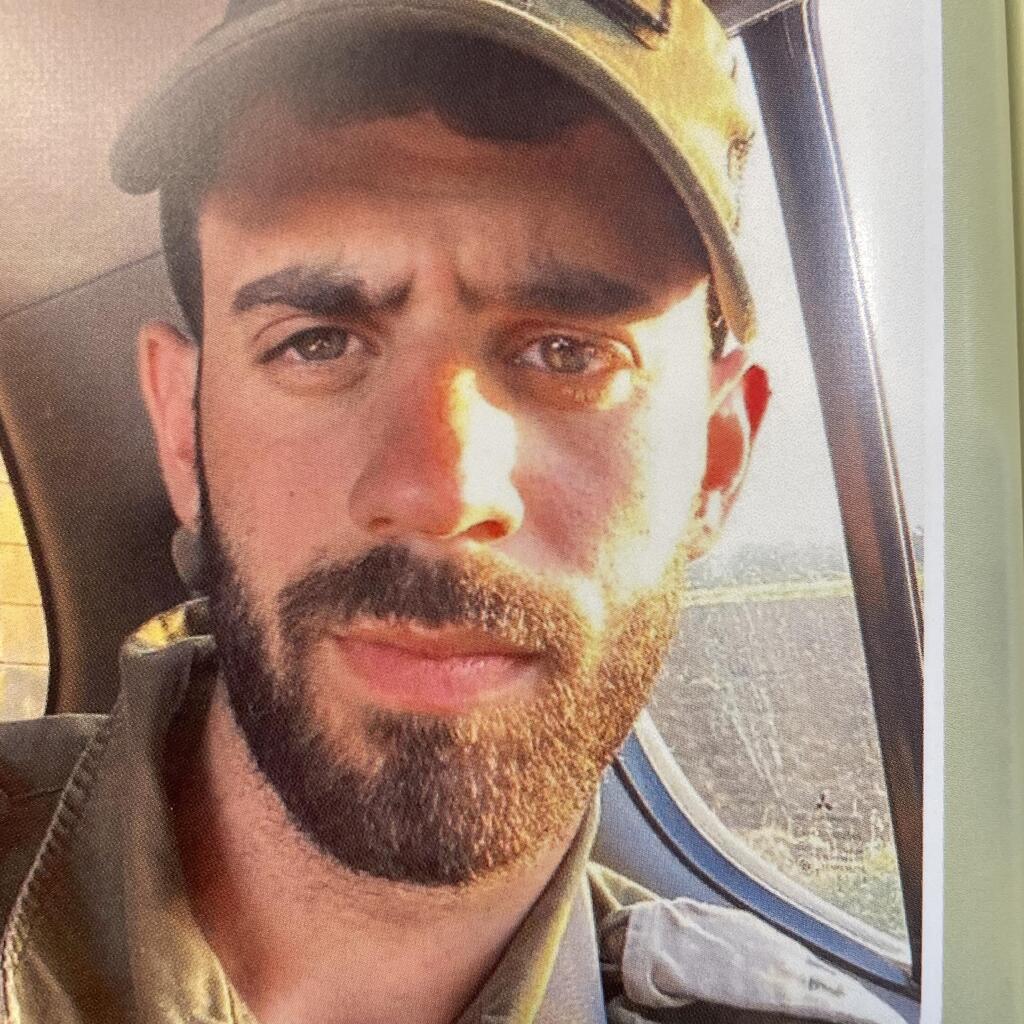
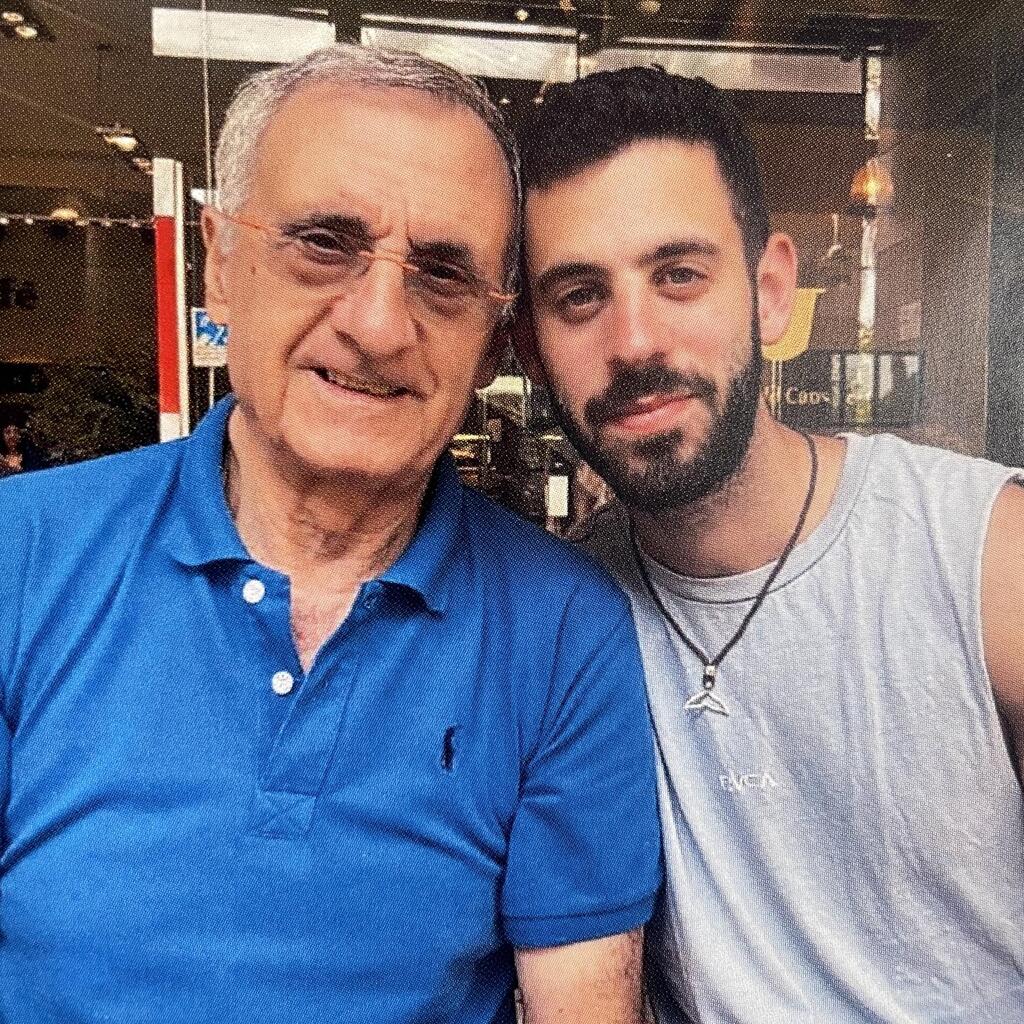
Tal Grushka was born in Kfar Saba on the 21st of Cheshvan 5758 (Nov. 21, 1997), the son of Adva and Yosef (Yossi). He was a younger brother to Itai and Hadar, his mother’s children from her first marriage and to Itai and Yael, his father’s children from his first marriage. From childhood, a rare talent was evident in him: He played the piano from age 5, and at 9, he was studying Chopin. “You see his little hands plucking at the piano,” his father, Yossi Grushka, recalls, “and it’s something you can’t believe. It looks almost superhuman.”
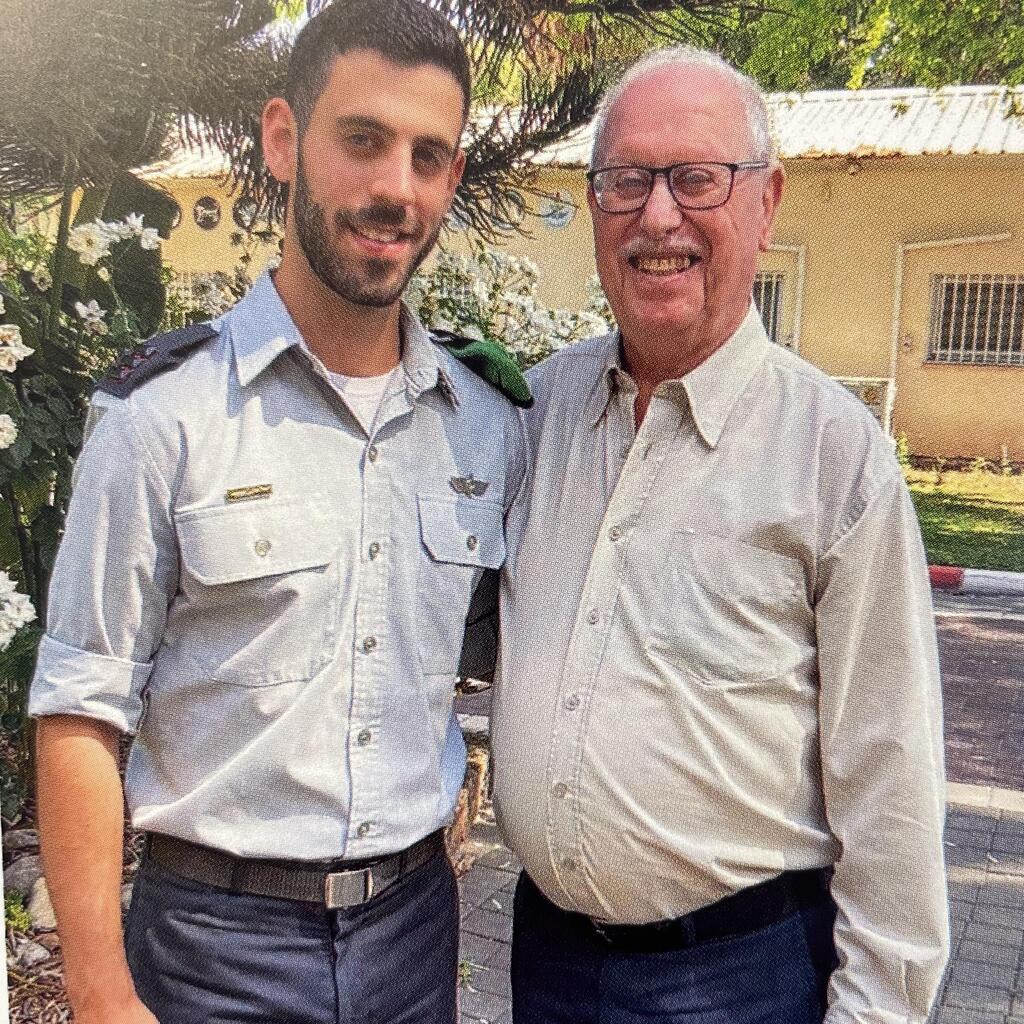
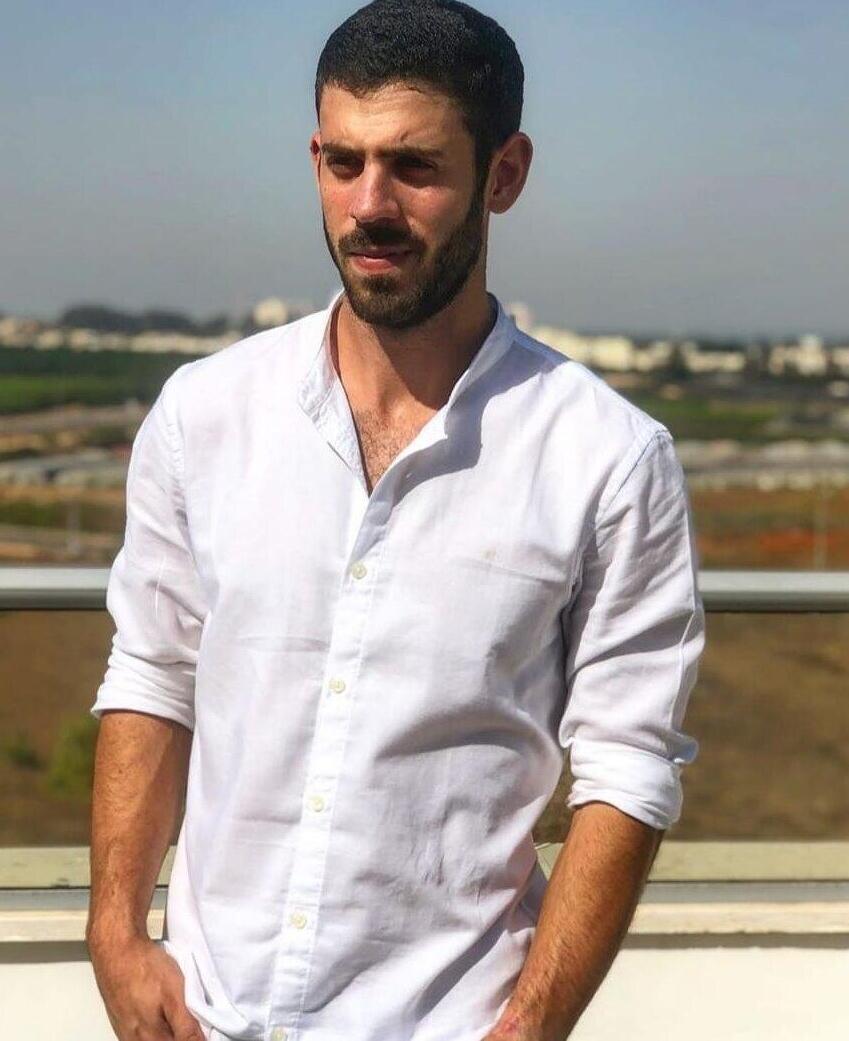
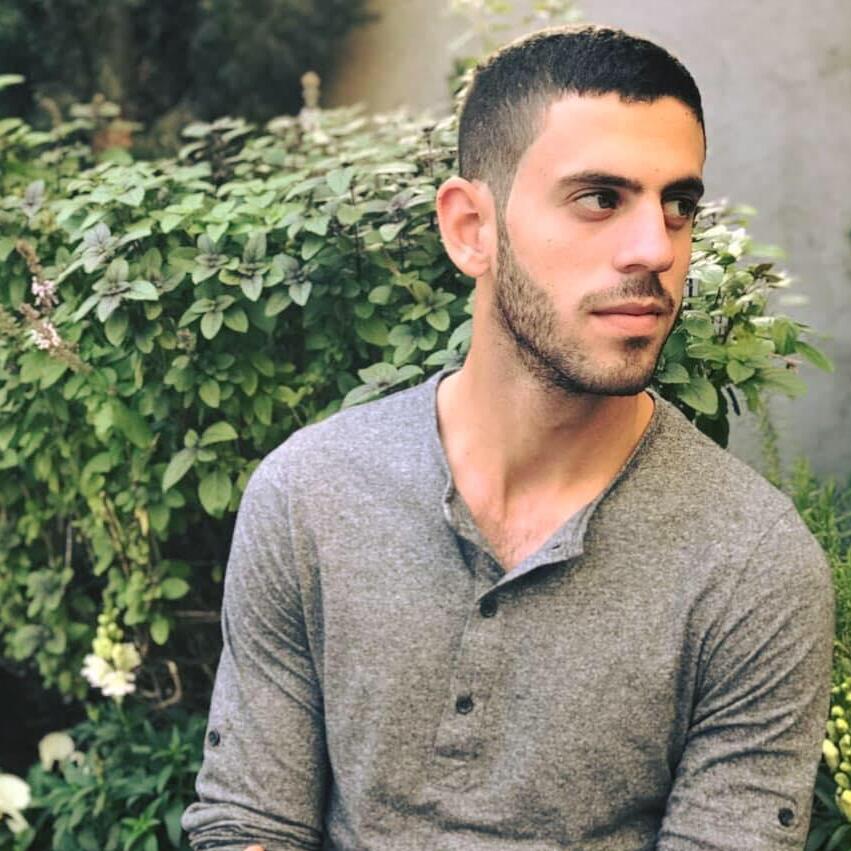
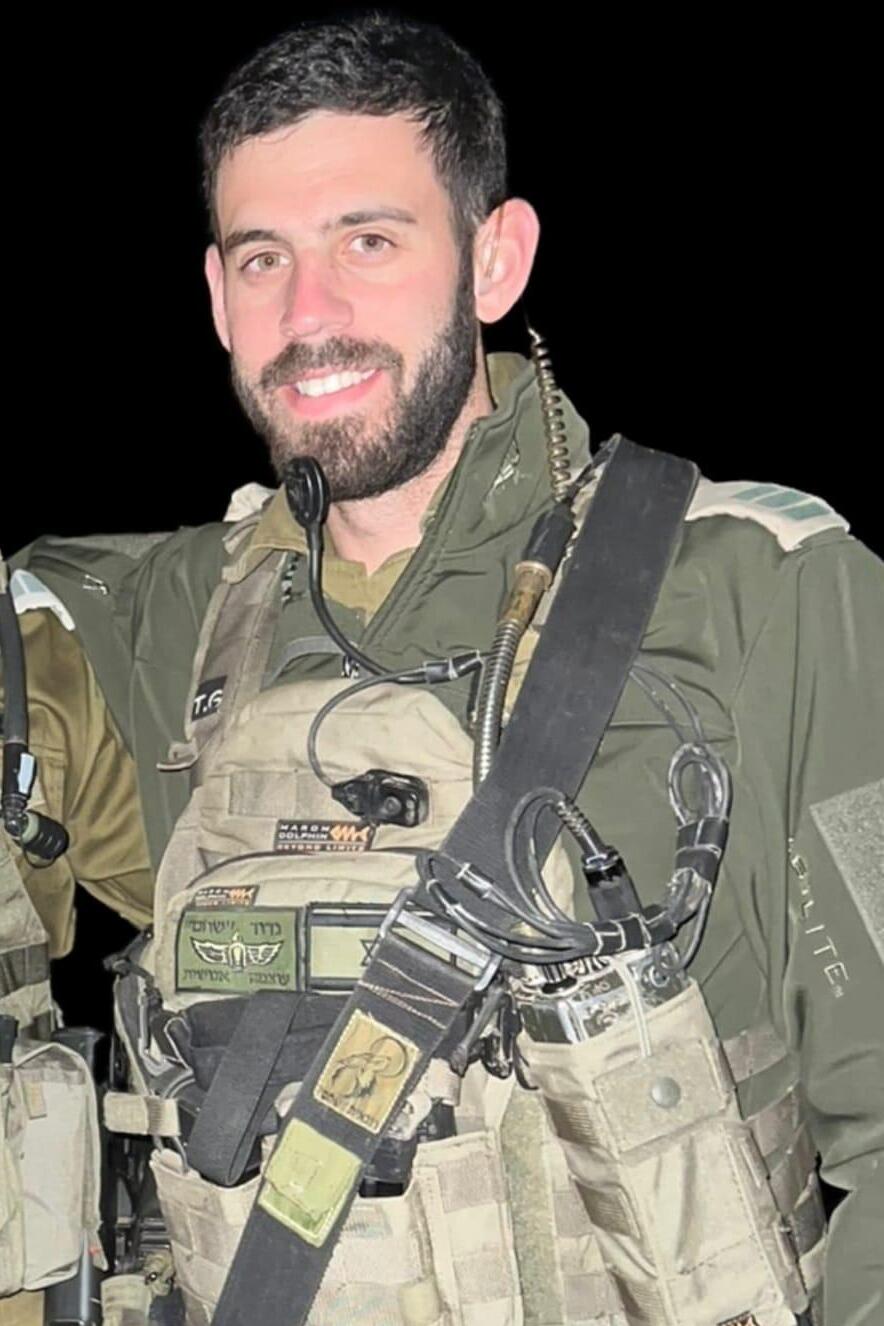
1 / 6
Hadar, his sister, smiles as she recalls a childhood incident. “Mom asked me to bring him in the infant carrier to the living room. I leaned it against my stomach and the carrier fell and he landed on his head. It became our running joke that everything that happened after that, all his creativity and talent, was thanks to me moving his brain cells around.”
‘There wasn’t a speck of evil in him’
Even as a child, his sensitivity and emotional intelligence stood out. “From the day he was born, there wasn’t a speck of evil in him,” his father Yossi says. “Truly, I don’t remember him ever getting angry. He always went in a good direction, never in a bad direction.”
Alongside his love of music, Tal also excelled in sports. He played soccer for Hapoel Kfar Saba and Ironi Rosh HaAyin and earned the respect of his peers. Later, together with friends from the neighborhood, he founded the soccer club M.S. Hanita, which became a second home. There, he was a player with heart and a central figure.
“Tal and I met when we were about 6 or 7, through soccer,” recalls Tal Adini, a childhood friend. “From there the connection formed, sleeping over at each other’s houses, studying for tests, eating together. My mom was always impressed by how polite he was. Everything — thank you, thank you very much, please. Small things, but unique.”
Adini goes on to describe Tal as “everyone’s best friend,” explaining: “Tal was everything. Everyone in the group will say Tal was their best friend. He knew how to talk to everyone, make everyone laugh, touch everyone.”
A child who wrote about Zionism and pain
His father Yossi says that from a young age, Tal wrote poems and reflections. He dealt with complex subjects, such as Zionism and the meaning of service. “He wrote; why should I be a Zionist, why should I be a fighter. From a young age, he spoke about his place in the world, to save people, to do good, to take on a role.”
Even when he faced personal difficulty, such as being a short child, he turned it into a song, “It’s hard to be short.” “He experienced the pain, understood what it means to feel a bit on the side,” his sister Hadar says, “and from that he developed social skills. He was everyone’s best friend.”
Military service - a career of excellence
His friend Adini describes the pre-enlistment period. “We wanted a meaningful service and to contribute as much as possible to the country. It was clear to us that combat was the path, and we invested quite a lot of time in it. We would go two or three times a week to combat fitness. From the first moment, I had no doubt that he would stand out and excel in whatever military framework he reached.”
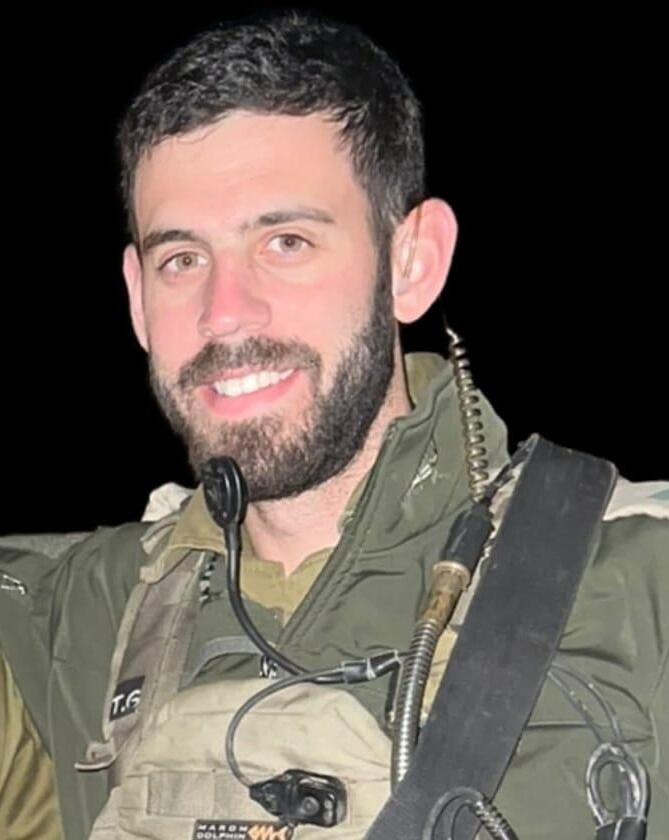
In March 2016, Tal enlisted in the IDF and was assigned as a fighter in the Orev reconnaissance unit of the Nahal Brigade. He went to squad commanders course and later served as a squad leader at the IDF’s Infantry School, where he excelled. After officers training, he returned to Orev as a team commander. He later commanded a rifle company in the 931st Battalion, and eventually received his dream assignment, commander of the Orev unit, a role he was slated to assume in October 2023.
His commander, Lt. Col. A, deputy commander of the Nahal reconnaissance unit, describes Tal as a rare person. “When he finished Bahad 1 and received a mandate to be a team commander — that’s rare. Only a select few do that. When you talk about an officer of the Land of Israel, that’s Tal. He knew how to demand of the fighters, to be professional, but also to be their friend. A balance that’s hard to achieve.”
Tal viewed military service as a mission, not only rank. As an officer, he returned to Orev and served as a team commander for about two years. During that period, he identified a decline in motivation for combat service among young people and initiated an outreach effort to the mayor of Kfar Saba. In his letter, he proposed establishing a project called “From Uniform to Unit,” in which combat soldiers who were high school graduates would share their personal experience to encourage younger students to choose meaningful combat service.
Lt. Col. A says Tal “knew when to show strength and aggressiveness, and when to give a cup of water to a Palestinian child who had nothing to do with it. The spirit of the IDF was always present in him.”
A different kind of leadership — in everyday life, too
Beyond being a professional commander, Tal cared for his soldiers as people. He insisted on basic values, respect, equality, giving. Before each weekend, he asked his soldiers to call their grandparents and wish them Shabbat shalom. The instruction became a legacy that continued after his death.
“That was his mindset,” his commander says. “Always to do good for others. To show how OK he is, so others will be OK, too. Before Tal the officer, there was Tal the person.”
He was present everywhere. “There was no situation where he sat on a couch and disappeared into his phone,” his sister Hadar says. “Always hugging, making jokes, sharp, reaching people.”
October 7, the final battle
On Saturday, Simchat Torah 5784 (Oct. 7, 2023), Tal was at the Nahal base in Gush Etzion. When the Hamas attack began, he and his soldiers were rushed south. On their way to Kfar Aza, they encountered an ambush. “Tal shouted to his soldiers, ‘Contact!’ and in doing so saved them from the initial shock,” his commander, A, says. “He moved toward engagement, closed the vehicle door and saved the driver, but was critically wounded. His entire world of values converged in that moment, with his fighters, with his land, with his people.”
“I will never forget that day,” his father Yossi says. “Three officers came to the family home and knocked on the door. You feel the blood drain from your body,” he says. “The head empties. You know the worst has happened.”
Captain Tal Grushka fell in battle at Kfar Aza. He was 26. He was laid to rest at the military cemetery in Kfar Saba and was posthumously promoted to the rank of major.
A legacy of love of people
Since his death, his family and friends have commemorated him in various ways. His soccer team changed its name to M.S. Grushka Hanita. An annual tournament is held in his memory. Songs were written and composed based on words he wrote. Educational initiatives were created, all carrying Tal’s spirit.
His sister Hadar wrote a poem about him: “I remember you, a baby… a piano bigger than you… a determined, humane soldier… this Tal will still be chief of staff.”
Knesset member Chili Tropper wrote: “Tal was a young man blessed with talents. A rare combination of a gifted pianist and a brave fighter. For him, everything was a way of life of giving and love of people.”
His sister Hadar concludes: “Since October 7, a very big bubble in our lives has burst. We won’t have any more grandchildren. But what brings comfort is that Tal dictated to us exactly what to do. We have his testament, the values he left. We want to continue raising our children that way, with the values Tal left behind.”
May his memory be a blessing.
Major
Tal Grushka