


The Officer and Gentleman Who Went Out to Defend His Family and Fight Terrorists Without a Moment’s Hesitation
When Lt. Col. Sahar Zion Machlof faced the terrorist attack on his base on October 7, he did not hesitate for a moment. Although he was not a combat soldier and despite his role as a communications officer, he immediately took up a weapon, dressed in civilian clothes, and went out with a group of fighters to defend his soldiers and his family. He put his life at risk and fought the terrorists with bravery. During the battles, Sahar was shot in the abdomen and fell in combat.
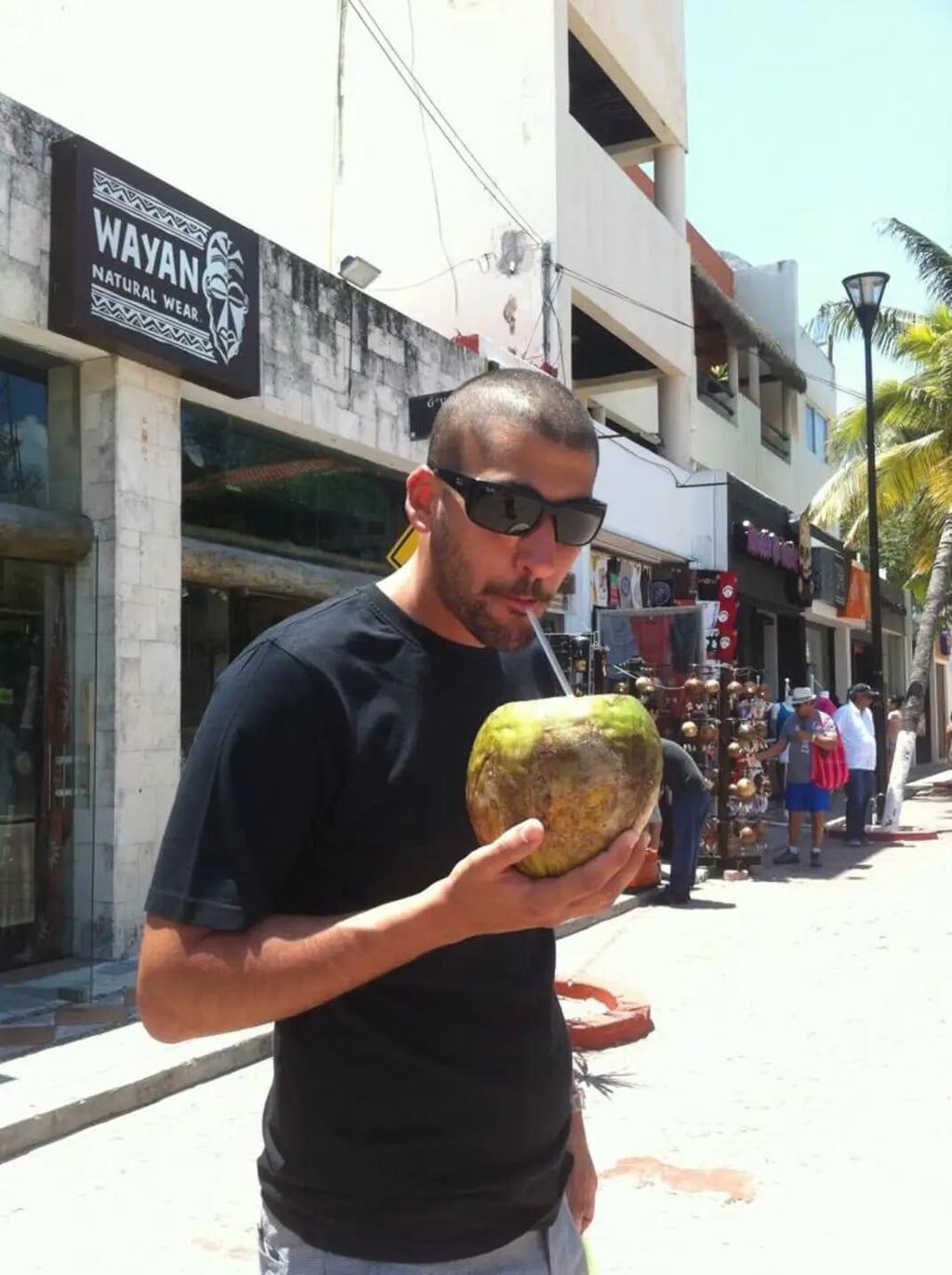
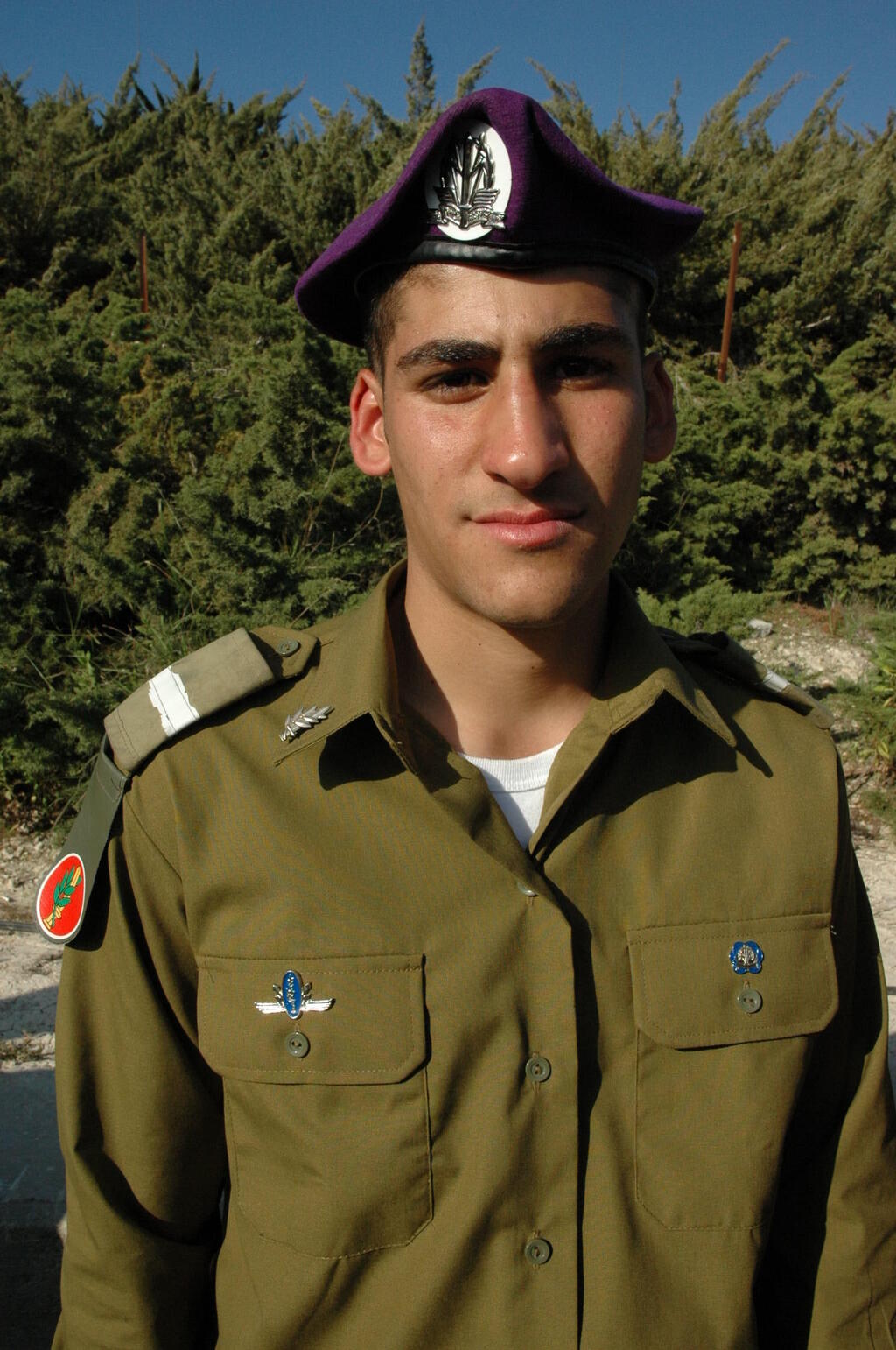
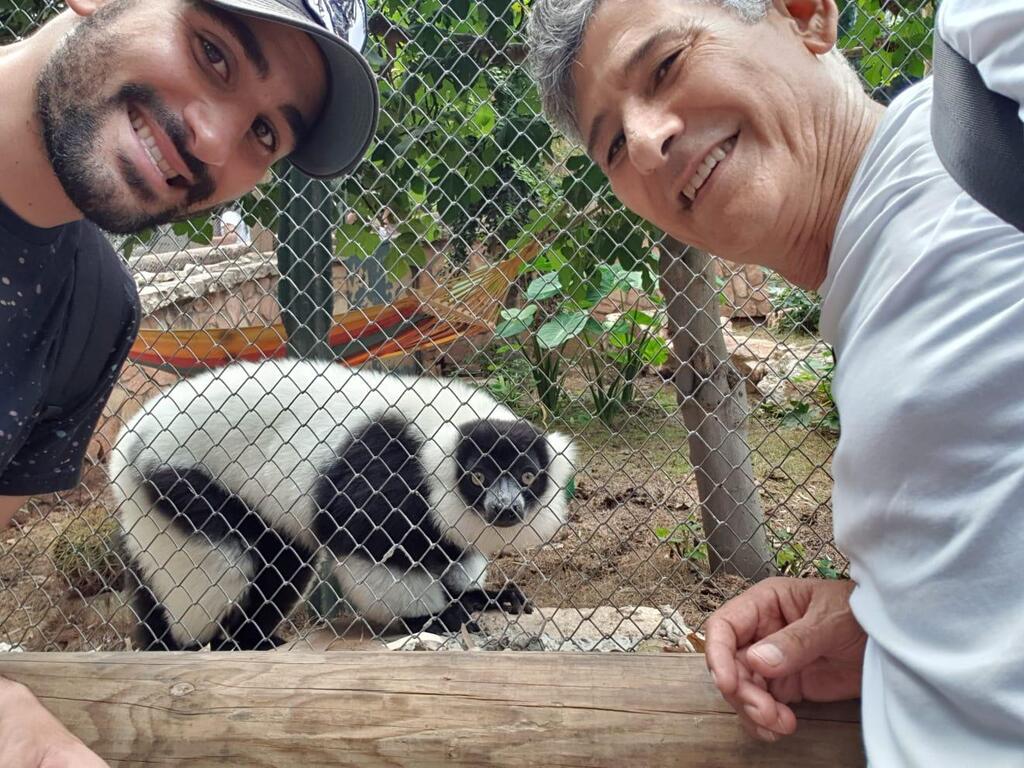
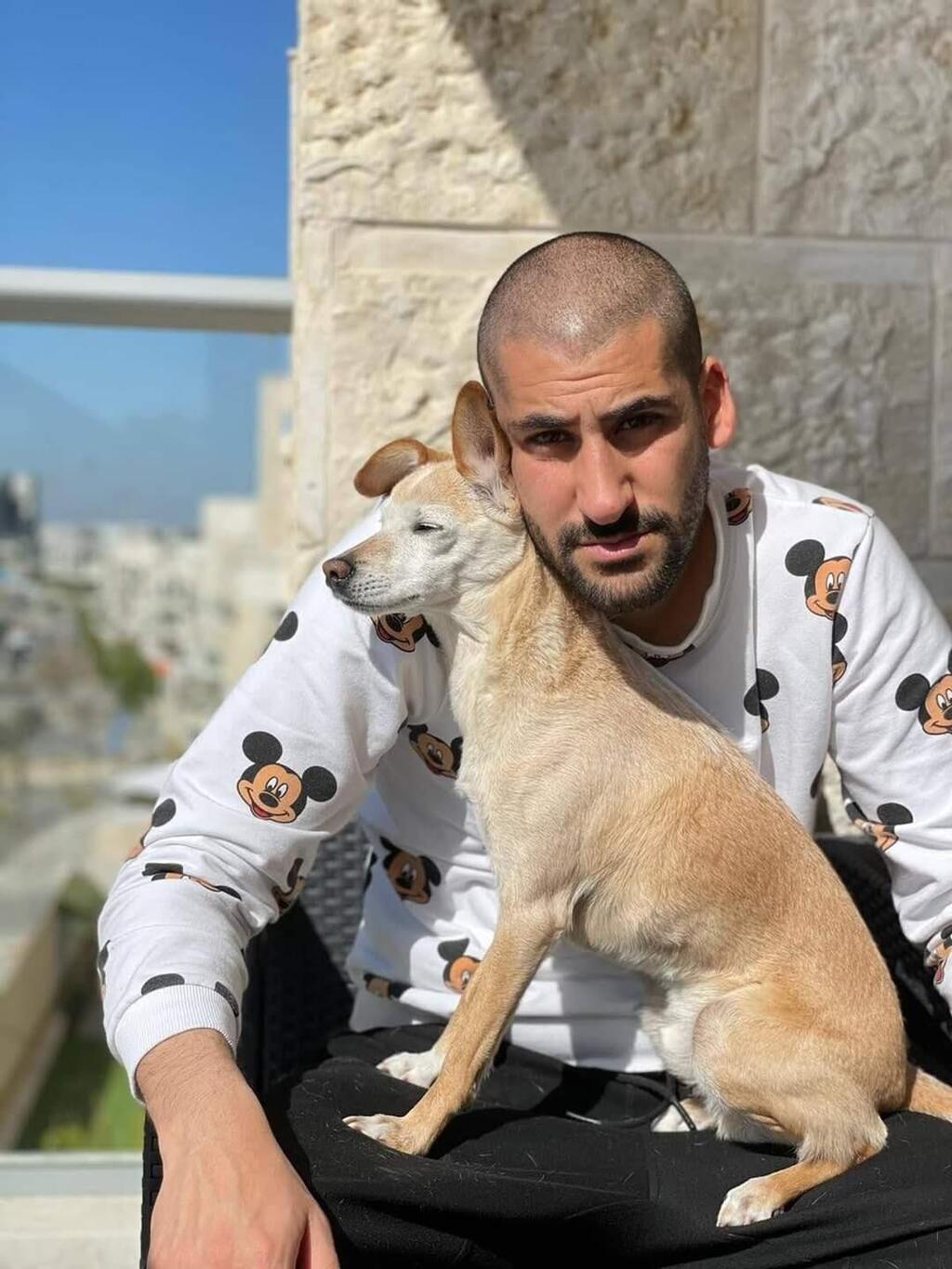
1 / 10
The son of Ofra and Moshe, he was born on the 10th of Tishrei 5747 (October 13, 1986) in Holon. A younger brother to Meital, he is survived by his wife, Shirley, and their three sons: Yotam, 7, Omer, 5, and Lavi, 3. From childhood, Sahar had a strong drive for excellence and never gave up on the goals he set for himself. “He was a curious child, he knew how to tell jokes,” says his father, Moshe. “He knew how to gently throw people off balance without hurting them. He had ambitions to reach the maximum. Even though he got such high grades, he always aimed for 100.” His sister, Meital Machlof Eliyahu, remembers a mischievous and happy child who always made her feel good. “When Sahar and I were kids, we were very silly together, always creating a sense of togetherness for each other, even if we weren’t talking,” she says. She also recalls that Sahar knew how to push people out of their comfort zones and help them discover strengths they didn’t know they had. “When he was 4 and I was 8, he had to undergo nose surgery,” Meital recalls. “When it was time to go into surgery, he asked that I accompany him. I was asked to hold his hand while they administered the anesthesia. Even at that age, he had the ability to pull people out of their comfort zones.”
Sahar Zion grew up and was educated in Holon. From an early age he was curious, inquisitive and loved to read books, study and learn. He had a calm, serene personality and a constant smile on his face. He studied at Campus Kiryat Sharett High School in Holon in the robotics track. As part of the program, he represented his school in a competition in the United States, where they placed fifth. “He could turn anything from seriousness to laughter, and from laughter to seriousness, in seconds,” his mother, Ofra, says. She describes a child with endless curiosity. “His most prominent trait in childhood was taking toys apart to understand what they were made of and how to put them back together. He studied physics and robotics at the highest level.” Ofra describes a joyful child who loved playing with his many friends. “He was crazy about soccer,” she says. “They would play with all the friends. He gave his friends the feeling that each one of them was his best friend, but all of them together.”
On December 6, 2004, he was drafted into the IDF and served in the C4I and Cyber Defense Directorate. He began his command path after completing officers’ training. As an officer, he fought in the Second Lebanon War in 2006 as part of the Combat Engineering Corps.
He met his wife, Shirley, during their military service. He was a C4I officer in the Kfir Brigade and she was a C4I officer in the Steel Formation (162nd Division). “From the start, we had a very strong friendship foundation,” Shirley said. “We gave each other space to grow. He focused on his military career. I saw that this was the direction he wanted and that it was good for him, so I supported him, and he supported me in the choices I made.” Shirley also said of him: “Sahar had all the lethal combinations: gifted and brilliant but with his feet on the ground, razor sharp but with a soft, embracing heart. Rational, calculated, a first-rate strategist, and at the same time creative, easygoing and someone who was so easy to be around. Serious and tough, but also playful and the center of every group. An awe-inspiring commander, but also a commander who was like a father figure, approachable. A father and partner for whom all the positive, exalted words Eliezer Ben-Yehuda ever invented would not do justice. One of a generation.”
His sister recalls how he met Shirley. “Meeting Shirley happened in the least surprising place, the army, which was his entire world,” she says. “It was clear to me that there he would find his other half. He brought into his relationship so much of who he was outwardly with other people: patience, encouragement, empowerment, seeing your partner and giving them the ability to advance and grow.”
His mother speaks of the family man Sahar was. “They have three sons: Yotam, 7, Omer, 5, and Lavi, 3. He was very sensitive to them. He would make them dinner, bathe them, play with them. When he came home, that was home.”
“A commander who cared for all his soldiers”
During his years in the army, he held many positions. He began as commander of the communications platoon of the Asaf Battalion (601) of the Combat Engineering Corps and continued in officer roles. He later commanded the Amirim Battalion (376) in the Hosen Unit of the C4I and Cyber Defense Directorate. Brig. Gen. Nati, who served as the IDF’s chief communications officer, said: “Sahar was an exceptional officer, a professional and a gentleman. A promising officer, a beloved and admired commander, a professional and humble man.”
His mother says that as an officer, he always saw the soldiers who needed help and support. “When he was in Division 98, there was a lone soldier there,” she recalls. “On one holiday, he was sleeping at Beit HaLochem. On the eve of the holiday, Sahar knocked on his door with a microwave and food and told him, ‘This is for you.’ He helped him with every option the army could give a lone soldier. He constantly made sure his soldiers were satisfied. He always knew how to show appreciation.”
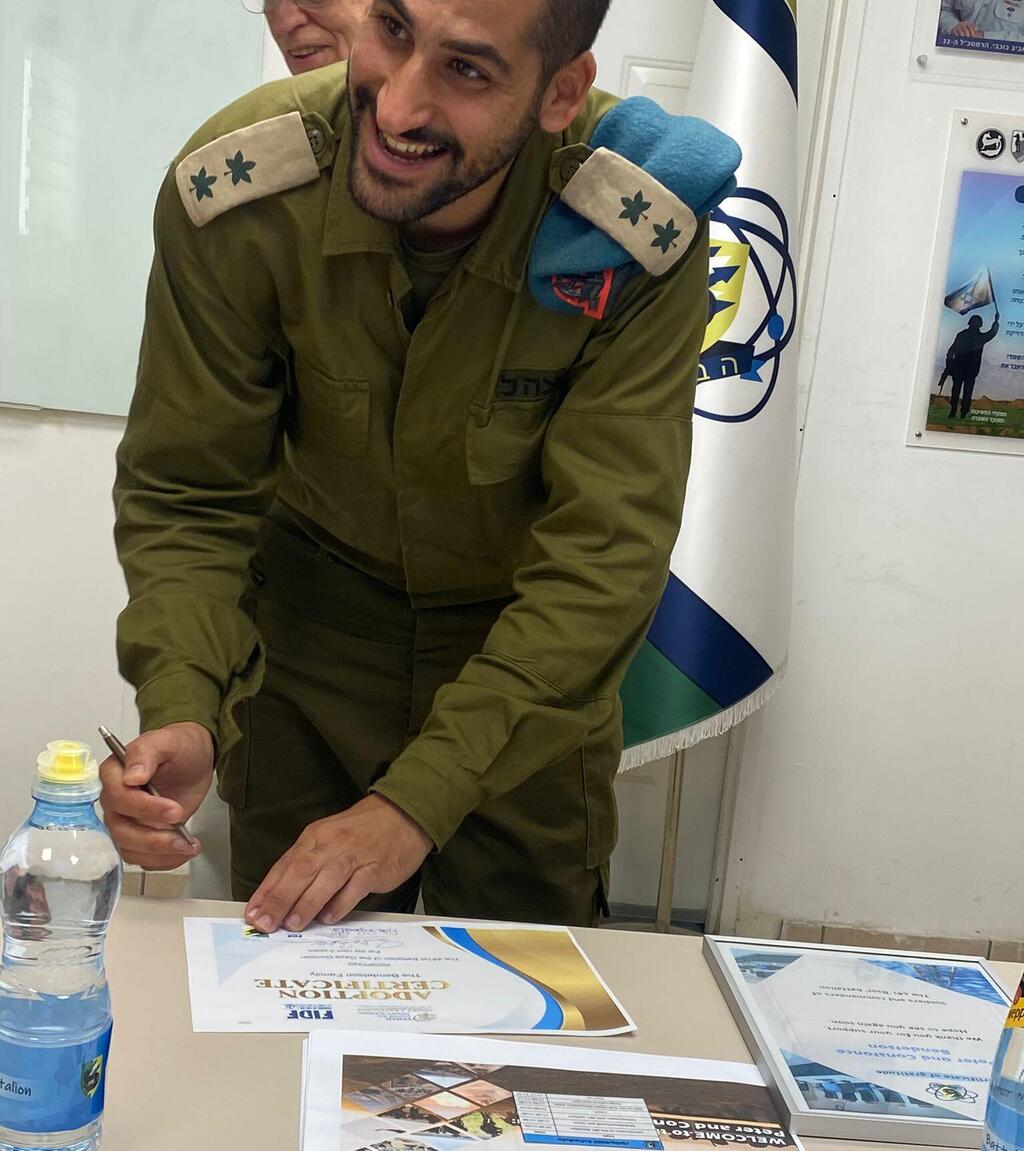
His choice of corps was not accidental. “Sahar chose communications because there is a lot of knowledge there and he thought he could contribute the most in that field,” his father explains. “He was a commander who cared about all his soldiers. He saw them at eye level.” Alongside his military service, he completed two degrees with honors: electrical and electronics engineering at Azrieli College of Engineering in Jerusalem, and economics and business administration. His dedication to his role made him a decorated officer. In 2021, for example, as a battalion commander in the 376th, he received a citation from President Isaac Herzog after the battalion under his command was selected as an outstanding reserve unit.
In 2022, he was appointed commander of the 481st Communications Battalion in the Gaza Division. On weekends when he was on duty, his family would stay with him at Re’im base. “We were one of those annoying couples who couldn’t imagine spending a single weekend apart,” his wife said. “He was my best friend, and because we weren’t together during the week, the Sabbaths were very important to us and to the children. You can’t explain what an experience it is for a child to spend Shabbat there.”
“He always had to be the first”
On that cursed Sabbath, Sahar was at Re’im base with his family. “They woke up at 6:30 a.m. to the sound of sirens, ‘Red Alert,’” his mother recalls. “They jumped out of bed. Sahar held Yotam and Omer, the older boys, by the hands and they ran to the operations room. When I woke up and called to tell my mother, a 90-year-old woman, not to be afraid and to go slowly to the safe room, I found myself calling Sahar. From the phone I heard, ‘Red Alert, Red Alert,’ sirens, as if you were inside the division. I asked him, ‘Sahar, how are you?’ He told me, ‘Mom, we’re fine here, don’t worry.’ That was my last conversation with him.”
Sahar did not waste time and immediately went out to fight. “He went out wearing a T-shirt, BDU pants and flip-flops. He took a weapon from the operations officer and went to fight,” his mother says. “He realized that there were terrorists who had actually entered the division. They were approaching the operations room and the living quarters. In the women’s quarters there was an asbestos structure where a terrorist was hiding. Sahar stood up to see what was happening, the terrorist shot him in the abdomen, and he was killed on the spot.”
His father explains that Sahar was not obligated to go into danger and fight the terrorists. “Sahar, in fact, was not a combat fighter,” he says. “He could have stayed in the operations room, operated his communications equipment and remained there, because that was his job. But when he saw that all the systems had already been blown up and there were no systems to operate, and Sahar being Sahar, he always had to be the first.” His mother describes how Shirley received the devastating news. “In the afternoon, when Shirley realized something was wrong and it couldn’t be that she hadn’t seen Sahar for so many hours, only around 5 p.m. did one of the officers take her aside and say, ‘Shirley, come with me to the room.’ He told her, ‘I’m sorry to inform you, but Sahar has been killed.’ From that moment, her world went dark.”
Sahar’s father recalls the moment of the notification, which he tried to delay as much as possible. “Around 11:20 p.m., there was a knock at the door, and I told Ofra, ‘Don’t open,’” he says through tears. “A major came in, along with a medic and two nurses. I grabbed him by the collar and said, ‘I want you to tell me one thing: Is he dead or captured?’ He told me, ‘He’s dead.’ I said, ‘Tell me now what’s happening with his family. At the base, did they survive? Where are they?’ He told me, ‘Calm down, they’re on their way home.’”
“When the light of the crescent went out, we woke from our slumber”
His sister commemorated her beloved brother with a black-and-white lotus tattoo on her arm, adorned with a crescent moon. “One of the things I chose to commemorate him with is the tattoo on my arm, essentially taking the meaning of his name and expressing it through the tattoo combined with a flower. A flower symbolizes several things. One, that he was cut down too soon. The lotus is a flower I love very much, one that always floats above very difficult, complex areas. I think it connects to the point that from the moment he is no longer here, you have to find balance and learn to float again.”
Sahar’s father speaks of many initiatives by soldiers who want to commemorate him in their own way. One commander donated a Torah scroll to the Gaza Division in his memory. Another, who works in jewelry, made necklaces for the family. “They spoke of Sahar as a commander who was sharp. His demands were to be focused in every task and do the very best, and at the same time to be the softest and warmest with his soldiers and protect them.” Sahar’s mother emphasizes the change the family has undergone since his fall. “As a family, it’s not the same life path. Life has changed,” she explains. “Each of the three, as I say, took some part of him. There is Sahar. We talk about him freely. We say, ‘It’s hard, I miss Dad Sahar.’ ‘I want Dad Sahar.’” “I think one of the most central things that left its mark on me is his tenacity of purpose,” his sister says. “The ability to always maintain the professional side, to advance, lead and do, and also to remember to laugh and be cynical about life. That’s what he was good at. Because in the end, there is no other option.”
As part of various commemoration efforts, the city of Modi’in-Maccabim-Re’ut decided to name a promenade near the family’s home after Sahar. At the entrance to the promenade stands a memorial stone bearing the story of his life. Wine & Friends produced a red wine in his memory. Galil Yosef Gold and Sons Winery, producers of Elite Arak, produced arak and arak glasses in his memory. The Holon Tangent Holon women’s circle dedicated a food delivery to 100 female soldiers of the Gaza Division in his memory. At Amit Comprehensive High School in Sderot, a memorial booklet was produced for two fallen officers in the war, Lt. Col. Sahar Machlof and Col. Asaf Hamami. To mark the publication of the booklet, a ceremony and sports day were held on Oct. 29, 2024, including a paintball tournament for the school’s students.
A friend of Sahar’s, Yoav Wasserman, wrote a poem in his memory:
(In Hebrew, “Sahar” means crescent)
“When the light of the crescent went out, we woke from our slumber / For days now the news has still been echoing / When the light of the crescent went out, something was sealed / Fear took over and we don’t know where to // But the light of the crescent did not go out, it only changed shifts / With the rising yellow, radiant sun / And when it rests in the sea, his light begins to emerge / Every night anew, when the heart continues to race // Toward the clear crescent light that only changed shifts / With the great sun, joyful and laughing / When it rests in the sea and the skies turn red / His light rises high and illuminates the stars // Just sing me a lullaby every night anew / So we know you are here, that you will always light the way / And if the crescent light is thin, it is present, it shines / It leaves dust on the horizon for a small star, a star that is growing.”
May his memory be a blessing.
Lieutenant colonel
Sahar Machlof