


The heroic operations NCO who ran in pajamas and flip-flops to the command center under fire
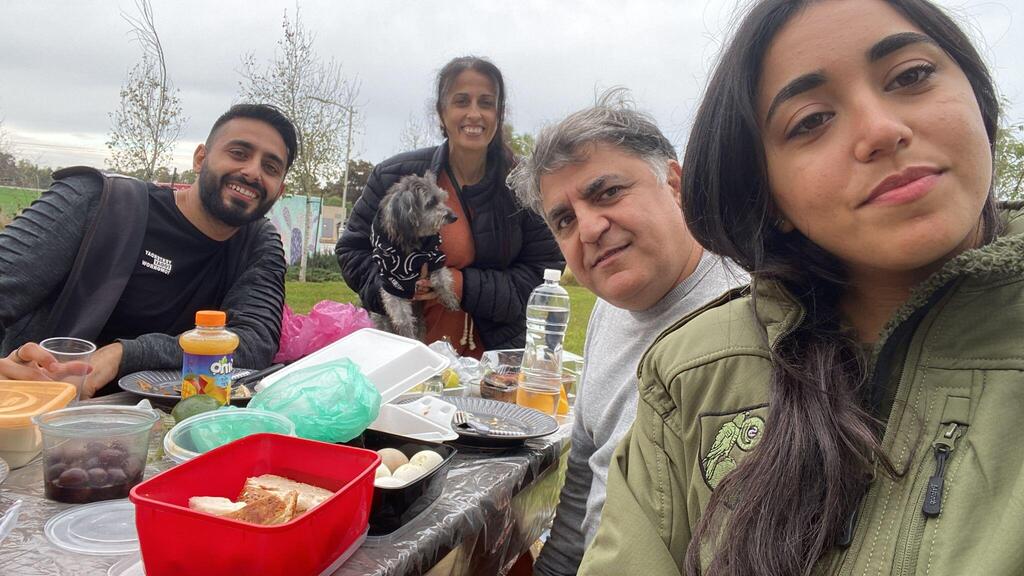
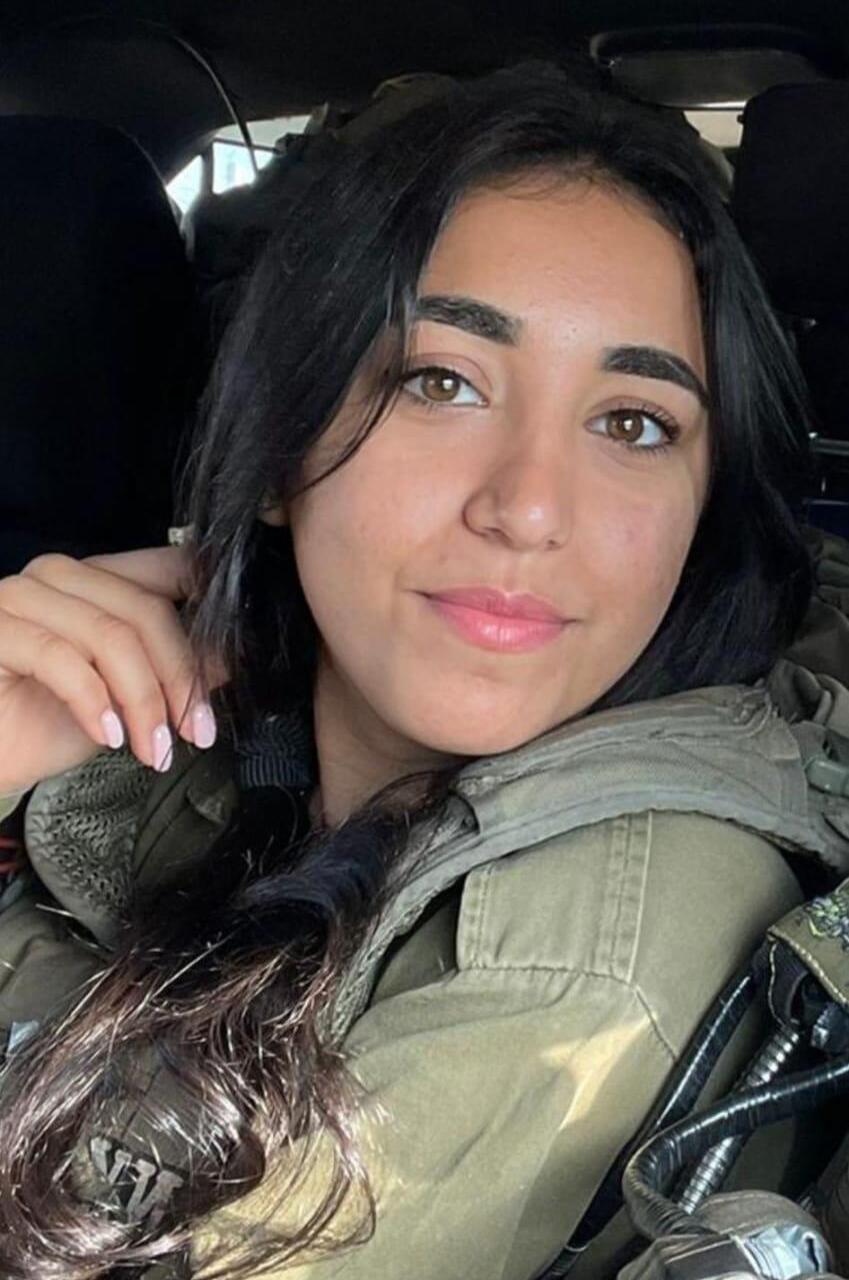
It was the last Sabbath of Staff Sgt. Shirel Haim Pour at the Nahal Oz base. Shirel, an operations NCO from the Northern Brigade, went out to report to IDF forces about the infiltration of the base she loved so much. She was only 20 when she decided to leave the shelter and run to the command center under fire so she could carry out her duties, with unimaginable courage. Soldiers who were with her said that until the final moment she helped them find places to hide and took part in defending the base in a firefight, under the surprise attack by Hamas terrorists. After 21 days in which her family hung between heaven and earth, not knowing what had become of Shirel, the National Institute of Forensic Medicine found her remains in the command center that the terrorists burned.

1 / 3
Shirel, known in her family as “the queen of the house,” was the youngest sister of Barak, Netanel and Lior and the only daughter of Eli and Tzameret. Shirel had a unique personality, full of joy for life. She loved to fly and travel the world, learn new languages, go out and simply enjoy life. She planned to travel the world after her release from the military. She was a devoted sister and friend who always cared for everyone she loved, wholeheartedly and with deep commitment and concern.
Her brothers describe a girl with nonstop giving, who loved showing those close to her how important they were to her and would do anything for them. “As a sister, Shirel was an amazing sister, very loving. Not loving in words, loving in actions,” says her brother, Barak Haim Pour. “She would do anything for me and for my brothers, for my parents, for her friends. Truly anything. Buying things, ordering us things we need, checking on things even on the level of I’ve got something on my face that popped up, and she’s a bit into cosmetics, she’ll look into it and check and order it without me asking.”
Shirel’s sense of camaraderie and devotion to everyone she knew guided her in every path she took. “Values like excellence, like comradeship, those are things that always, always led her,” her brother Barak explains. “Everything she did, she did all the way.”
Barak says Shirel was an outstanding student throughout her school years, in everything she did and everything she chose to do. “In elementary school she was outstanding, in middle school she finished as outstanding, in high school she was outstanding with high honors and social excellence. In the army she received four different certificates of excellence and received recognition from the brigade commander.” At first, she refused to accept the award because she was modest and humble.
Shirel expressed her love for those around her through actions, explains her brother Lior Haim Pour. “She was there for literally everything,” he emphasizes. “She wouldn’t come and tell you how much she loves you and how much she missed you. You would know because you’d come home and she would take care of you in every possible way. You wanted something, she would run to do it for you. No matter what, I was at work and I was missing clothes, she would run to buy them for me. I needed her to give me a lift somewhere because I got stuck one way or another, she would come and do it. And it’s in everything, someone comes and you sit with them, you won’t sit with them for five minutes, explain quickly and be done because I don’t have time. She’ll sit with them for hours if needed on anything and go over it 200 times.”
Noa Malka, her close friend, says she was the friend everyone would want, someone you could rely on in any situation, no matter what. “A true friend,” Noa emphasizes. “I also heard many people say that she was always there for them. Always listened and understood. She was a supportive shoulder for so many people. In addition, she was very stubborn about what she wanted, she wouldn’t give up. Anything she truly wanted, she would achieve. And if she didn’t achieve it, she would do everything to achieve it.”
'Nahal Oz is home'
Shirel’s choice of her role as an operations NCO at Nahal Oz was easy, her brother explains. It was important to her that her service be meaningful. She wanted to contribute as much as possible to the country. Despite the risk of serving on the border, she did not hesitate for even a moment. “She got the assignment as an operations NCO, understood it was a role with a big mission, a role with a lot of influence, with great importance, and the moment she saw that was the deal, she said, ‘Great, I’m going for it,’” her brother Barak says. “Immediately after she finished training, she transferred to the Nahal Oz post.”
Nahal Oz was not just a place for her, but truly a home. Her brother Lior quotes their slogan, which underscored their immense commitment to the mission and to guarding Israel’s borders alongside the Gaza Strip. “She would say, ‘Nahal Oz is home,’” he recalls with a smile. “It was a motto that led them. ‘Nahal Oz is home’, it was written on the wall at the entrance to the command center. She really felt that way. She loved going back to base, she loved being there. She lived her role with devotion, I’ve never seen anything like it.”
“She loved her job like crazy,” Barak explains. “She was very professional at her job, really a source of knowledge for everyone in the role. In the command center she felt a very great mission. She did very meaningful service and did it in the best way, as was typical of her.”
A 20-year-old girl decided she needed to fight
On the cursed Sabbath of October 7, Shirel had finished her shift, but decided to stay in the command center until 3 a.m. to help the soldiers. After the terrorists infiltrated the base, a prolonged battle unfolded, nearly 50 minutes, at the command center door, as terrorists tried to break in. After they failed to breach it, the terrorists inserted an accelerant and burned the command center with everyone inside.
Barak explains that Shirel was on the verge of discharge. “It was the last Sabbath of her service. She was supposed to go on pre-discharge leave three days later. Together with her friends, like all of Israel, they woke up to sirens and the sound of rockets being launched. They got up, ran to the shelters, and very quickly they understood there was something different there.”
As the fight over the command center unfolded, her brothers tried to understand what Shirel was facing. Meanwhile, in Rishon LeZion, they sat in a shelter and tried to get a sign of life from her. “I text her in the morning, the simplest message in the world, ‘Shirel, tell me how you are,’” her brother Lior recalls. “She answers me around 6:30 a.m. with, ‘Everything is OK.’”
“Then I send her another message when I’m seeing more videos. She writes to me after that at 7, ‘I have no reception,’ and then at 8:30 another message with a heart. I just write to her, ‘Shirel, I’m begging you, every minute you have, text me.’”
Lior’s worry grew as videos of the terrorists began to appear on Telegram. “Suddenly we’re all in the shelter, and I’m getting videos that it’s escalating,” he says. “We already understand it’s bigger than we think. And little by little you get videos where you recognize the Nahal Oz post. And you realize that, wait, something here is … terrible.”
Barak says Shirel did not miss a single moment and did not wait. Instead of staying in the shelter, the safe place, she immediately ran to the command center to help forces reach everyone who needed them and to defend her base. Her self-sacrifice is unimaginable: As the base was flooded with terrorists, she did not give up and went out to carry out her mission.
“When she understood something big was happening and understood they needed her, she decided to leave the shelter and run together with the tracker who was with her, to run to the command center and do her job,” Barak says. “That’s what she did in pajamas and flip-flops after she hadn’t slept all night. A 20-year-old girl decided she needed to fight her war and her battle, and ran to the command center and helped all the girls manage the incident, to send reports to the forces: where terrorists are, where to go, whether to the party, to communities, to any place where it was relevant to send the force.”
Meanwhile, in the shelter in Rishon LeZion, Lior did not stop sending her messages, trying to understand her condition and whether she was OK. The worry was at its peak because he understood this was an exceptional incident they had not anticipated or prepared for. “My messages are just pleas for her to answer me, just to answer,” Lior recalls. “‘Answer what’s going on, and I know there’s chaos by you.’ Suddenly she answers me after half an hour and writes the smallest thing in the world: ‘I have no reception but everything is OK, and take care of yourselves.’”
At the same time she wrote that everything was OK, Barak explains, she already knew how grave the situation was. But she did not allow herself self-pity or to stir worry. Instead, she was entirely focused on the mission in front of her. “At that time, also according to all the investigations, we know that when she wrote those things, she knew very well that nothing here was OK,” Barak says. “She knew very well there were terrorists inside the base, and they knew the situation was bad. But from her perspective, it wouldn’t help her to alarm us, or God forbid that she knows what’s happening across the sector, that I, my brothers, my father, someone might by mistake drive to the area and, God forbid, something would happen to them.”
Noa, her friend, emphasizes that Shirel did not let anyone worry and did not want people to fear for her safety, even though the situation was very bad. “She didn’t let us even for a moment think that something bad was happening,” she explains. “I was sure everything was fine, that she was coming back from it and she was safe and nothing was happening to her.”
Shirel understood her family was worried and, even as she was on a mission to save lives, sent them messages so they would not worry about her. “She cared about us more than she cared about herself there, when she was inside hell,” Lior says. “A 20-year-old girl, inside a mess with terrorists around her, she already knows everything is probably going to end. She sends messages to me, sends messages to my mom that everything is OK. The last message I got from her was at 10:30 — just a heart and ‘I have no reception.’ And from there it ended. Since then there has been no more response from her.”
Barak and the family set up an improvised command center in a desperate attempt to understand what happened to Shirel. “For 21 days she was missing,” Barak recalls. “We opened a kind of home command center to try to understand what happened. Talking with people who were with her, who got out, who fled, families, people who had served with her in the past. We tried to glean every piece of information, calling every possible hospital in the country to understand if somehow she could have arrived there. After 21 days we received that terrible news.”
Lior explains how proud the family is of her and of her extraordinary courage. “She left an enormous absence. An enormous absence. I’m proud of who she was. I’m proud of who she was and of what she did.”
Since Shirel’s death, the family is not the same. “The entire family changed, and not only in its physical makeup,” Barak explains. “In our daily life, in our emotions, everything is completely different. We try to simply be together, the whole family. We try to be strong. We try to talk about her as much as possible and commemorate her because she deserves it. She isn’t here to tell her story. And she has an amazing story, not only of that day. An amazing life story, of 20 years filled with so much good she did, with so many experiences she had. And yes, that day too, this story too, is part of her life story. She deserves for people to hear this. We will always mention her, because she is with us forever.”
At the funeral, Shirel’s grandfather also delivered a eulogy in Persian. The eulogy was published around the world, and the family also received condolences from the Iranian people. A well-known Persian artist contacted the family and asked to display her photo on a statue shown at the Museum of Tolerance.
May her memory be a blessing.
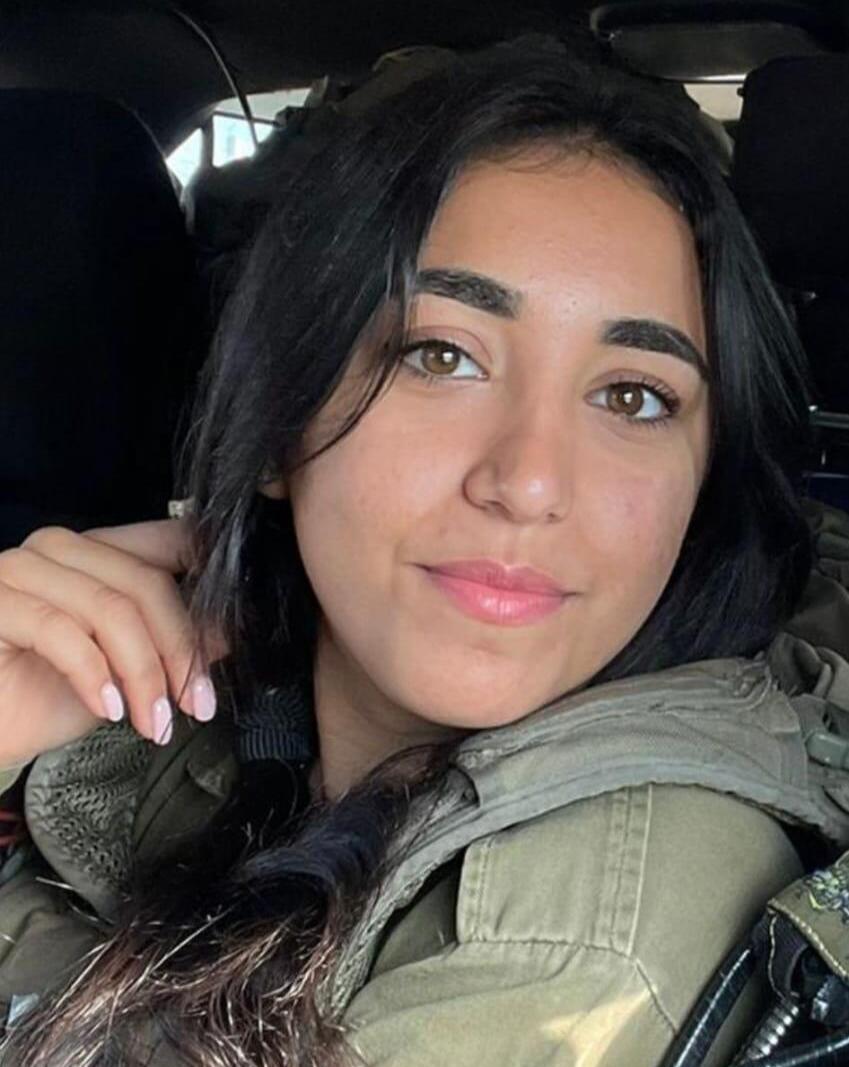
Staff Sergeant
Shirel Haim Pour