


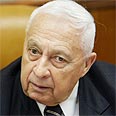
Ariel Sharon, Likud
None
Prior to entering politics, Sharon served in the Israel Defense Forces for more than 25 years and retired with the rank of Major-General.
Sharon was born on February 27, 1928 in Kfar Malal. In 1942, at the age of 14 he joined the Haganah, the predecessor of the Israeli Defense Forces. In the 1948 War of Independence, Sharon commanded an infantry company. In 1953, he founded and led the elite "101" commando unit, which carried out retaliatory operations in response to Arab attacks. In 1956, he was appointed head of the Paratroop Corps.
From 1958-1962, Sharon held posts as commander of the Infantry Brigade and head of the Infantry School. During this time he also studied law at Tel Aviv University, and in 1962 earned his law degree from Hebrew University.
In 1964, he was named head of the IDF Northern Command, and two years later became head of the army's training division.
During the 1967 Six Day War, Sharon served as commander of an armored division. In 1969, he was named head of the IDF Southern Command.
Sharon resigned from the army in 1972, but was recalled to command an armored division during the 1973 Yom Kippur War, during which he led Israeli forces past the Suez Canal and deep into Egyptian territory.
Sharon was first elected to the Knesset in December 1973, but resigned just a year later. In 1975, he served as security advisor to Prime Minister Yitzhak Rabin.
In 1977 he was elected to the Knesset and after the elections he joined Herut, which was the predecessor to the modern Likud party. Prime Minister Menachem Begin appointed Sharon to the post of Minister of Agriculture in his first government.
In 1981, Sharon was appointed Defense Minister and oversaw Israel's operations during the Lebanon War, but in 1983, he was forced to resign after the government's Kahan Commission found him indirectly responsible for the September 1982 massacre by Lebanese Christians of hundreds of Palestinian refugees in the Sabra and Shatila camps.
Sharon remained in the government as a minister without portfolio and later served as Minister of Industry and trade from 1984-1990. From 1990-1992, he served as Minister of Construction and Housing.
As a minister in various posts, Sharon championed Israeli efforts to build settlements in the West Bank and Gaza Strip.
In 1996, Sharon was appointed Minister of National Infrastructure in the government of Prime Minister Benjamin Netanyahu. In 1998, Sharon was appointed Foreign Minister.
Sharon became interim Likud party chairman in May 1999 after Netanyahu decided to take a break from politics following his defeat at the hands of Labor Party leader Ehud Barak. In September he was elected party chairman and is credited with rehabilitating the party.
On February 6, 2001, Sharon defeated Barak in a special election and became prime minister. He was reelected on January 28, 2003 after calling early elections.
Prime Minister Sharon has said Israel is prepared to make painful concessions as part of a peace agreement with the Palestinians, but that the Palestinians must end all terrorist activities.
In early 2005, Sharon won government and Knesset backing for his disengagement plan, which calls for Israel to evacuate all settlements and the Gaza Strip and four isolated settlements in the northern West Bank.
Sharon is widowed and has two sons.
