


'High risk' troops disarmed, arrested
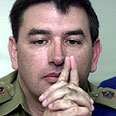
Brigadier General Mickey Barel, head of Military Police, told Ynet on the eve his retirement of that the army has carried out a number of investigations of soldiers who could use weapons against Arabs or Palestinians, or against security forces who took part in the disengagement
Military Police Chief Mickey Barel has revealed that the IDF has arrested and disarmed a number of soldiers deemed capable of carrying out terror attacks against Palestinians, or of opening fire against members of the security forces who took part in the disengagement.
“Following the terror attack in Shfaram, and before the disengagement, we dealt with dozens of soldiers – through investigations and by intelligence sharing,” said Barel. "Some of them were arrested, some dismissed, and some have been disarmed.”
“Intelligence was passed on to commanders, and some of the soldiers under investigation were stripped of their weapons. We carried out a risk assessment with the advice of commanders and other sources. In the case of Natan Zada, there was no concrete intelligence that this man was going to carry out a terror attack. No one came and said that he was a ‘ticking bomb.’ In my view, there is not even one soldier who could be classed as such,” said the outgoing Military Police chief.
'Nothing like the adrenalin'
When he became drafted 29 years ago, Barel did not want to be in the military police. He began his army career as a military prison guard. But he fell in love with the force, and quickly scaled the ladder.
After 30 years in uniform, he will salute for the last time. “If I got the chance, I would choose the same path. I enjoyed every moment,” he said.
“There’s nothing like the adrenalin in this work, you become addicted to the crazy pace, and the surprises that wait for you every day.”
Preventing suicide
The issue of suicides is very sensitive among the ranks of the IDF, and Barel says that the army is heavily investing in means to track down potential suicide cases among soldiers before they have a chance to harm themselves.
“When you check the circumstances surrounding a suicide, you find that some are linked to the army, but most are not,” he said. “If you asked me whether the same soldier would commit suicide if he were a civilian, I couldn’t say for sure. It’s hard to know what goes on in the mind of a person, and how long the idea has been developing.”
“I know the criticisms that have been levelled at the army. I say, it is very hard to prophesize what will be, and it’s easy to analyze from hindsight. Sometimes there were red lights that went off, and preventative action was not taken, these are things we have learned from investigations. There have been cases of suicides that were preventable. But most were not.”
The future
With his retirement around the corner, and civilian life closer than ever, the Brigadier General is not yet sure about his next step.
“It may sound funny, but I don’t know I’m going to do exactly,” he said. “I have a number of offers that I have to make a decision about. Two of them are in the public sector, that are related to the work I did in the army. I also have a number of offers from the business world. Everything is open,” he said.
