


Lebanon condemns rocket attack on Israel
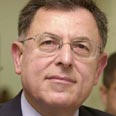
Prime Minister Fuad Saniora slams katyusha barrage fired into northern Israel, while U.N. envoy urges Lebanese government to assert control over tense border region to prevent future attacks on Israel
Lebanon's prime minister on Wednesday condemned a rocket barrage fired a day earlier into northern Israel, while a U.N. envoy urged the Lebanese government to assert control over the tense border region to prevent future attacks on the Jewish state.
The rockets landed in a residential area of the northern town of Kiryat Shmona, damaging property but causing no casualties.
Israel accused a militant pro-Syrian Palestinian group of firing the rockets and retaliated with air strikes early Wednesday against the group's base outside Beirut — Israel's deepest strike into Lebanon in 18 months. Two guerrillas were wounded.
Maj. Gen. Udi Adam, head of the Israeli army's northern command, warned Israel would retaliate if there were any more rocket fire from Lebanon.
"The main message that we passed, and we are trying to give, is that the Lebanese government must take responsibility for what happens in its territory," Adam told The Associated Press. "If Kiryat Shmona residents don't sleep quietly, then the residents of Beirut won't sleep quietly."
The comments by Lebanese Prime Minister Fuad Saniora were a rare rebuke of such rocket fire from his territory into Israel.
"These acts — the firing of rockets and the Israeli raids and air violations — are eventually aimed at undermining stability in Lebanon and distracting attention from efforts to continue internal dialogue on major issues," Saniora said in a statement carried by Lebanon's National News Agency.
U.N. envoy expresses ‘deep concern’ over rocket fire
Israel blamed the attack on the Popular Front for the Liberation of Palestine-General Command, a small, Syrian-backed Palestinian group that has been fighting the Jewish state for decades.
Following Wednesday's strike on the PFLP-GC base, six Israeli warplanes flew low over southern Lebanon and the western Bekaa Valley in presumed reconnaissance flights that drew anti-aircraft fire from the Lebanese army, Lebanese security officials said.
The PFLP-GC commander in Lebanon, Anwar Raja, denied that the PFLP-GC was responsible for the rocket barrage. An AP photographer at the base in Naameh said the strike hit an entrance to a tunnel, leaving it almost blocked by stones and rubble.
Geir Pedersen, U.N. Secretary-General Kofi Annan's personal representative for Lebanon, expressed "his deep concern" over the rocket fire.
In a statement, Pedersen "once again urged the government of Lebanon to extend its authority over all of its territory and exert its monopoly on the use of force."
The Lebanese government has rejected repeated U.N. and U.S. demands to deploy the army along the country's southern border following the Israeli withdrawal from the area in 2000, saying it will not serve as an Israeli protection force.
This has enabled the pro-Syrian terror group Hizbullah to control security in the border area.
On Saniora's instructions, the Foreign Ministry informed the United Nations that the Lebanese government was determined to hunt down the persons who fired the rockets and to prevent a recurrence of such acts.
