


UN: Israel left no ecological damage in Gaza
United Nation Environment Program publishes report clearing Israel of causing any environmental contamination during Gaza withdrawal, settlement demolition; report declares ‘no environmental constraints to Palestinian settlement of area’
Israel’s withdrawal from the Gaza Strip and demolition of evacuated buildings there did not cause any significant ecological damage to the area, a report published Thursday by the United Nations Environment Program concluded. The examination of the land was requested by the Palestinian Authority, which suspected the land may be unsafe for use.
A comprehensive environmental study of the land where settlements had been vacated detected no water or land contamination, and thus there are "no environmental constraints to Palestinian settlement in the area," the report said.
United Nations representatives held a special press conference Thursday at the American Colony hotel in east Jerusalem to release the study data.
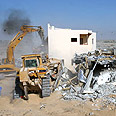
After the disengagement in August, 1.2 million tons of rubble were left behind from the destroyed homes and community buildings, the report said. Removal and disposal of the rubble, some of which was laced with asbestos, must be done carefully to ensure that workers are not exposed to unnecessary harm, the report said.
The UN report said that although some asbestos-related pollution remained, overall "the scientific assessment report gives the Gaza pullout an environmental clean bill of health."
At the Palestinians’ request
The Palestinian Authority had requested the examination of the land, suspected that the areas evacuated by Israel were somehow contaminated and posed a hazard. The report, however, found no basis for such suspicions.
Israeli authorities were satisfied with the report. “We are happy that the findings prove that Israel is not polluting the land, despite the lies that the Palestinians and their supporters have been spreading for years,” Daniel Maron, director of the foreign Ministry's human rights division, told Ynet.
“We thank the UN for their professional work here, and we see the results here as a positive sign of the cooperation between Israel and the United Nations,” Maron added.
Israel is a member of the UNEP’s directors’ committee, and is recognized as a professional and active participant in discussions of global ecological issues.
Agreement with Egypt
At the end of August 2005, an agreement was reached with Egypt regarding the disposal of wastes from the demolition of settlement buildings.
Roughly 80 percent of the rubble could be recycled and reused by the Palestinians. Of the other 20 percent, most of it would be transferred to Egypt by a third party. The portions containing hazardous waste, such as asbestos, would be buried in Israel, as coordinated by the Defense Ministry and the Environment Ministry. The deal was brokered by the Quartet’s envoy to the Middle East James Wolfensohn.
At the end of 2005, the UN began its program, funded partly by a USD 25 million stipend from Israel, to clear the former settlement areas of waste.
Roee Nahmias and AP contributed to the report
