


Finding your roots
Everything you need to know before you travel to search your roots: organized tours, information gathering, transportation, worthwhile destinations and more
Large numbers of Jews are traveling abroad in search of their family roots, and sometimes they make surprising discoveries.
Two sisters, born in Poland and hidden on a remote farm during WWII, recently went to Poland with their families and found the woman who had hidden them. In another case a Jerusalem family found that hilulot, pilgrimages to the tomb of a saintly rabbi, were being made to the grave of their relative in Morocco, who had gone from Jerusalem to Morocco in the 17th century as a representative of the Jewish community in the Land of Israel.
What do you need to know before you go searching for your roots? We’ve collected information and recommendations for each of the various countries from Danny Hirshtein, Pini Eitan, Moshe Hartman, and Victor Maor of Ophir Tours, Eilat Jungster from Gesher, and Benyamin Niyazov from Asia Travel.
Morocco
A trip in search of your roots in Morocco lasts 10-15 days. The most popular destinations are Casablanca, Rabat, Fez, and Erfoud, the birthplace of the Abuhatzeira dynasty, the village of Todra, and the graves of righteous men. In Morocco there are numerous graves of righteous men where hilulot are held.
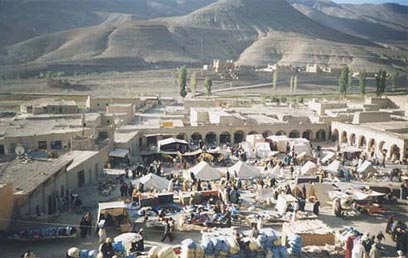
Morocco (Photo: Asaf Mayer Yitzhaki)
On Tu Be’av (which falls on August 9 this year) the celebration for Rabbi David Ben Amram will take place in Wazam in the north of Morocco. Ben Amram, who lived in the 18th century, was born in Hebron and went to Morocco as a representative of the Jewish community in the Holy Land.
By the way, the Sahara is not a good place to visit in the summer because the temperature reaches 120-140 degrees Fahrenheit. A private trip to Morocco costs between USD 1,500-4,500 per person, depending on the type of hotel and services purchased. A local guide costs USD 60 a day. A minibus with gas and driver is USD 280 a day. It is customary to pay 50 dirhams at the entrance to cemeteries (about USD 5.70).
It is easy to get oriented in Morocco. The big cities have Jewish communities, the largest of which is in Casablanca. You can contact the community by phone and get directions to the cemeteries. Most cemeteries have guards and it is easy to find the graves. Sometimes there is a cluster of graves in a small, relatively remote town.
Tunisia
Tunisia is smaller than Morocco, more expensive, and less friendly. It is best not to go in the summer because of the heat. Organized tours last from 8-11 days, including 3 days in Djerba. The tours cost USD 1,100-1,700 per person. A local guide costs USD 40-50 a day, and renting a car with driver is USD 310-320 a day. Entrance to cemeteries costs 1 Tunisian dinar, which is equivalent to USD 1. The main destinations are the city of Bizerte and the island of Djerba with its synagogue, which attracts Jews from all over the world.
Poland
A trip in search of your Polish roots generally lasts 5-12 days. If you join an organized tour you can usually take one-day trips to destinations that are not part of the tour, or you can plan your own trip using local travel agents. The most popular destinations are Warsaw, Cracow, and the extermination camps.
The chances of finding original houses or tombstones in the cemetery vary. Pre-war Warsaw no longer exists. Some of the streets have changed their location and their numbering. Warsaw’s cemetery is the largest Jewish cemetery in Europe with 250,000 graves, but the graves are not mapped. If you don’t know the exact location of the grave it will be hard to find it, but in any case you will have the experience of touching Jewish history.
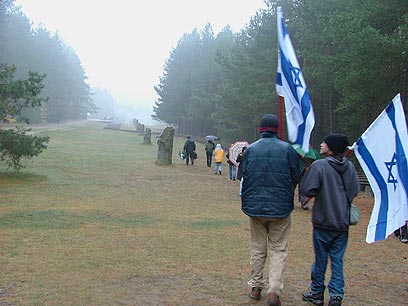
Treblinka, Poland (Photo: Ophir Hacohen)
The cemetery in Lodz is better kept, and most of it is clean and accessible. There are several dozen well-kept cemeteries in Poland in cities like Zdunska Wola, Piotrkov, and Nowy Sacz (Sanz).
By e-mailing officials at Auschwitz you can receive information on people who were imprisoned at the camp. You can also contact officials who handle the archives of cities or regions in Poland to receive information on relatives and even property.
You can travel within Poland by train, but if your group consists of more than four people you are better off renting a car. Take a local driver who speaks Polish if you plan to make side trips to small towns or poorer areas such as in eastern Poland.
Poland is a country with a great deal of tourism, so be sure to finalize all hotel arrangements before you go. Stay at hotels with at least 3 stars.
The cost is USD 1,000-1,500 per person for a week-long trip, depending on the level of accommodations and the means of transportation. A car with driver costs from USD 120-170 a day. If you plan to take extended trips outside of Warsaw you will need to take into account the cost of accommodations and food for the driver. You should pay the cemetery guards between USD 3-20. Synagogues have recently begun charging entrance fees.
Ukraine, Belarus, Lithuania, Latvia
Ukraine has large Jewish communities, which makes it relatively easy to become oriented and get around among the hostile local populace. The destinations for visitors include Uman, where Rabbi Nahman of Breslav is buried, and Medzhibozh, where the Baal Shem Tov is buried.
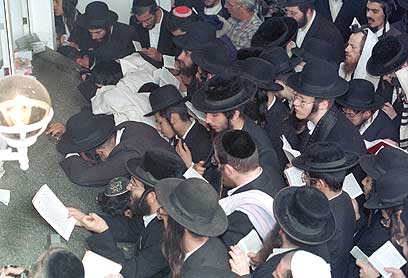
Uman, Ukraine (Photo: AP)
Most people going to Belarus, Lithuania, and Latvia stay for 2-3 days. The main destinations are Grodno, Slonim, and Pinsk-Karlin in Belarus, and Vilna (Vilnius), Kovno, and Ponar in Lithuania. In Vilna there is a local Jewish community.
In all countries that were formerly part of the Soviet Union it is best to rent a car and some families also hire a guard at USD 80 for 5 days. The trip will cost about the same as a visit to Poland.
Hungary and Romania
Most people who go in search of their roots in Hungary or Romania stay for 5-7 days, and include pleasure trips as well. Romania has large Jewish communities and is easy to get around. In Hungary you can use public transport if you know Hungarian. If you want to visit small towns and don’t know the language, you will need an interpreter. Both countries have many well-kept cemeteries.
The average cost of the trip is USD 800-1,000 per person, depending on the type of hotel and other services. In Hungary a driver will cost you USD 200 a day, and an interpreter USD 160-220 a day.
Uzbekistan
If you visit Uzbekistan on an organized tour you can include your own side trips in search of your roots. Tours last from 7-9 days, and attract Bukharan Jews as well as Ashkenazi Jews whose families ended up in the area during the Second World War. The most popular destinations are Samarkand - where you can visit the grave that is said to contain the remains of the Prophet Daniel - as well as Tashkent and Bukhara.
The local people are welcoming to tourists, and can help you find houses and landmarks. The cemeteries are well kept.
A 7-day organized tour costs about USD 1,400, while if you go on your own it will cost from about USD 1,300-1,500 per person for a week, depending on the type of hotel. Car rental costs USD 60 a day.
