


_a.jpg "צילום: ירון ברנר")
12,000 buildings hit by rocket attacks
Some 2,000 buildings destroyed during war in north; compensation to cost government tens of thousands of shekels
Some 12,000 buildings, including 4,000 public structures, were damaged by rocket attacks waged by Hizbullah from Lebanon during 35 days of confrontation with the Israel Defense Forces, a report by the Ministry for the Environment showed.
The Ministry for the Environment is drafting plans to get rid of tons of rubble from destroyed buildings, as the Prime Minister's Office estimates that 2,000 buildings and apartments were destroyed during the war.
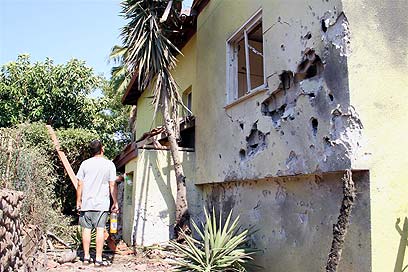
House hit in Kiryat Shmona (Photo: Baruch Grosvald)
Grinding and disposing of the rubble in an environmental friendly manner will cost the government between NIS 80-115 (about USD 18-26) per ton of rubble.
The report estimated that 85 percent of the rubble could be buried underground at the cost of NIS 4.25 million (USD 974,770) and 15 percent could be grinded at the cost of NIS 900,000 (USD 200,000).
The report said 400 bush fires were started by Katuysha rockets during the war, burning up to 12,000 dunams of bush and forestry.
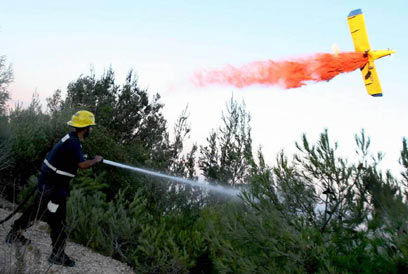
Figherfighters in Kiryat Shmona (Photo: Hagai Aharon)
In Kiryat Shmona alone over 7,000 dunams were burnt.
The cost of extinguishing bush fires and preventing from covering larger areas stood at NIS 20 million (USD 4.6 million), the ministry said.
The report warned that 25 buildings made from asbestos were hit in the war, releasing the dangerous substance and creating a great public health hazard.
The buildings are owned by industrial and agricultural firms, it was reported.
In some cases asbestos concentration reached 2,300 fibers per square meter.
Eliminating the danger posed by asbestos to public health requires special removal procedures, the cost of which could reach tens of thousands of shekels.
In addition to damage to life and property, animal rights groups and local authorities say that some 700 dogs were found abandoned during the war.
Dozens of dogs died of dehydration and malnutrition.
