


Lebanese troops extend reach into south
Lebanon's army commander raises his country's flag Monday on ridge overlooking border with Israel, reclaiming area after Israel's pullout from nearly all of south Lebanon. Gen. Michel Suleiman tells about 500 soldiers that although his army is no match for Israel, it would fight if necessary
But the dispute over a divided border village and farmlands marred Lebanon's reclamation of its territory. President Emile Lahoud accused Israel of failing to live up to its commitments under the UN ceasefire resolution by holding on to Lebanese territory and violating the country's sovereignty.
Gen. Michel Suleiman told about 500 soldiers that the army won't allow any attacks from Lebanon that could undermine the ceasefire — an apparent reference to rockets Hezbollah launched at Israel from the south in 34 days of fighting that ended Aug. 14.
He said that although his army is no match for Israel, it would fight if necessary.
"I call upon you to confront the Israeli aggressions and violations with whatever meager capabilities that are available," he said.
'No right for Israel to violate airspace'
The United Nations-brokered ceasefire supports the Lebanese military in reasserting control over the south — including areas last held by the national army 30 years ago.
The Lebanese troops are supported by a beefed-up UN peacekeeping mission as they move to extend Lebanese authority over the entire south.
But Israeli forces' continued presence in part of the border village of Ghajar and their plans to continue patrolling Lebanese airspace are potential sources of friction between the neighbors.
Lahoud said Monday Israel "has no right to violate our airspace and territorial waters," adding that Lebanon wants its prisoners back and wants Israel to abandon the Lebanese side of Ghajar.
Lahoud also told reporters that the dispute over the Chebaa Farms area, held by Israel, was "the basis of the problems." Prime Minister Fuad Saniora said the UN was working to resolve the Ghajar problem.

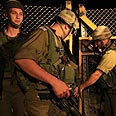
Lebanese army arrives in south (Photo: AP)
Resolution 1701, which opened the way for the cease-fire, directs the UN secretary-general to come up with a proposal to delineate the borders in the area near the frontiers of Israel, Lebanon and Syria within a now-elapsed 30 days.
An army spokesman said Lebanese army deployment in the south has exceeded the 15,000 troops mandated by the UN ceasefire resolution. The spokesman requested anonymity in compliance with military regulations.
International peacekeepers, the United Nations Interim Force in Lebanon, called Israel's pullout from nearly all of south Lebanon "significant progress." But both the Lebanese government and Hizbullah dismissed the withdrawal Sunday as "incomplete" and demanded Israel stop what they called its violations of Lebanon's airspace, sea and land.
'Hizbullah's right for resistance remains'
Parliamentary Speaker Nabih Berri, a close ally of Hizbullah, warned that guerrilla attacks could resume if Israel did not fulfill the UN ceasefire resolution and all Lebanese territory is regained.
"Our right of resistance is always there," he told As-Safir newspaper on Monday.
Senior Hizbullah official Sheik Hassan Ezzeddine warned the Islamic militant group would resume attacks against Israel if it breached the UN ceasefire, which went into effect Aug. 14.
UNIFIL, the UN peacekeeping force confirmed in a statement Sunday that Israel had withdrawn from the entire south except Ghajar.
The pre-dawn pullout Sunday put a formal end to a nearly three-month troop incursion into Lebanon that began after Hizbullah guerrillas captured two Israeli soldiers and killed three others in a July 12 cross-border raid.
It clears the way for the full deployment of UNIFIL's 15,000 soldiers who will police the border with Lebanese troops.
Israel wants Lebanon to keep Hizbullah out of the south and disarm it, but Beirut has indicated it would not actively seek Hizbullah's weapons. The militant group said it would disarm only when a strong central government was in place.
