


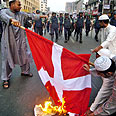
Muslim Brotherhood denounces 'Danish insult' to Islam
Egyptian Islamic group condemns video showing young members of Danish political party mocking Prophet Muhammad; urges Muslims across world to boycott Denmark-made products
The video showed people in their 20s and 30s participating in a drawing contest at a summer camp for the Danish People's Party Youth last August. They appeared to have been drinking alcohol.
The footage shows a woman presenting a drawing of a camel and saying it has "the head of Muhammad" and beer bottles as humps. The group laughs as the woman, who was not identified, explained the drawing.
"Muslims are shocked by this new Danish insult," the Muslim Brotherhood said in a statement issued Saturday. It described the drawing as "the ugliest for God's most honorable human being, peace be upon him." Kenneth Christensen, chairman of the Danish People's Party Youth - known for its anti-immigration stance - refused to apologize Friday for the actions of its members, but acknowledged they were problematic.
"It is bad style because it overshadows our political line," Christensen said. But he added that he believed it was "ok to poke fun at Muhammad, Jesus or Bill Clinton."
Call to boycott Danish products
The Brotherhood, which enjoys wide popularity in Egypt and across the Arab World, urged Muslims on Saturday to boycott products from Denmark and any other country that would allow such an "insult."
It also called on Muslims to "express denouncement through peaceful means, by demonstrations and protests." The drawings depicted in the video, like the pope's comments about Islam earlier this month and Danish cartoons mocking Muhammad last year, were likely to provoke Muslims and could trigger a new round of angry demonstrations all around the world.
"The repetition of such actions is evidence of the depth of enmity carried by certain sectors in the West toward Islam and the prophet," the Brotherhood statement said. In September 2005, the Danish daily Jyllands-Posten printed drawings of the Prophet Muhammad. Four months later, they were reprinted in a range of Western media, triggering protests from Morocco to Indonesia. Some Islamic leaders called for the cartoonists to be killed. Throughout the crisis, the Danish government resisted calls to apologize for the cartoons and said it could not be held responsible for the actions of Denmark's independent media.
Islamic law is interpreted to forbid any depiction of the prophet for fear it could lead to idolatry.
