


Israel provides landmine maps
Israel provides UNIFIL with maps to landmines laid by IDF prior to military's 2000 pullout
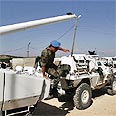
According to a report by Lebanese paper 'The Daily Star', the Israel Defense Forces provided the United Nations Interim Force in Lebanon (UNIFIL) with maps on Monday of the minefields it laid during the 1978-2000 occupation in the south of the country.
The move is in accordance with the UN Security Council resolution 1701 that ended this summer's war, a UN statement said Monday. Disclosing minefields has been a long-time demand of both the Lebanese government and Hizbullah.
According to a UNIFIL statement issued Monday, following a meeting between UNIFIL acting force commander Brigadier General J.P. Nehra and senior officers from the Lebanese and Israeli militaries, the Israelis "provided UNIFIL with the maps of minefields in South Lebanon as of their pullout in June 2000."
UNIFIL handed these maps over to the UN Mine Action Coordination Center and to the Lebanese Army for review.
Lebanese armed forces, who continue to deploy in south Lebanon in coordination with UNIFIL, have been facing problems with Israeli land mines and unexploded munitions, including cluster-bombs.
Contentious issues from recent war
Israel has yet to provide maps of the locations of cluster-bomb strikes in southern Lebanon from the most recent war, which UNIFIL continues to ask for.
The Daily Star reported that so far over 700 cluster-bomb strike locations have been identified, and over 100 people have been killed or wounded in unexploded ordnance incidents.
An additional topic in the meeting with UNIFIL was the situation around Ghajar, a border town with half its land lying in Lebanon and the other half on Israeli ground captured from Syria in the 1967 war.
The IDF, which withdrew its soldiers from all south Lebanese towns by early October, insists on keeping troops in Ghajar.
