


UN adopts resolution against N. Korea
Security Council votes unanimously to impose punishing sanctions on North Korea for its claimed nuclear test, declaring that its action poses 'a clear threat to international peace and security'. Resolution bans import or export of material, equipment that could be used to make nuclear weapons or ballistic missiles
North Korea immediately rejected the resolution, and its UN ambassador walked out of the council chamber after accusing its members of a "gangster-like" action which neglects the nuclear threat posed by the United States.
Ambassador Pak Gil Yon said North Korea wants talks but warned that it will consider increased US pressure a declaration of war.
The vote came after the United States, Britain and France overcame last-minute differences with Russia and China during what Russia's UN ambassador called "tense negotiations."
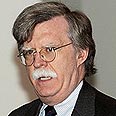
The resolution demands North Korea eliminate all its nuclear weapons, but expressly rules out military action against the country — a demand by the Russians and Chinese. But US Ambassador John Bolton warned Pyongyang that if it continues pursuing nuclear weapons, the United States would return to the council and seek further measures.
Embargo limited to major hardware
The Security Council condemned the nuclear test that North Korea said it conducted on October 9. It demanded that North Korea immediately return to six-party talks aimed at persuading Pyongyang to dismantle its weapons program without precondition.
It imposed sanctions for the North's "flagrant disregard" of the council's appeal not to detonate a nuclear device and demanded that North Korea "not conduct any further nuclear test or launch of a ballistic missile."
The resolution bans the import or export of material and equipment that could be used to make nuclear weapons or ballistic missiles. It orders all countries to freeze the assets and ban travel for anyone engaged in supporting North Korea's weapons programs.
To meet Russian and Chinese concerns, the Americans eliminated a complete ban on the sale of conventional weapons. Instead, the resolution limits the embargo to major hardware such as tanks, warships, combat aircraft and missiles.
The resolution calls on all countries to inspect cargo leaving and arriving in North Korea to prevent any illegal trafficking in weapons of mass destruction or ballistic missiles. The final draft was softened from language saying the council "decides" — which is a stronger authorization.
But China's UN Ambassador Wang Guangya said after the vote that the provision allowing the boarding of ships to inspect cargo was still unacceptable to Beijing.
Israel's Ambassador to the UN Dan Gillerman welcomed the decision to impose sanctions on North Korea, saying that it "manifests the consensus in the international community regarding the severity with which it views the nuclear test executed by Pyongyang.
Gillerman added, however, that the resolution was compromising and the he was worried over the messages it was conveying to Iran.
No evidence of radioactive particles
The accord came as US officials said Friday that an air sampling after North Korea's claimed nuclear test detected radioactive debris consistent with an atomic explosion. However, the Bush administration and congressional officials said no final determination had been made about the nature of Monday's mystery-shrouded blast.
Results from another test disclosed Friday — an initial air sampling on Tuesday — showed no evidence of radioactive particles that would be expected from a successful nuclear detonation, a US government intelligence official said.
South Korea and Japan have also been monitoring their environment for signs of a nuclear test. Both said they had found no unusual levels of radiation as of Saturday.
"Until we reach a final conclusion that North Korea's nuclear test was indeed genuine, we should be open to various and comprehensive judgments," South Korea's presidential spokesman Yoon Tae-young said.
The US and other nations trying to persuade the North to give up its atomic program continued a flurry of high-level diplomatic visits. Secretary of State Condoleezza Rice planned a trip next week to Asia; Russia sent an envoy to Pyongyang; and the presidents of China and South Korea — the North's main sources of trade and aid — met in Beijing to discuss the proposed resolution.
Rice's trip is meant to present a unified front to North Korea, which will be looking for any cracks in the diplomatic coalition behind the UN statement.
Rice's trip to China, South Korea and Japan is the next step in the US diplomatic offensive at the United Nations and with Pyongyang's neighbors. State Department spokesman Sean McCormack said "she's going to be talking about the passage of that resolution certainly, but really what comes after."
A Russian nuclear envoy who visited North Korea said Saturday he pressed the North to return to six-nation nuclear disarmament talks. Russian Deputy Foreign Minister Alexander Alexeyev said he had a "very useful" meeting Friday with Kim Gye Gwan, the North's nuclear negotiator, but did not say how Kim responded. Alexeyev spoke on his arrival in Beijing from Pyongyang, North Korea's capital.
Pyongyang has boycotted the six-nation talks for the past 13 months to protest financial measures imposed by Washington for alleged counterfeiting and money-laundering.
Earlier, a Russian news agency quoted Alexeyev as saying North Korea favors the implementation of a year-old agreement to abandon its nuclear programs in exchange for aid and security guarantees.
The report apparently referred to an agreement reached in September 2005 at the talks involving the two Koreas, the US, China, Russia and Japan. If the Russian report is confirmed, it could signify a major breakthrough in efforts to curb North Korea's nuclear ambitions.
Yitzhak Benhorin contributed to the report
