


Hizbullah to expand protest in Lebanon conflict
Senior opposition politician says Shiite group, its allies will step up campaign of protest, disruption next week to try to topple Lebanese government by paralyzing country. 'All political and diplomatic efforts are deadlocked,' politician adds
The move is an attempt to break a deadlock that has defied mediation efforts and fuelled Sunni-Shiite tensions.
"The opposition is putting the final touches to the second phase of its campaign. Things will start moving next week," said the opposition politician, who asked not to be identified.
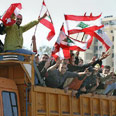
Protesters have camped outside the heavily guarded office of Prime Minister Fouad Siniora in central Beirut for the past five weeks to try to force him to concede veto power to the opposition in a unity government or call an election.
Siniora has stubbornly resisted, even though his cabinet had already been weakened by the resignation of six ministers from Hizbullah and its allies in November.
The impasse has hurt Lebanon's recovery from the July-August war with Israel and raised fears of instability in a land where Christians, Druze, Sunnis and Shiites coexist uneasily.
"All political and diplomatic efforts are deadlocked," the opposition politician said. "There is no option for the opposition but to step up pressure on the authorities, who are proceeding as if there is nothing wrong ...
"The moves will culminate in a stage where most of the country would be paralyzed."
Both sides have outside backing. Hizbullah is allied to both Iran and Syria, long the dominant power in Lebanon.
The United States, France and Saudi Arabia have all encouraged Siniora, who opposes Syrian influence and commands a majority in parliament, to stand firm.
Sunnis reuniting
Siniora's Sunni base is also coalescing around him.
International Crisis Group analyst Patrick Haenni said many Sunni Islamists who saw Hizbullah leader Sayyed Hassan Nasrallah as an Arab and Muslim hero while his Shiite guerrillas were fighting Israel were now swinging behind Siniora again.
"The conflict has become re-confessionalized," he said. "The government, despite all its international connections and strong links with the United States, was able to regain the support of Sunnis, even those who supported Hizbullah during the war."
Siniora's government believes Hizbullah wants to thwart formation of an international tribunal to try suspects in the assassination of former Prime Minister Rafik al-Hariri, blamed on Syria by many Lebanese Sunnis, Christians and Druze.
Syria denies any role in Hariri's killing or later assassinations in Lebanon. Hizbullah insists it backs creation of the court in principle, but says it fears the United States and France will use it as a political weapon against Syria.
Hizbullah, the only faction to remain armed after Lebanon's 1975-90 civil war, will refine its protest plans at the weekend with its allies, the Shiite Amal movement and supporters of Christian leader Michel Aoun, the source said.
Another opposition source said the idea was to start with lightning strikes and stoppages in vital sectors of the economy. Marches, road closures and other actions might follow.
Mediation efforts in Lebanon, including one led by Arab League Secretary-General Amr Moussa, have failed.
Hizbullah accuses the government of betraying it in the war with Israel and of seeking to disarm it via the UN Security Council resolution that halted hostilities. Hizbullah's critics say it had no right to drag Lebanon into an unwanted conflict.
Analysts say Hizbullah's determination to keep its "resistance" identity and its weapons, which it has pledged to use only against Israel, lies behind the anti-government campaign.
