


World void of facts
Wikipedia a democratic initiative, but how can we avoid inaccuracies?
A short while ago someone told me that the free-content, online encyclopedia Wikipedia has devoted an entry to my name. I was quite surprised because I never dared to hope that any type of encyclopedia would deem me valuable enough for an encyclopedia entry.
Wikipedia, however, is unlike other encyclopedias and its distinction is the answer to my wonderment. Its compilers are not learned experts that weigh what and who are entitled to enter its pages, but rather, anyone who believes he or she possesses knowledge worthwhile adding to this treasure. And this is the idea - perhaps I should say ideology - at the basis of this invention: Human knowledge should not be sorted and phrased by a revered minority. Any person with reasonable compilation abilities is permitted to write an entry.
When the online encyclopedia becomes known by millions of people, any reader worldwide would be able to find what they are searching for. That's how we can put an end to the tyranny of professional editors, whose opinions determine the relevance of things in our world.
As the Internet is not limited in scope and is not limited in page length or volume, this encyclopedia can be expanded endlessly and can include everything that is known and everything that will ever be known to man. This is a democratic initiative that is continuously updated; it is chaotic and post modern.
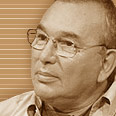
Who's that man?
And therefore, while excusing my curiosity, I checked what was written under my entry and almost failed to recognize myself. If I were to rely on what's written there, the fellow who bears the same name as my own is not at all the man whose life I am living.
Well, that's my subjective point of view, yet since I am aware of leading philosophical trends, I am aware that the foreignness I sensed in that man is not enough to refute the facts pertaining to my life, because facts change according to points of view.
Therefore, the anonymous Wikipedia biographer, just like myself, is right and I am more than who I thought I was, but also other types of Yaron Londons, as many as the grains of sand on the beach and stars in the heavens.
It's not easy coming to terms with this realization. The writer has aged me by a full four years, and considering the number of years statistics have left me, four years are not something I want to give up at the simple shrug of my shoulders.
Memory overload
So what was to be done? I considered sending Wikipedia a corrected version, but decided against it because in the absence of authoritative editing, what guarantee is there that my version would be perceived as more credible than the existing one?
While pondering this matter, an American lecturer at one of the colleges, a stubborn fellow with a conservative view pertaining to the significance of facts, banned his students from quoting from the online encyclopedia. He argued that the data published there cannot be relied on. Had his stance not been so irregular the article on this somewhat strange fellow would never have made it to the press. The world, quite evidently is marching towards an era void of facts due to an excess of facts.
In Funes the Memorious, by Argentinean author Jorge Luis Borges, Funes, just like the Internet,
remembered everything and never forgot a thing. However, accumulation of all the information inside his head prevented him from classifying its nature according to any type of relevance in order to give it meaning.
Funes died but Borges did not provide an explanation as to the cause of his death, yet many interpreters of this great writer believe that the boy with the infinite memory simply collapsed from memory overload.
