


What will we tell the mothers?
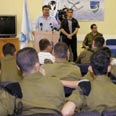
New IDF recruits have no illusion of peace, but are we missing an opportunity?
The voices are coming from every home in Israel. He knows, because his brother-in-law just returned from reserve service. His son also returned for his weekend vacation from the army bearing a similar message. Yes, she heard it too – her neighbor's neighbor has a good friend at army headquarters. It's been lingering in the air for a while, and there it goes: Listen, Nissim, there's going to be a war. And it really is not clear whether we'll win or not.
Yes, on Memorial Day eve, the rumors going around are working overtime. It will apparently happen in June-July. No, we won't strike first, says the prime minister, but warns: The confrontation can break out simply because of a misunderstanding. And the army is already preparing, and officials at the recruitment center are reporting high motivation, and the IDF chief of staff pledges that on his watch it will be clear at least who's winning and who's losing.
Army Chief Ashkenazi doesn't have any time, commentators write. The countdown is already underway. And again we charge forward to an arms race, drive army units crazy with inspections and alerts, and review combat theories - doctrines of deterrence, alert, and victory. Meanwhile, Knesset members are listening attentively, impressed by the performance of a commander who speaks in a language they can understand, certain they can sleep well at night with him in charge. There's no doubt that with this Golani guy the sky is the limit – after all, he's no pilot like former Chief of Staff Dan Halutz.
Once upon a time we were taught something else about the role of our leadership. We were told it's supposed to do everything in its power to prevent the killing in time. To think out of the box, turn crises into opportunities, identify gaps in the walls of hostility, pave the way for dialogue – change the course of history and avoid being dragged into wars of choice with open eyes. Nobody is renouncing the Golan Heights now or adopting the Palestinian right of return – we're just talking about talking. Perhaps then the bullets won't whistle by.
But these days, who has time for leadership? With the entire top brass on the verge of collapse, not knowing what will happen tomorrow and how long it would stay in office, there is no wonder that it doesn't miss an opportunity to miss an opportunity.
Syria reaching out
But sometimes, what can we do, not everything is politics. There's a whole world out there, and this world is dangerous but also changing. There, they're talking peace from Riyadh to Rabat, calling on us to go study at university in Doha, and in Amman the Jordanian king is willing to consider compensation to Palestinian refugees instead of a right of return.
Damascus is reaching out to us. Even Pakistan's president considers the idea of dropping by for a visit. Between the Shiite Iranian rock and the Sunni al-Qaeda hard place, someone out there is starting to realize that the Zionist demon isn't that bad, and may even have some advantages. Just like we dreamed of and wrote in our Declaration of Independence, they're calling on us to talk to them as a group and as individuals, before it's too late. And where are we?
And where are the children of the 1973 winter now? At least they were promised a dove, an olive branch, and peace (with security) at home. The children of the summer of 1989, who will be enlisting for military service soon, are not even promised that. There's no attempt even to sell them an illusion, or some kind of hope for the mother who sends her son into the unknown. What is she supposed to feel when a war breaks out? Who can look her in the eye and tell her that we really had no choice?
This year, in the impossible seam line between Memorial Day mourning and Independence Day celebration, we would do well to dedicate some time for self-reflection too. It might be good to recall what happened last time we turned our back on an Arab leader who talked peace and also beat the drums of war.
Tactically, we ultimately won. But at what price? And how many names will be added to our commemoration pages by next Memorial Day? And, actually, why?
The writer is a Ynet editor
