


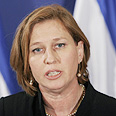
Livni not planning putsch, aides say
Hours before publication of Winograd report, foreign minister's aides say Livni waiting to read it before giving her response; Defense Minister Peretz does some damage control of his own
"The foreign minister has no plans to lead a putsch or impeach the prime minister," Foreign Minister Tzipi Livni's aides confirmed on Monday, just hours before the publication of the Winograd Commission's partial report.
Livni has remained silent for some time and has refrained from publicly backing Prime Minister Ehud Olmert.
In a talk with Ynet on Monday, LIvni's supporters in Kadima made it clear that her silence over the report derived from her desire to respond only after reading it.
"It's not right to respond to the report before its publication or before she reads it," Livni's aides said. "At the moment, what she is interested in is keeping the party united."
Livni is expected to give her opinion on the report in a Kadima ministers meeting on Monday evening, in the presence of Prime Minister Ehud Olmert.
"There are all kinds of voices within Kadima saying that we should prepare for the day after, or that we should do something so as not to be hurt in polls. The foreign minister doesn’t deal with this, and hasn’t been dealing with this," her aides said.
Peretz prepares for reprucussions
Defense Minister Amir Peretz's office has also been preparing for the repercussions of the report. Peretz's aides have been talking with journalists, in order to clarify a few points regarding the defense minister's conduct during the war.
Main accusations against Peretz are that he did not consult with enough military experts to make up for his lack of experience.
In response to the Defense Ministry's chief official for diplomatic affairs, Amos Gilad's testimony in which he possibly accused Peretz of not consulting with him, Peretz's aides said in his defense that "the defense minister consulted with Gilad at least once a day, this can bee seen in all the minutes from the war period, and therefore it's not true."
Peretz is also concerned about claims that he was the military echelon's rubber stamp. The minister's aides said, "The facts prove that he was not the military's rubber stamp. There were two confrontations, already on the first day with the chief of staff. In both cases the chief of staff suggested something, and Peretz decided differently."
