


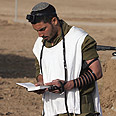
In the army
צילום: צפריר אביוב
Don’t disengage from IDF
Religious Zionism has been in serious crisis since the disengagement from Gaza. Most religious Zionist young people still choose to serve in elite units, and their parents, who are licking their wounds, could learn a thing or two from them
We’ve just been told that one out of four young people don’t serve in the IDF. And what is the story with religious Zionists on the second anniversary of the disengagement? Recently we’ve been in crisis. Religious Zionism is not at its peak. It lacks influence, and a not-insignificant number of the political moves we’ve seen lately are a result of this inferior status.
There are quite a few crises, mainly political, but no less social and familial, within religious Zionism. At the same time, the leaders of the movement – politicians, educators, and others – do not have the strength to reorganize and reunite the troops. The damage can be seen in the educational system, the increasing number of young people abandoning religion, and in increasing crises among religious families, none of which were very common in the past.
Actually, one of the things I don’t believe has been affected by recent events, including the disengagement, is IDF service.
The way religious Zionist young people got through this difficult period was respectable and praiseworthy. Some were about to be drafted and some were already in the army at the time of disengagement. Many of them, who graduated from or study in hesder yeshivas and pre-army educational programs, disregarded the calls for refusal by some of their educators. These young people – who were and are still at an age at which they go through many difficult inner personal struggles – faced the most difficult dilemmas and got through them very successfully.
During this time I spoke with some of the young people in hesder yeshivot and I saw how, despite their pain and their not-insignificant struggle over the government’s strange moves, they chose the good of the country and joined both the IDF and its elite units.
Basic values
My son was about to be drafted, and I saw the great tension in his hesder yeshiva when everyone, or the vast majority of them, were waiting to get into the elite infantry units. I saw the great disappointment of those who did not get in.There’s an interesting paradox here. On the one hand there is tremendous anger at the state and at what it has done, mainly in light of the strange results, proven today, of the disengagement, and on the other, a willingness to give their all for the country unquestioningly, uncompromisingly, and in the best way possible. Perhaps this is a subject for psychologists in the future.
I explain this interest very simply. These young people get to where they get with certain basic values. They know that there is a purpose in life, they know how to set a goal and to serve it in the best and most correct way, and I was happy that they didn’t cave in to any sort of temporary pressures. Anyone who understands the reason the country was established, who knows why he needs to serve the country, sees going into the army and the need to serve the country as something self-evident, and is also a participant in this work, which is still ongoing.
Returning religious Zionism its strength
The disengagement, hard as it was, did not decrease the desire to join the IDF, and the fact that there was no such decline is, in fact, progress. These religious Zionist young people are highly praiseworthy, and the fruits of this praise serve us all, not just one population or another. The fruits are not those of one political camp or another, but of all of us.I can only expect this trend to continue among religious Zionist young people, and perhaps (and I am very doubtful) the adults, the parents of these children, will gird their loins and return religious Zionism to its natural status among the populace and in the country, both in terms of values, and in terms of political strength.
Meir Bar Noy is the author of Orange Time: The Uprooting from Gush Katif – A Personal Diary, published by Reuven Mass, which is scheduled to be published in Hebrew this week to mark the anniversary of the disengagement from Gaza
