


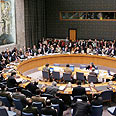
UN: Release kidnapped IDF soldiers immediately
Security Council expresses deep concern over fact Hizbullah has yet to deliver sign of life from abducted Israeli troops, says also concerned by arms smuggling from Syria to Lebanese group, Air Force flights over Lebanon and disagreement over legal status of Shabaa Farms
The Council also expressed its deep concern over the fact that no sign of life had been received from the abducted troops.
The Security Council also slammed the continued violation of the arms embargo imposed on Hizbullah and declared that it was concerned by the continued smuggling of weapons from Syria to Lebanon and the arming of elements not subject to the authority of the Fouad Siniora government.
The Council also expressed its concern over the Israel Air Force flights on Lebanese territory and the disagreement over the legal status of the Shabaa Farms.
The presidential statement on the implementation of Security Council Resolution 1701 for the end of the Second Lebanon War, was delivered following a report submitted by UN Secretary-General Ban Ki-moon on the progress in the resolution's implementation.
In his report, which was submitted about a month ago, Ban called on Hibzullah to present evidence that the captives were still alive.
The publication of the statement was delayed for more than a month as Qatar, the representative of the Arab states in the Security Council, thwarted its approval for several weeks in a bid to change its wording and soften it.
Israel's representatives at the UN expressed their satisfaction over the statement, which they said "would serve as a good basis ahead of the Council discussions on the renewal of the UNIFIL mandate at the end of the month."
Nonetheless, Israeli sources in New York expressed their concern over the events in southern Lebanon and Hizbullah's continued efforts to return to its patterns of activity on the eve of the Second Lebanon War.
