


Criticism in IDF on citation policy
Senior officers slam overwhelming number of citations for Second Lebanon War. Only female officer to receive citation condemned by bereaved parents of soldier they say she could have saved
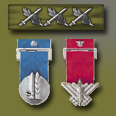
Various figures in the IDF's top brass expressed concern over the cheapening of military honors following Tuesday's announcement that 142 citations would be awarded to soldiers who fought in the Second Lebanon War.
During the war 119 soldiers were killed. By comparison - during the 1982 Lebanon War - 670 IDF soldiers were killed but only 11 citations were awarded, in the Yom Kippur War - 2,656 soldiers were killed and 478 citations were awarded and during the Six Day War - 776 soldiers were killed and 258 citations were awarded.
"Now is not the time to be discussing decorations," said Israel Klausner, who lost his son Ohad in the battle of Bint Jbeil, after the announcement.
"They reviewed the candidates months ago, before the Winograd Commission released its findings and before the results of the inquiries reached the bereaved parents," he said, "citations should be awarded after the investigations are completed and in looking at the context of the battles and the campaign.
"The way the citations for this war were awarded is some sort of media spin on (Prime Minister) Olmert's part, meant to make us forget his failings and the Winograd Commission."
Meanwhile the bereaved parents of another soldier killed in the war, First Sgt. Kobi Smilag, denounced the decision to award Lt Dr Marina Kaminsky a citation for "her courage in treating and evacuating wounded soldiers while under fire in Bint Jbeil." Eliezer and Flora Smilag said that Kaminsky, the only female soldier to be awarded a citation, did not do enough to save their son after his tank was hit.
'Soldiers deserve more than a good word'
"Alongside the failures that arose during the war, and which are still being studied thoroughly, there are also many stories of heroism, of courage and valor and actions that soldiers, in doing so, sacrificed their lives," said a military official.
"We must not forget these things; we cannot only talk about what was wrong when there were also so many positive things. There are many soldiers who deserve much more than a good word and that is why
the citation committee was formed."
The official said that the army staved off authorizing the citations until the bereaved families had all received copies of the military's various inquiries into the war and their results.
