


Yom Kippur
None
The holiest day in Judaism, Yom Kippur – or the Day of Atonement – is the day in which according to Jewish religion one must repent one's sins from the past year, before his or her fate is decided upon for the upcoming year. It is traditionally observed by 25 hours of fasting and intensive prayer.
Yom Kippur is marked on the 10th day of the Jewish month of Tishrei, which usually falls at the end of September or mid-October. According to the religious texts, Yom Kippur's date was derived from the day in which Moses came down from Mount Sinai with the Ten Commandments.
Confession, repentance and fasting are the holiday's main customs, as stated in the biblical text:
"This is to be a lasting ordinance for you: On the tenth day of the seventh month you must deny yourselves and not do any work – whether native-born or an alien living among you – because on this day atonement will be made for you, to cleanse you. Then, before the LORD, you will be clean from all your sins. It is a Sabbath of rest, and you must deny yourselves; it is a lasting ordinance." (Leviticus 16:29-31)
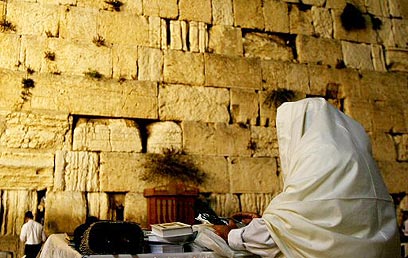
"On this day atonement will be made for you" (Archive photo: Reuters)
The first of Yom Kippur's mitzvahs actually begins at the end of Rosh Hashana, when the 10 days of atonement begin, known as the Days of Awe. During this period, one is supposed to ask forgiveness from friends, family and acquaintances for any insults or wrongdoings that may have been committed, knowingly or unknowingly, before coming before God during Yom Kippur prayers to ask for atonement.
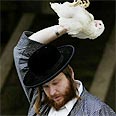
The Days of Awe climax with the traditional custom of kaparot, in which chickens are waved over a person's head before being slaughtered, symbolically transferring the person's sins onto the chicken just before Yom Kippur. Today, this custom is typically only performed within strictly religious circles.
Over the past few years, many choose to donate to charity as a symbol for atonement and redemption in place of kaparot, which has come under criticism for being harmful and abusive to the chickens.
'You must deny yourselves'
Along with the prayer inducting Yom Kippur, a ceremony of the "Untying of Vows" takes place, in which a special prayer releases one from any vows made during the past year.
Total abstention from all manors of food and drink usually begins 30 minutes before sundown. An hour before the fasting, it is customary to have a meal - Seuda Mafseket – and light candles, just like on Shabbat. It is also customary to light memorial candles, symbolizing atonement for the sins of loved ones who died.
Along with repentance, the Jews were also ordered to "deny themselves". According to halachic rules, the five things one must deny oneself on Yom Kippur are food and drink, wearing leather garments and shoes, anointing oneself with perfumes or lotions, bathing and having intercourse, and dealing with money. Work of any kind is also forbidden.
In keeping with the holiness of the day and by law, any radio or television broadcasts on Yom Kippur are forbidden, airports are shut down, public transportation is halted and all businesses are closed.
Traffic is not restricted by law per se, but with the exception of emergency vehicles only, is frowned upon.
The customary greeting for Yom Kippur is "May you be sealed in the book of life."
