


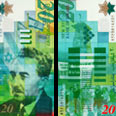
The new NIS 20 polymer note
באדיבות בנק ישראל
New NIS 20 polymer note to enter currency today
New note is almost identical to existing paper note but is made of plastic material which is far more durable than the easily worn out paper note
The Bank of Israel will begin distributing Sunday a new NIS 20 polymer note via the commercial banks and the Postal Bank.
In honor of Israel's 60th Independence Day celebrations, a limited edition of 1.8 million polymer notes will be distributed to the public, carrying the message: "Sixty Years to the State of Israel." The distribution will be done via ATMs supplying 20 Shekel notes, serviced by Discount Bank, Mercantile Discount and Bank Otzar Hahayal.
The polymer notes will be circulated simultaneous to the ones made of traditional paper. The latter's quality has been very poor due to their long circulation in the markets. Producing notes out of polymer will improve their durability and lastingness.
Due to the advantages polymer provides, its usage around the world is increasing, and it is currently used for issuing notes by 26 countries among which are: Australia, New-Zealand, Singapore and more. Israel is the 27th country to adopt the polymer notes.
The slight differences between the paper and polymer notes are in the security marks; most prominent is the transparent window with the number "20" printed on it, making the polymer notes easily identifiable by the public.
More durable, yet more expensive
The cost of producing a NIS 20 note is 30 Agurot ($0.08), while the cost of producing a polymer note is 50% more expensive. According to the Currency Department, the number of NIS 20 notes reached 23.55 million in 2006. Therefore, if paper notes are replaced, which could take a few years, they may reach NIS 10.6 million.If the trial run does succeed, Bank of Israel will consider changing the existing notes into polymer.
Bank of Israel wished to clarify that there is no need to exchange the old notes since they will be circulated together with the new ones and will not expire.
