


Iran seeks 'common ground' with West
Yet to respond to incentive package proposed in Geneva this month, Islamic Republic agrees to 'work out differences' on condition that US changes its approach to Tehran
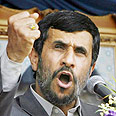
Iranian President Mahmoud Ahmadinejad said Monday that Iran will seek common ground with the United States and five other world powers that have proposed incentives for Tehran to freeze its nuclear enrichment program. NBC also said Ahmadinejad believes the oil market is overvalued in part because of manipulation.
Speaking in an interview conducted in Iran with NBC News less than a week before a deadline for its reply to the incentives package, Ahmadinejad also said progress toward agreement would depend on the sincerity of a new US shift in its approach to Tehran.
Western officials said after a meeting with Iran's chief nuclear negotiator in Geneva on July 19 that Tehran had two weeks to reply to an offer of a halt to new steps toward more UN sanctions if Iran froze the expansion of its nuclear program. That would give Iran until Saturday to reply.
"They submitted a package and we responded by submitting our own package," Ahmadinejad said through an interpreter in an excerpt of the NBC interview aired on Monday.
"It's very natural. In the first steps, we are going to negotiate over the common ground as they exist inside the two packages. If the two parties succeed in agreeing over the common ground, that will help us to work on our differences as well, to reach an agreement." NBC also said Ahmadinejad denied Iran was working to produce a bomb, paraphrasing him as saying nuclear weapons are outdated.
Iran has so far ruled out a freeze to start preliminary talks or suspension of enrichment to start formal negotiations on the incentives package proposed by the six powers – the United States, Russia, China, Britain, France and Germany.
In a policy shift, a US diplomat attended the Geneva talks, which Iran has called its success. Ahmadinejad told NBC on Monday: "The main question here is whether this approach is a continuation of the old approach or is it a totally new approach.
"If this is the continuation of the old process, the Iranian people need to defend their right, its interests as well," he said. "But if the approach changes, we will be facing a new situation and the response by the Iranian people will be a positive one."
