


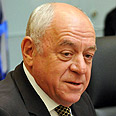
Bar-On: Gov't to increase market investments by 40%
(Video) Finance minister presents cabinet, reporters with market stimulus plan, says State's investment in economy in 2009 will reach NIS 21.7 billion. Plan will create thousands of new jobs, he adds
VIDEO - Finance Minister Ronnie Bar-On called a press conference on Wednesday in order to present reporters with the Treasury's market stimulus plan. Bar-On presented the cabinet with his plan earlier in the day.
The government, he told reporters, intends on increasing the State's investments in the local economy by 40%, brining investment projections for 2009 to NIS 21.7 billion ($5.449 billion).
Nevertheless, Bar-On noted that the plan was subject to future changes "should the need arise": "We will form a small business fund, facilitate cash flow and help exporters. The government takes risks because it has confidence in the strength of the market."
The stimulus plan, he said, is unprecedented both in scope and in the measures taken to facilitate the market's activity and employment rates: "We're talking about thousands of new jobs… this crisis is an opportunity for us to reduce our dependency on foreign workers. This plan sends an important message to the market – the government will not back down and neither should you.
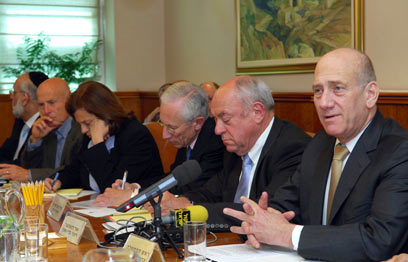
Bar-On (second from R) presenting market stimulus plan to cabinet (Photo: GPO)
"We’ve also made the decision to continue with tax reductions, which isn’t easy at a time when we know the deficit stands to grow… We have the obligation to launch the market stimulus plan here and now, or will we will pay a heavy price in the future," said Bar-On.
'Time for governmental responsibility'
When presenting the cabinet with the plan, Bar-On urged his peers to demonstrate governmental responsibility, warning that a nay vote would mean "a stagnation of the market pending the induction of the new government."

Video courtesy of Infolive.tv
Voting the plan down, he added "would also send an ominous message to the market, essentially saying there is no government and no Knesset, at least where the economy is concerned."
Governor of the Bank of Israel Stanley Fischer, who was present at the meeting, voiced his support for the plan, as did Prime Minister Ehud Olmert, who said that "there is a broad consensus that this is the right plan," adding that measure protecting pension funds should be considered as well.
Fischer added that it was essential for the government to take every possible budgetary measure to boost the economy now in order to facilitate the business sector – especially small and growing businesses – by allowing easier access to credit lines.
The chancellor also noted that the Treasury must continue its plan to reduce taxes.
