


Mummy at the museum (Archive)
באדיבות מוזיאון ארצות המקרא ירושלים
Historical treasure at Bible Lands Museum
Rare 4,000 year-old cuneiform tablet that sheds light on beliefs and practices of religious Babylonian customs during Tu B'Shvat now on display at Bible Lands Museum
As part of Tu B'Shvat celebrations the Bible Lands Museum Jerusalem reveals a rare 4,000 year old cuneiform tablet that sheds light on the beliefs and practices of the religious Babylonian customs during Tu B'Shvat.
The large cuneiform tablet is prominently displayed in the heart of the Museum's Gallery of the Patriarchs and reveals the roots of the Hebrew calendar, whose origins stem from Ancient Babylon. It sheds light on the religious practices of the Babylonians from the time of Abraham.
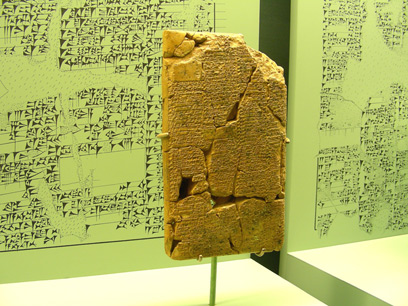
The ancient tablet (Photo courtesy of Bible Lands Museum)
In the words of the late Dr. Elie Borowski, founder of the museum, this tablet is "the most important document and historical treasure for the understanding of the Hebrew calendar as well as for the ancient history of the cradle of mankind"
The rare tablet takes the visitors to the ancient month Shabatu, 4,000 years ago. It is the only known example of a text recording the daily routine followed in the temples of the capital city of Larsa, which neighbored Ur in ancient Mesopotamia. In over six hundred and thirty lines, the tablet registers the rites performed in the temples during the month of Shabatu. This month is identical to the Hebrew month of Shevat and they are both the eleventh month of the year.
Free daily guided tours, English 10:30, Hebrew 11:30
Sun., Mon., Tues.. Thurs. – 9:30-17:30
Weds. – 9:30-21:30
Fri. & Holiday Eves – 9:30-14:00
Sat. and Holidays - closed
