


Hamas to buy caravans for homeless Gazans
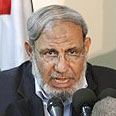
Palestinian group's strongman Mahmoud al-Zahar says organization will use funds confiscated by Egypt at border to house Gazans who lost homes in Israeli offensive. 'It's our right to bring in anything – money and weapons. We will buy whatever Palestinians need,' he says
Hamas strongman Mahmoud al-Zahar said on Wednesday that his organization planned to buy some 1,000 caravans from Egypt to house residents of the Gaza Strip left homeless following Israel's Operation Cast Lead.
London-based Al-Sharq al-Awsat newspaper reported that Hamas planned to purchase the caravans with funds that were seized from the organization's senioe member Ayman Taha a few weeks ago when he tried to return to the Strip from Cairo.
Al-Zahar said that the last round of meetings between the Hamas delegation and Egyptian intelligence chief Omar Suleiman have been positive.
According to al-Zahar, Hamas demanded Palestinian detainees held by Egypt be released, and that the caravans be allowed into Gaza. The official added that a Hamas delegation of engineers traveled to Egypt on Monday to discuss the purchase of the caravans.
Another Hamas official demanded Egypt pressure Israel into allowing the entrance of construction materials such as aluminum, iron, glass and wood into the Gaza Strip, as well as materials for the construction of an electric infrastructure, in order to expedite the rebuilding of the Strip.
Regarding the money Egypt seized from Taha, al-Zahar said, "It is our right to bring anything in – money, and even weapons. We made no commitments to anyone on this matter. We will use this money to buy whatever the Palestinian people needs and in order to rebuild what the Israeli occupation destroyed."
Al-Zahar also commented on talks of a truce between Hamas and Israel, and Israel's insistence on tying the release of captive soldier Gilad Shalit to the equation.
"Israel has agreed to all the steps, and just before a statement of the date of the truce, took it back, as usual, and tied the truce to prisoner exchange and the opening of crossings," he said.
"We will never accept a situation in which the 'price' of a captive soldier is 'paid' with crossings.
"We also refuse to accept any deviation from our demands on this deal, especially regarding prisoners that received life sentences without any reference to their organizational affiliation or their geographical place of residence. This is the matter that is disputed between us and them," he added.
